


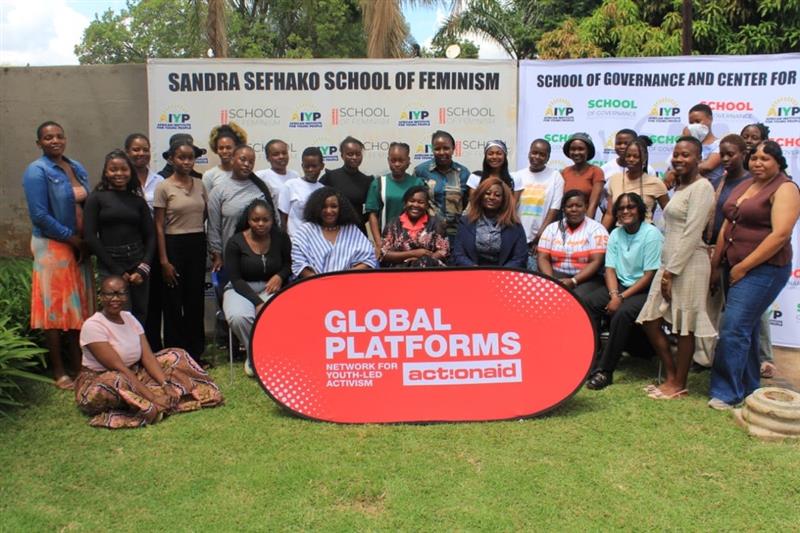
On 25 March 2026, the African Institute for Young People (AIYP) successfully hosted Feminist Echoes: Uniting Young Women for Political Emancipation at the Global Platform Youth Hub. The training brought together 35 young women from diverse backgrounds—including students, young mothers, and school dropouts—and equipped them with leadership, advocacy, and political engagement skills through a participatory feminist circle approach. The initiative was implemented under the Sandra Sefhako School of Feminism, a flagship program of AIYP dedicated to mentoring and empowering young African women to lead in sexual and reproductive health and rights (SRHR), human rights, climate justice, and political and economic participation. The program seeks to dismantle patriarchal barriers, strengthenwomen’s participation in decision-making, and build solidarity across communities and nations.
Named in honor of Sandra Sefhako, a distinguished youth activist and Mandela Washington Fellowship alumna from Botswana, the school celebrates her legacy of advancing women’s rights and gender equality in Africa. It provides mentorship, capacity-building, advocacy training, and leadership development to equip participants with the skills, knowledge, and confidence to lead transformative change in their communities. The training utilized culturally grounded methodologies inspired by the Shona nhanga tradition, alongside intergenerational dialogue, group discussions, and roundtable engagements. Esteemed leaders, including Senator Itayi Mwanza, Councillor Leah Chidamba, and former Epworth Mayor Annah Sande, shared their lived experiences in politics, offering mentorship and practical insights into navigating governance spaces.
Participants deepened their understanding of feminism, Ubuntu, and solidarity, while building confidence, networks, and actionable commitments to engage in leadership and political processes. The training underscored the importance of early mentorship, inclusivity, and the creation of safe spaces for emerging women leaders.
Overall, Feminist Echoes strengthened the capacity of young women to influence governance, foster collective empowerment, and advance inclusive political participation, in alignment with the enduring legacy of Sandra Sefhako.
Introduction
The African Institute for Young People (AIYP) convened Feminist Echoes:Uniting Young
Women for Political Emancipation at the Global Platform Youth Hub as part of the Youth in Elections Project. The initiative was designed as a participatory feminist circle contributing to the broader vision of the Sandra Sefhako School of Feminism, a flagship program committed to mentoring and equipping young African women with the skills, knowledge, and confidence to lead in political, social, and economic spaces.Grounded in the traditional Shona concept of nhanga as a safe space for guidance, mentorship,
and socialization, Feminist Echoes created an inclusive platform for young women to engage in dialogue, storytelling, and intergenerational exchange with experienced women leaders. The initiative directly responds to the persistent underrepresentation of young women in governance by fostering leadership, strengthening networks, and building practical skills in advocacy, negotiation, and coalition-building.
Through this feminist circle, participants were empowered to engage more actively and
confidently in political processes, share lived experiences, and develop actionable strategies for influencing decision-making. By nurturing solidarity, promoting feminist values, and transforming individual aspirations into collective action, Feminist Echoes contributes to advancing inclusive governance and cultivating a new generation of transformative women leaders in line with the legacy of the Sandra Sefhako School of Feminism.
Objectives
- To establish a safe and inclusive feminist platform that enables at least 35 young women to share experiences, build solidarity, and engage in structured dialogue on political participation during the training.
- To enhance the leadership, advocacy, and political engagement capacities of at least 35 young women through mentorship, peer learning, and skills-building sessions, with participants demonstrating improved knowledge and confidence by the end of the training.
- To support at least 35 young women to develop practical, actionable strategies and commitments for engaging in political processes and decision-making, with clear follow-up actions identified for implementation beyond the training.
Methodologies Used
The activity utilized a participatory, learner-centered, and culturally grounded methodology informed by the Shona concept of nhanga, which emphasizes safe spaces for mentorship, guidance, and socialization. This approach ensured inclusivity and created an enabling environment for experiential learning, open dialogue, and knowledge exchange among participants and facilitators. An intergenerational dialogue model was employed to facilitate direct engagement between young women participants and experienced women leaders, including Senator Itayi Mwanza, Councillor Leah Chidamba, and former Epworth Mayor Annah Sande. Through storytelling and experience-sharing, participants gained practical insights into leadership pathways, barriers to participation, and strategies for navigating political and civic spaces. The session was facilitated using inclusive moderation techniques by Tsitsi Patience Mashiri to ensure equitable participation and safe engagement.
The methodology further incorporated peer-to-peer learning through structured group
discussions and roundtable dialogues. These sessions enabled participants to critically reflect on key thematic areas, including feminism, ubuntu, and solidarity, while co-creating context-specific strategies for enhancing women’s political participation. This approach strengthened critical thinking, collaboration, and collective problem-solving.Networking and relationship-building were integrated as a core component of the methodology, fostering cross-sectoral linkages among participants from diverse political, social, and economic backgrounds. This contributed to the development of sustained support systems and collaborative engagement beyond the training.
Overall, the methodology combined experiential learning, intergenerational mentorship, peer learning, and culturally relevant frameworks to promote leadership development, collective empowerment, and inclusive participation. It aligns with the values underpinning the Sandra Sefhako School of Feminism, particularly feminism, ubuntu, and solidarity, while reinforcing shared responsibility and agency among young women.
Summary of Proceedings
The training was successfully held on 25 March 2026 at the Global Platform Youth Hub,
bringing together 35 young women from diverse backgrounds, including students, young
mothers, and school dropouts, reinforcing the principle of inclusivity. The diversity of
participants enriched discussions, ensuring a wide range of perspectives on women’s
participation in leadership and governance. The sessions were structured into thematic segments to maximize learning and engagement. The first segment focused on mentorship, where facilitators shared guidance on leadership and governance, drawing on their personal experiences and professional journeys. This provided participants with practical insights into the realities of leadership and pathways to active political participation. The second segment emphasized feminism, ubuntu, and solidarity as strategic frameworks for political engagement. This participatory session encouraged equal contributions from all participants, fostering dialogue and reflection on how these values can be applied to advance women’s leadership and influence in governance processes. The training concluded with participants developing actionable commitments, pledging to pursue leadership and governance opportunities within their communities. Overall, the sessions enabled participants to gain knowledge, confidence, and practical skills, equipping them to engage meaningfully in political and civic spaces.
Outcomes (Results)
By the conclusion of the training, participants demonstrated a significant improvement in their understanding of feminist principles, Ubuntu, and solidarity, gaining clarity on how these concepts can be applied to advance gender equality and women’s political participation. Young women acquired practical strategies for leadership, advocacy, and coalition-building, strengthening their capacity to engage meaningfully in governance and decision-making processes. The training fostered an inclusive political culture through open dialogue, peer learning, and collective reflection. Participants left with increased confidence, a stronger sense of agency, and a reinforced commitment to pursue leadership opportunities. Overall, the training empowered young women to translate knowledge and mentorship into tangible actions that advance their political emancipation and civic engagement.
Lessons Learnt
A key lesson from the training was the critical role of seasoned leaders in opening doors for young women, highlighting that today’s participants are tomorrow’s leaders. The sessions demonstrated that young women possess the passion, potential, and capacity to drive positive change in their communities and political spaces when given the right guidance and opportunities. The training also underscored the mentorship gap for emerging women leaders, as many participants reported limited access to guidance, networks, and practical insights needed to navigate political and civic spaces effectively. This highlighted the importance of structured mentorship programs and safe, inclusive spaces—like the nhanga circles—where young women can learn from experienced leaders, exchange ideas, and gain practical strategies for leadership. Additionally, the value of intergenerational dialogue became evident, with interactions between seasoned leaders and young women providing inspiration, encouragement, and actionable insights. Participants learned not only about leadership successes but also about overcoming challenges and systemic barriers, reinforcing the need for continuous engagement, capacity building, and platforms that foster solidarity, Ubuntu, and feminist principles to strengthen the next generation of women leaders.
Recommendations
Based on the training experience, it is recommended that future trainings intentionally include very young leaders, starting from high school, to introduce them early to concepts of leadership, feminism, Ubuntu, and solidarity. Early engagement will nurture political awareness, confidence, and civic responsibility, enabling young women to build a strong foundation for future leadership roles. It is also important to ensure that the training environment remains inclusive and accessible to all participants, including providing facilities and accommodations for people with disabilities. Creating such an enabling environment will foster equitable learning, ensure diverse voices are heard, and strengthen the overall impact of the program in developing capable, confident, and
inclusive young women leaders.
Conclusion
The training successfully created a proactive, mentorship-driven space that equipped young women with the knowledge, skills, and confidence to navigate political and governance spaces effectively. Through presentations, intergenerational dialogue, group discussions, and networking, participants translated ideas into actionable strategies for political engagement and leadership. The training reinforced the values of feminism, Ubuntu, and solidarity, encouraging participants to work collectively and support one another in their leadership journeys. Overall, Feminist Echoes: Uniting Young Women for Political Emancipation contributed significantly to building a generation of confident, politically engaged young women prepared to influence decision-making processes and shape inclusive, equitable governance in their communities and beyond.
