

Results for "culture"
266 Results
Africa Global Partnership Scholars
In an era where complex global challenges demand collective action, the need for international collaboration and knowledge sharing has never been more critical. Africa Global Partnership Scholars Program (Africa GPS) is a cohort-based program, designed for early to mid-career MSU faculty to create and deepen new scholarly partnerships with collaborators and peer institutions in Africa in support of MSU’s global mission.
PROGRAM OBJECTIVES:
Foster the development of a group of faculty members dedicated to establishing and enhancing international research connections, collaborating on solutions with African partners, and adopting a global perspective in their scholarly work
Support MSU’s 2030 strategic plan goal of discovery, creativity and innovation for excellence and global impact
Connect MSU faculty with potential collaborators and mentors in Africa, expand the scholars' international networks, and offer support for establishing long-lasting collaborations
Heighten global awareness and research dialogue
Elevate the status of MSU’s global mission
Capitalize on opportunities to leverage external resources and form partnerships
ELIGIBILITY FOR APPLICATION
Tenure-stream or fixed term faculty at Michigan State University without prior scholarly experience in Africa are eligible to apply for Africa GPS.
REQUIRED APPLICATION MATERIALS
As part of the application process, the applicant must submit the following materials:
Completed application questionnaire
An up-to-date curriculum vitae (max 4 pages)
A one-page statement that describes your reasons for applying, potential research focus, and if known, the AAP consortium institution and African country of interest for the collaboration. If needed, AAP can help identify the country, mentor and/or the collaboration partner based on the applicant’s interests.
A letter expressing strong support from the Chair/School Director/Dean. The letter should affirm:
The candidate’s international interest, experience, and/or research
The candidate’s strengths as a researcher within the context of unit expectations
The candidate’s proposed project will advance the mission and goals of the academic unit, be supported by the unit, and benefit international partners
Applicants are encouraged to obtain a commitment from their unit or college to provide a 20% cost share. While cost sharing is not required, preference will be given to proposals that include this match.
FUNDING
To facilitate the participation of faculty members selected as Africa GPS Fellows, AAP will provide support for the following:
Up to $10,000 in support of international travel and scholarly collaborations with a researcher and/or mentor at an AAP Consortium member institution. The $10,000 may be used to support the MSU faculty members’ individual travel, collaborative research activities or to bring an African partner to MSU.
Connection with potential collaborators, mentors, and institutions in Africa
Structured workshops on establishing and navigating international partnerships
Financial Guidelines:
The financial support must be expended prior to the end of the program (one year after awarded).
Preference will be given to applicants who provide a 20% match from the applicant’s unit, department or college.
PROGRAM EXPECTATIONS
Africa GPS participants are expected to develop a sustainable collaboration with peer researchers at an AAP consortium institution. As a result, within two years of being selected for the program, the scholar is expected to achieve the following outputs:
A collaborative research paper coauthored with their African collaborator to be submitted for publication.
A concept note of a proposal submitted to a funding agency to sustain the partnership with the African collaborator.
Progress reports submitted every six months to AAP documenting how the collaboration is progressing and any challenges that may have arisen.
Attend program orientation, professional development workshops organized by AAP, and other relevant events as shared by the AAP team.
SELECTION CRITERIA FOR GLOBAL RESEARCH FELLOWS
The criteria below will be utilized to evaluate candidates for their selection to the Africa GPS program:
Commitment Level: Applicants need to show a readiness to dedicate the necessary time to maximize the benefits of the Fellowship year, along with a proven scholarly potential that supports such a commitment.
Research Interest: Candidates should demonstrate a strong commitment to international research and articulate how participation in Africa GPS will contribute to their personal and professional development
Unit Support: Candidates must have strong support from relevant departmental or school and college administrators, indicated by enthusiastic recommendations.
Alignment of Interests: The applicant’s international research interests should align with the Africa GPS’s mission to foster excellence in international research.
Apply here: https://msu.co1.qualtrics.com/jfe/form/SV_bIS1j4JJxUE2voq
SELECTION OF FELLOWS
Application materials will be reviewed by a selection committee in International Studies and Programs. Scholars will be announced by May 2026. Funds must be transferred to selected scholars by June 30, 2026.
If you have any questions, please contact Justin Rabineau at: rabinea1@msu.edu
Read more
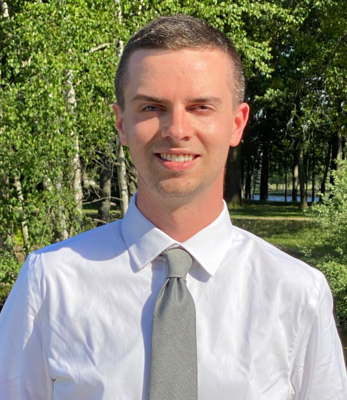
By: Justin Rabineau
Due Date: Mar, 31, 2026
Agri-food systems
+6
Leave a comment

No Preview Available
Call for Papers: History of Technology Conference
“Engaging the History of Technology”
International Congress of History of Science and Technology
Annual Meeting
Democritus University of Thrace
Alexandroupolis, Greece
October 8 – 11, 2026
The theme of this conference, “Engaging the History of Technology”, invites critical reflections on how history of technology can engage with evolving methodologies, theories and pedagogies, and other branches of historical study to demonstrate that understanding technologies’ pasts are essential to navigating contemporary challenges. The conference, therefore, seeks contributions across spatial and epistemic boundaries: from the everyday and local to the geopolitical and planetary; from archival practice to classroom teaching and public engagement; and from discipline-specific research methods to interdisciplinary collaborations.
Contributors may engage with one or more of the following themes, or even suggest new ways of thinking about:
1. The History of Technology between the Local, the Regional, and the Global:• Circulation of technologies, expertise, and knowledge across borders• Adaptation and appropriation of technologies in different cultural contexts• Tensions between globalisation and localisation in technological change• Regional networks and their role in shaping technological trajectories• Colonial, postcolonial and decolonial dimensions of technology• Networks of maintenance and repair2. History of Technology, Historiography and Education:• Methodological innovations in researching the history of technology• Interdisciplinary approaches and their challenges• Teaching the history of technology in universities and schools• Public engagement and the communication of technological history• The relevance of technology history to contemporary policy debates• Digital humanities and new forms of historical scholarship3. Intersections between the History of Technology and Other Fields of Historical Study:• Technology and social history: class, labour, gender, and everyday life• Technology and cultural history: representation, identity, and meaning• Technology and environmental history: sustainability, resource use, and ecological change• Technology and economic history: innovation, industrialisation, and development• Technology and political history: governance, regulation, and power• Technology and the history of medicine: cultural values, therapeutic practice, and material conceptions about the human body4. Special Focus: Museums, Material and Intangible Cultural Heritage, and Public Engagement: Given our collaboration with the Ethnological Museum of Thrace, the planners particularly welcome proposals that engage with material and intangible culture, museum practices, and public history. They are interested in innovative session formats that:• Explore tensions and synergies between academic and museum approaches to technological history• Demonstrate object-based learning methodologies• Address the challenges of communicating technological history to diverse publics• Examine the role of museums in preserving and interpreting technological heritage• Study visitor engagements with intangible heritage, particularly those of marginalised and silenced ethno-cultural communities• Critically examine the funding relationships between private technological and industrial interests, and museum
Proposals will be accepted in the following formats:
Paper presentations
Individual and author teams’ presentations.Please, submit an abstract of up to 350 words.
Panel Sessions
Thematically coherent sessions of 3-4 papers. Panel organisers should submit a panel abstract (up to 400 words) describing the theme and its significance; after approval the conference committee and the panel organisers will issue a specific call for proposals (individual or author teams’ paper abstracts up to 350 words each).
Roundtables
Discussion-based sessions with 4-6 participants addressing a specific question or debate. Organisers should submit a description of the topic and format (up to 350 words); names and brief bios of participants (up to 100 words each); key questions to be addressed.
Graduate Student and Early Career Opportunities
ICOHTEC is committed to supporting emerging scholars. We particularly welcome submissions from graduate students and early career researchers. The conference will feature:• Visual Lightning Talk Competitions for graduate students• Mentorship opportunities pairing students with established scholars• Book development workshops
Submissions of abstracts through the conference website: December 15, 2025 - January 31, 2026
Official conferencewebsite: https://icohtec2026.hs.duth.gr
- Peter Alegi, MSU Department of History -“Soccer as Work and Play: A Congolese Life Story, from Colonialism to Globalization” (co-sponsored by the MSU Department of African American and African Studies and the MSU African Studies Center)
Monday, March 23 - Jenelle Thelen – “Smooth as Silk: Working Women of the Belding, MI Silk Mills (1902-1908)” (co-sponsored by the MSU Center for Gender in Global Context)
Friday, April 3 - David Stowe, MSU Religious Studies – “The Musical Tanner: Negotiating Work, Music, and Belief in Revolutionary Boston”
* TBD - Nicholas Sly, MSU Department of History - “Curing the Crisis of Masculinity: Calisthenics and Office Work in the Early Twentieth Century”
Check out all the Our Daily Work/Our Daily Lives brown bag presentation recordings available on the MSU Library website (over 125 and still counting!!- JPB)
Did you miss a brown bag presentation that you really want to hear? Or perhaps you may want to explore the listing of past presentations that you didn't even know about. There's an answer to both quests.
Thanks to all our friends at MSU Vincent Voice Library, there is a new home for all our recorded brown bags. Follow these links and you should be able to tap into all of the recordings we have cataloged thus far: Our Daily Work/Our Daily Lives Channel or https://mediaspace.msu.edu/channel/channelid/209060293. Easy Peasy!! Thanks to everyone for setting us up this way!!!
The deepest note of Thanks to all of the folks at the Vincent Voice Library who have worked with us to create this archived set of recordings. Thanks to Shawn, James, Mike, Rick and the late John Shaw for their work over the years on our behalf.
For over thirty years, "Our Daily Work/ Our Daily Lives" has been a cooperative project of the Michigan Traditional Arts Program and the Labor Education Program.
Read more

By: Aaron Dorner
Due Date: Jan, 31, 2026
Culture and society
+1
Leave a comment
African Futures Research Leadership Program - Cohort 6 Call for Applicants
AAP AFRICAN FUTURES RESEARCH LEADERSHIP PROGRAM
Artificial Intelligence in Africa: Transdisciplinary Innovations for Sustainable Futures
Cohort 6 Call for Applicants
Alliance for African Partnership (AAP) invites applications for the sixth cohort of the African Futures Research Leadership Program. This competitive visiting scholar program supports early career researchers from AAP consortium universities to collaborate for one year with faculty members at Michigan State University (MSU) and their home institutions. The program focuses on strengthening skills in impactful research, curriculum development, innovative teaching, scholarly and policy writing, dissemination of research results, and grant proposal development. Scholars will also participate in a structured professional development program while building meaningful and lasting connections with MSU faculty and fellow scholars.
The primary goal of the African Futures Program is to strengthen the capacity of emerging African researchers to become scientific leaders in their communities. The program seeks to foster long-term partnerships with MSU faculty, co-create innovative solutions to Africa’s challenges, and cultivate the next generation of research mentors and leaders.
AAP invites applications from early career researchers to join the upcoming cohort, which will begin virtually in February 2026. Scholars will spend September through December 2026 at MSU for the in-person phase of the program, followed by continued virtual collaboration through early 2027. Each scholar will receive a small grant to support research, teaching, and professional development activities, including conference participation and publication. Scholars will also receive a stipend during their time at MSU, visa support, and round-trip travel from their home institution.
Potential Teaching and Research Areas
The 2026 theme, “Artificial Intelligence in Africa: Transdisciplinary Innovations for Sustainable Futures,” highlights the potential of AI to address Africa’s most critical challenges and opportunities. AI research must be ethical, contextualized, and socially responsible, drawing insights from science, engineering, the arts, business, culture, and society. In addition to thematic research, scholars will contribute to the development of curricula for a transdisciplinary doctoral program in AI in Africa and explore innovations in teaching and learning.
We particularly encourage cross-disciplinary projects exploring AI’s transformative potential in:
Agri-food systems – leveraging AI for food security, sustainable agriculture, and resilient supply chains
Health and nutrition – applying AI in disease prevention, diagnostics, personalized medicine, and strengthening health systems
Climate change, water, energy, and environment – using AI for mitigation, adaptation, monitoring, and sustainable resource management
Ethics, governance, and society – integrating human rights, accountability, and inclusivity in AI design and deployment
Culture and the arts – examining how AI interacts with African languages, creative expression, heritage preservation, and digital storytelling
Engineering and science – developing AI-driven technologies suited to African contexts
Education – enhancing equitable access to learning, bridging digital divides, and improving pedagogy through AI
Business and entrepreneurship – fostering inclusive growth, financial technologies, and youth-led AI innovations to shape Africa’s digital future
Through transdisciplinary collaboration, the program aims to promote AI research and teaching that bridges technical and social disciplines, ensuring innovation reflects Africa’s diverse values and aspirations.
Program Benefits
Professional Development – Structured workshops on equitable partnerships, teaching innovation, academic time management, proposal development, budgeting, and research communication to enhance research, teaching, writing, and leadership skills
Leadership Development – A research leadership retreat focused on building leadership competencies, self-reflection, and career development for research advancement
Collaboration Networks – Each scholar will collaborate with MSU and home institution partners. Collaborators may conduct reciprocal one-week visits. Scholars will also join AAP’s network of researchers at MSU, across Africa, and globally to foster lasting institutional partnerships
Expected Outcomes
By the end of the program, each scholar and their team are expected to achieve at least:
Submission or publication of one to three joint manuscripts
Submission of at least one grant proposal
Presentation at one or more academic or professional conferences
Collaborations are designed to extend beyond the program’s duration. Scholars are encouraged to engage broadly with MSU faculty and maintain partnerships after completion. Participants must submit regular progress reports to AAP and their home institution focal point. Failure to meet program or partnership expectations may result in early termination.
Eligibility
Citizenship in an African country
PhD awarded within the last 10 years
Current employment as Academic Staff at one of the AAP African member universities including Egerton University, Makerere University, University of Dar es Salaam, Lilongwe University of Agriculture and Natural Resources, University of Botswana, University of Nigeria, Nsukka, University Cheikh Anta Diop, Yambo Ouologuem University of Bamako, United States International University-Africa, or University of Pretoria
Official approval of leave or sabbatical for the in-person phase
A home institution partner committed to collaborating throughout the program
Research aligned with the program’s thematic areas, focusing on AI in Africa
Submission of only one proposal per applicant in this round of funding
Application Requirements
An updated CV outlining professional accomplishments
A one-page letter of interest detailing alignment with program priorities, research approach, and potential societal impact
Names of up to three potential MSU faculty collaborators (identified from MSU department websites; applicants should not contact faculty directly—AAP will initiate contact)
Two relevant peer-reviewed publications
Two professional references providing context on the relationship and an assessment of the applicant’s expertise
A one-page letter from the home institution collaborator confirming willingness to participate and travel to MSU for collaboration
A one-page endorsement letter from the Head of Department approving leave
A one-page letter of support from the institution’s AAP Focal Point
Selection Criteria:
Professional merit, scientific ability, and potential for career impact (evaluated through CV, publications, letters, and references)
Institutional assurance of continued employment and support post-fellowship
Commitment to return to the home country after the fellowship
Consideration for diversity across disciplines, institutions, and regions. Priority will be given to projects that demonstrate transdisciplinary approaches integrating technology, culture, ethics, and societal impact
EXTENDED DEADLINE: Applications are due by November 28, 2025
Apply: https://msu.co1.qualtrics.com/jfe/form/SV_eVb2iErQhRpmAPs
For questions, please contact José Jackson-Malete at jacks184@msu.edu or +1-517-884-8587.
This project is made possible with the philanthropic support of Carnegie Corporation of New York
Read more
By: Justin Rabineau
Due Date: Nov, 28, 2025
Agri-food systems
+7
Leave a comment
No Preview Available
The Call for the 2026 AWARD Leadership Program for Emerging African Women in Agricultural Sciences
The call for applications to the 2026 Leadership Program for Emerging African Women in Agricultural Sciences is now open.
The program funded by The Carnegie Corporation of New York (CCNY) and implemented by African Women in Agricultural Research and Development (AWARD) seeks to build a pool of capable, confident, influential young women scientists equipped to excel in agricultural sciences, thrive in leadership roles, and champion gender integration in agriculture.
In this call, the leadership program is targeting applications from the following sub-Saharan African countries: Benin, Burkina Faso, Cote d’Ivoire, Ethiopia, Ghana, Kenya, Malawi, Nigeria, Senegal, Tanzania, and Zambia.
The initiative seeks to invest in up to 40 competitively selected African women under 35 years of age and their mentors. Selected candidates will participate in an intensive, non-residential career transformative program spanning nine months. They will be equipped in a range of areas, including:
Effective leadership styles
How to define their career path and leverage networks to advance their careers
How to develop personal brands to build confidence in pitching their research ideas to potential funding agencies and collaborators
The necessary tools and skills to successfully manage teams, navigate organizational dynamics, build alliances, and take risks
How to navigate gender dynamics and apply proven strategies to be effective negotiators and problem solvers.
Apply here: https://form.jotform.com/252601474687968
Read more

By: Baboki Gaolaolwe-Major
Due Date: Oct, 29, 2025
Culture and society
Leave a comment

No Preview Available
Open Call: WD2026 Media Scholarship Program
Deadline: Oct 15, 2025
Donor: Women Deliver
Grant Type: Scholarship
Grant Size: Not Available
Countries/Regions: All Countries
Area: Disability, Climate Change, Health, Human Rights, Indigenous Communities, , Individuals, Journalists, Leaders, LGBTQ, Journalism, Media, Refugee & Asylum Seekers, Gender Equality
The Women Deliver is offering Media Scholarships for journalists and content creators worldwide, especially those who may not otherwise be able to attend and report.
For more information, visit https://womendeliver.org/wd2026/participate-in-wd2026/media-scholarships/
Premium Link: https://grants.fundsforngospremium.com/opportunity/op/open-call-wd2026-media-scholarship-program
Read more
By: Baboki Gaolaolwe-Major
Due Date: Oct, 15, 2025
Culture and society
+2
Leave a comment
No Preview Available
Apply Now: Fulbright Visiting Scholar Program (Botswana)
Deadline: Sep 19, 2025
Donor: U.S. Embassy in Botswana
Grant Type: Grant
Grant Size: Not Available
Countries/Regions: Botswana
Area: Arts & Culture, Filmmaking and Entertainment, Music, Energy, Individuals, Artificial Intelligence, Cyber Security, Misinformation/Disinformation, Research, Science, Technology, Sports & Recreation
The U.S. Embassy in Botswana is pleased to announce the competition for the Fulbright Visiting Scholar Program for the 2026-27 academic year.
For more information, visit https://bw.usembassy.gov/funding-opportunities/#F/Bright
Premium Link: https://grants.fundsforngospremium.com/opportunity/op/apply-now-fulbright-visiting-scholar-program-botswana
Read more
By: Baboki Gaolaolwe-Major
Due Date: Sep, 19, 2025
Culture and society
Leave a comment
No Preview Available
Edited Volume on "Feminism and Literary Studies in African Literature and Culture"
Book Series Title: Contemporary Literary Studies on Language and LiteraturePublisher: HJ Verlag Maurer – Maurer Press, Frankfurt, GermanyWebsite: www.maurer.press
We invite contributions for the next volume of our series, Contemporary Literary Studies on Language and Literature. This volume is dedicated to exploring feminist perspectives in literature and culture, providing a platform for work that highlights the diverse ways feminism continues to shape literary scholarship.
We welcome chapters that examine women’s and gender-diverse voices in literature, challenge patriarchal structures, and consider how feminist approaches intersect with race, class, sexuality, disability, ecology, and postcolonial contexts. Submissions may focus on novels, poetry, drama, life writing, oral traditions, or interdisciplinary forms.
Possible Areas of Inquiry (not limited to):
Feminist literary criticism and theory
Postcolonial and decolonial feminism
Ecofeminism and environmental justice
Queer feminism and sexuality in literature
Disability feminism and embodiment
Re-reading canons and genres through feminist lenses
Feminist experimentation with form and narrative
Other feminist and intersectional approaches to literature are also welcome.
Submission Guidelines
Abstract: Minimum 250 words (including a short bio of the author)
Full Chapter: Minimum 4,000 words
Formatting: Times New Roman, APA 6th edition, justified text, 1.15 spacing
Languages Accepted: English, German, Turkish, and Azerbaijani
Plagiarism and Similarity Policy
All submissions will be screened using Turnitin. Works with a similarity index above 20% cannot be considered.
Important Dates
Abstract Submission Deadline: 15 September 2025
Full Chapter Submission Deadline: 30 November 2025
Estimated Publication Date: January / February 2026
There will also be publication fees charged
Submission Emails
Please send abstracts and full chapters (once accepted) to all of the following:
Dr. Gülşah Kıran Elkoca (Editor): gulsah.k@adu.edu.tr
Kanan Aghasiyev (Editor, M.A.): kaasiyev@gmail.com
Prof. Dr. Habib Tekin (Editor): habib.tekin@marmara.edu.tr
Read more: https://networks.h-net.org/group/announcements/20122592/edited-volume-feminism-and-literary-studies
Read more
By: Baboki Gaolaolwe-Major
Due Date: Sep, 15, 2025
Other
Leave a comment
No Preview Available
Call for Entries: World Food Day Poster Contest
Deadline: Nov 07, 2025
Donor: Food and Agriculture Organization of the United Nations
Grant Type: Events
Grant Size: Not Available
Countries/Regions: All Countries
Area: Food Safety, Community Development, Health, Children, Youth, Peace & Conflict Resolution, Sustainable Development
Join the World Food Day Poster Contest and show them your creativity! Use your skills to show how better foods create a better future - and how together they can build a peaceful, sustainable, prosperous, and food-secure world where everyone has access to a healthy diet.
For more information, visit https://www.fao.org/world-food-day/contest/en/
Premium Link: https://grants.fundsforngospremium.com/opportunity/op/call-for-entries-world-food-day-poster-contest
Read more
By: Baboki Gaolaolwe-Major
Due Date: Nov, 7, 2025
Culture and society
+1
Leave a comment

No Preview Available
Applications open for Getty Library Research Grants
Deadline: Oct 01, 2025
Donor: Conservation Research Foundation Museum
Grant Type: Grant
Grant Size: $1000 to $10,000
Countries/Regions: All Countries
Area: Arts & Culture, Researchers, Research
The Getty Library Research Grants offers support for researchers to use the Getty Library’s collections.
For more information, visit https://www.getty.edu/projects/library-research-grants/
Premium Link: https://grants.fundsforngospremium.com/opportunity/op/applications-open-for-getty-library-research-grants
Read more
By: Baboki Gaolaolwe-Major
Due Date: Oct, 1, 2025
Culture and society
+1
Leave a comment
COIL Faculty Fellows Program - Africa
Collaborative Online International Learning (COIL) is an educational methodology focused on fostering online intercultural learning experiences within universities in different countries. MSU’s Center for Global Learning and Innovation, Alliance for African Partnership (AAP), and African Studies Center (ASC) anticipate welcoming to the third cohort of the COIL Faculty Fellows Program-Africa a mix of bilateral and trilateral COIL projects. Prior experience in COIL is not required; faculty from any discipline are welcome!
https://globalyouth.isp.msu.edu/partnerships/coil/coil-faculty-fellows-program-africa/coil-faculty-fellows-cohort-3/
Read more
By: Justin Rabineau
Due Date: Aug, 10, 2025
Agri-food systems
+6
Leave a comment

No Preview Available
Call for Applications: Black Atlantic Editorial Fellowship (Africa)
Deadline: Aug 03, 2025
Donor: The Republic
Grant Type: Fellowship
Grant Size: Less than $1000
Countries/Regions: Algeria, Angola, Benin, Botswana, Burkina Faso, Burundi, Cameroon, Cape Verde, Central African Republic, Chad, Comoros, Congo (Brazzaville), Congo DR, Cote DIvoire (Ivory Coast), Djibouti, Egypt, Equatorial Guinea, Eritrea, Ethiopia, Gabon, Gambia, Ghana, Guinea, Guinea-Bissau, Kenya, Lesotho, Liberia, Libya, Madagascar, Malawi, Mali, Mauritania, Mauritius, Mayotte, Morocco, Mozambique, Namibia, Niger, Nigeria, Reunion, Rwanda, Saint Helena, Sao Tome And Principe, Senegal, Seychelles, Sierra Leone, Somalia, South Africa, Sudan, Swaziland, Tanzania, Togo, Tunisia, Uganda, Western Sahara, Zambia, Zimbabwe, South Sudan
Area: Arts & Culture, Literature, Politics, Black, , Individuals, Journalists, Researchers, Science, Technology
The Republic is pleased to announce the Black Atlantic Editorial Fellowship, a six-month fellowship programme designed towards the commissioning, writing and curation of stories rooted in Blackness and the African experience.
For more information, visit https://rpublc.com/dispatch/black-atlantic-editorial-fellowship/
Premium Link: https://grants.fundsforngospremium.com/opportunity/op/call-for-applications-black-atlantic-editorial-fellowship-africa
Read more
By: Baboki Gaolaolwe-Major
Due Date: Aug, 3, 2025
Culture and society
+1
Leave a comment

No Preview Available
Applications open for National Poverty Eradication Programme (Nigeria)
Deadline: Jun 30, 2025
Donor: National Poverty Eradication Programme
Grant Type: Events
Grant Size: Less than $1000
Countries/Regions: Nigeria
Area: Arts & Culture, Business & Industry, Rural Development, Urban Development, Economic Development, Employment & Labor, Youth, Poverty Alleviation, Youth & Adolescents
Applicants are now invited to submit applications for the National Poverty Eradication Programme by the Nigerian government to address poverty in Nigeria and related issues.
For more information, visit https://napep-gov.ng/
Premium Link: https://grants.fundsforngospremium.com/opportunity/op/applications-open-for-national-poverty-eradication-programme-nigeria
Read more
By: Baboki Gaolaolwe-Major
Due Date: Jun, 30, 2025
Culture and society
+1

Leave a comment