


Baboki Gaolaolwe-Major
(Alliance for African Partnership)
Administrative Assistant
Communication
Education
Governance
Marketing
A Journey of Academic Excellence through Community Engagement
Translating scientific knowledge for societal benefit has long posed a challenge in research. Until about two decades ago, this crucial aspect of science received limited emphasis. However, community engagement—often referred to as public engagement or science communication—has now become a critical component that facilitates the application of research by end users. The scientific community has increasingly recognized that research is incomplete without involving key stakeholders and end users, necessitating a human-centric approach to research and development.
Dr. Mercy Kaburu, an accomplished Assistant Professor of International Relations at Kenya’s United States International University (USIU), exemplifies this approach. She is dedicated to using community engagement to effectively translate research on Kenya’s foreign policy, its role in regional and global politics, regional integration within the East African Community (EAC), and women’s political participation, especially in Kenya.
As an emerging leader in science and her community, Dr. Kaburu has achieved notable successes, has led impactful research initiatives, and has engaged with her community in ways that underscore her impressive academic journey. Her research focuses on three core areas: Kenya’s foreign policy, regional integration within the EAC, and enhancing women’s political participation in Kenya. Over the last three years, she has published articles on key topics such as Kenya's elections, gender-based violence, and regional integration. One of her most notable achievements was securing a prestigious publication in the Washington Post on regional integration within the EAC, along with a forthcoming book chapter on Kenya's foreign policy.
In addition to her publications, Dr. Kaburu is leading a joint research initiative between USIU, the University of Nairobi, and the Free Pentecostal Fellowship in Kenya. This five-year project, which focuses on child protection in Busia County, highlights her dedication to community engagement and research that has a real-world impact. "This project will allow me to make a difference, especially on issues relating to policy and child protection," she explains with enthusiasm.
AAP’s Role in Her Journey
After participating in the Alliance for African Partnership (AAP) program at Michigan State University (MSU), Dr. Kaburu was promoted to Assistant Professor. Reflecting on the impact of AAP, she says, “One of the biggest things AAP did for me was open my spaces for conferencing and partnership, attending academic conferences, and creating new collaborations.”
Her time at MSU, supported by AAP, broadened her academic horizons through conference presentations and the establishment of crucial partnerships. Dr. Kaburu expressed her gratitude for the mentorship she received, particularly from Professor Caroline Logan, who played an instrumental role in guiding her conference participation and subsequent publications. “Thanks to my mentor, I was able to attend key conferences, which played a major role in helping me meet the guidelines for promotion,” she adds.
Looking Ahead
Dr. Kaburu’s future shines brightly as she continues to expand her academic and community-based endeavors. Recently appointed by Afrobarometer as the Coordinator for Capacity Building for Early Career Scholars in Africa, Dr. Kaburu is excited about furthering her research and mentoring new scholars. “I am looking at myself engaging more with the community,” she shares. “I believe I can have my fingerprint on policy, especially regarding women and political participation in Kenya.”
Her current focus includes securing more research grants and influencing policy. Looking ahead, she aspires to become an Associate Professor within the next three years. “I am giving myself the next three years to meet the requirements of an Associate Professor. Growth, for me, is very important,” she says confidently.
Dr. Kaburu’s inspiring story serves as a testament to the transformative power of opportunities like the AAP program. Her advice to other scholars, particularly women, is to seize opportunities for growth and mentorship. “When a woman scholar gets the opportunity, please take it up, and always try to build lasting relationships with your mentor,” she advises.
As she continues to make strides in her career and community involvement, we look forward to seeing the incredible impact she will undoubtedly continue to make.
By:
Baboki Gaolaolwe-Major
Tuesday, Nov 12, 2024
EDUCATION
+1

Leave a comment
Makerere University is determined to end Sickle Cell Disorder in Africa, in the lead of this mission
As you’re reading this sentence someone lost the opportunity of a lifetime simply because they are a woman. And as you’re reading this sentence, someone else was denied their dream for the exact same reason. Worldwide the proverbial glass ceiling has been cracked and battered over the past century. For most of us, we live in a world where women can vote, have aspirations, and are considered equal human beings instead of someone’s property. But damaged as the glass ceiling may be, it still hangs over the heads of many women. If you find this hard to believe, just ask any woman you know, and they will tell you how hard they had to fight for the same thing others take for granted. So, how can a woman become a leader in a world dominated by men?
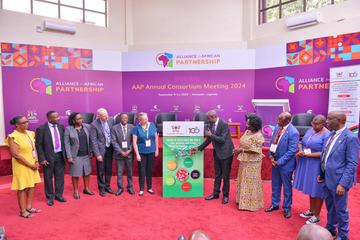
The Alliance for African Partnership (AAP) recently launched a Centre of Excellence for Sickle Cell Anemia and Other Neglected Tropical Diseases during their annual consortium meeting at Makerere University (MAK). Nothing fell short of a tag “impressive”. Sarah Kiguli, a MAK scholar based in Uganda, has not only consistently been a leader amongst the academic and medical academic community, but she has been on the forefront of decisions affecting the country’s future. She sat on the council for Makerere University for eight years, she served as the president of the Association of Uganda Women Medical Doctors for four years and most recently, she has founded the Centre of Excellence for Sickle Cell Anemia and Other Neglected Tropical Diseases and spear heading this noble idea.
The center promises to be a turning point for Uganda, doing research on how to combat diseases which have been plaguing Uganda unabetted for years. Despite the center only existing for a month, it has already set up a system to register patients with sickle cell disease. By registering them, they and others will be aware of the risks of passing this disease down to the next generation and can take the necessary steps to prevent that.
Sarah’s resume of consistence excellence in leadership is a testament to her determination, but as with every woman before her she needed to scratch and claw at the glass ceiling to reach where she is today. Thanks to the leadership of Vice Chancellor, Prof Barnabas Nawangwe of recognizing these challenges, Sarah finds herself at the helm of this noble institution. When asked about the challenges she and other Ugandan woman have faced, she spoke about the difficulty of gaining the necessary skills to lead while raising a family. Worldwide, the common perception is that the women raise the family, and the men earn the money. Even if a woman is doing her best to earn, she is expected to shoulder the burden of cooking, cleaning, tending to the children. Can you imagine earning a bachelor’s degree, two master’s degrees and fellowship while having to juggle being a mother? Many people don’t need to imagine, and still, like Sarah, they manage to thrive. Even with less sleep, even with more stress, they succeed.
But despite her climb through the ceiling, Sarah is humble. Her story is not known because she does not go out of her way to share it. Partially due to introversion, Sarah does not make the obstacles she has broken through evident to those around her. Instead, she uses her passion to inspire. Using Vice Chancellor Nawangwe as an example, she explained that her passion for helping Ugandans suffering from diseases such as anemia is often enough to persuade him to trust in her ideas. This wouldn’t be the only time her passion for helping others aided her in her journey. She would note that she didn’t ascend the ladder to leadership alone. While her world is indeed dominated by men, many of them were swayed by her care for others and her willingness to do whatever is needed as she went through training in medical school as well as through her service in pediatrics. They mentored and supported her on her path to leadership, and she feels that without them she would not be where she is today.
She pays this forward to women that she works with. As she keeps an eye out for women to add to her team or to mentor into becoming leaders of their own. According to Sarah, she doesn’t just do this out of the kindness of her heart though, she knows and understands that women are necessary for science to continue to surge forward. When asked on the perspectives that women bring to science she used her experiences in Uganda as an example. In her culture, she noted that most women think broadly, beyond science, but the social and psychosocial effects of what they are studying and how to best mobilize communities to put solutions into effect. When looking at sickle cell research itself, she noted that the nurturing perspectives of older women allows for better research and mobilization teams to be built as well as patient care to be improved.
Finally, when Sarah Kiguli was asked to give advice to women who want to become leaders, or women who have been inspired by her story, she had the following to say: Think that woman should believe in herself. Believe in yourself, set your goals so that you can know where you want to go. Make targets, work with other people, work with people who support you. It is lonely, it is a lonely path moving up there, but also being up there is extremely lonely, especially if you are successful. It is lonely. So, surround yourself with people who support you. And we should always look out for each other as women. I know that there are groups holding researchers i know for doctors, we have groups holding doctors. But find, find, find a mentor if you don't have a mentor. mentorship is really important and find men and women who are willing to look out for you. So that they support you as you go through this journey. And it is actually possible. It is possible!
If you want to go there, identify what your niche is, what you want to do.
And then start the journey.
By:
Baboki Gaolaolwe-Major
Tuesday, Nov 12, 2024
HEALTH AND NUTRITION
+1
Leave a comment
Breaking the Glass Ceiling: Why Women in Science Must Be Visible, Viable, and Valuable
As Africa faces numerous developmental, unemployment, and health challenges that hinder its progress toward achieving the United Nations Sustainable Development Goals (UNSDGs), women often bear the brunt. Only 30% of academic professionals in Africa are women, a statistic that contributes to the continent’s slow progress. Addressing this issue at the recent UN Women in Science Dialogue, hosted by AAP, Teresa highlighted essential steps to dismantle barriers for women in science. She underscored the importance of increasing visibility for women, ensuring institutional accountability, and creating sustainable programs that empower and support women in science. Despite decades of global efforts to promote gender equality, the world continues to face significant challenges in advancing women into leadership roles and providing equal access to opportunities, particularly in science and technology. Patriarchal structures often still shape decisions made behind closed doors, in interviews, and within boardrooms, subtly reinforcing biases that prevent many women from rising to their full potential. Even in countries that have made notable strides in this area, a pervasive glass ceiling remains—a barrier that limits women’s progression to the highest levels of leadership and restricts access to decision-making spaces traditionally dominated by men. The situation is even more challenging for women in Africa, particularly those pursuing careers in science. While the continent is home to a rich pool of talent, cultural norms and systemic barriers often make it more difficult for women to break through in fields traditionally dominated by men. In sub-Saharan Africa, women make up only 30% of the research workforce, and even fewer hold leadership roles in scientific institutions. This imbalance is further exacerbated by limited access to quality education, lack of mentorship, and societal expectations around gender roles, which disproportionately affect women, especially in rural areas. According to the World Economic Forum’s 2023 Global Gender Gap Report, while some progress has been made, it will still take an estimated 131 years to close the global gender gap at the current pace of change. In science, technology, engineering, and mathematics (STEM), the disparity is even more stark. In Africa, female representation in STEM leadership remains low despite the critical role that women scientists play in addressing the continent’s pressing challenges, from healthcare to climate change. The glass ceiling for African women in science is often much thicker and more complex, as they face not only professional biases but also deeply ingrained cultural and societal barriers. Despite these hurdles, many African women have risen to make groundbreaking contributions in science, yet their stories often go untold, and the systemic issues they face persist largely unchanged. As I addressed the 79th UN General Assembly Science Summit on the topic of “Advancing the Role of Women in Science for Sustainable Development in Africa,” I underscored the need to break down barriers and empower women to lead. I believe the way forward is clear: we must make women visible, viable, and valuable in science. Let me explain why these three principles are essential to advancing gender equality and ensuring a more sustainable future for global science. Visibility: A Global Call to Action
First and foremost, women must be made visible. We cannot be content with merely having women present in scientific fields—we need women to be seen in leadership roles, on boards, in governance, and making economic decisions that shape the future of our world. The United Nations' Sustainable Development Goal 5 calls for achieving gender equality and empowering all women and girls, but progress is slow. Women must be included at every level of decision-making, from academia to industry, from policy to practice. Visibility also means safety. Women cannot be expected to thrive if they are not secure in their environments—whether that’s in the lab or in the broader societal context. In regions impacted by conflict or disaster, such as the flood-ravaged areas of Pakistan or war-torn zones in Africa, institutional resilience and support for women are more important than ever. We must create pathways for women to participate, even in the most difficult of circumstances, through technology, mentorship, and policy reforms. From remote parts of Africa to the most elite scientific institutions, we need to make women visible in ways that inspire confidence and foster success. Viability: Institutional Responsibility
While global initiatives are vital, I firmly believe that the real work begins at home. Higher education institutions have a critical role to play in ensuring women are viable throughout their scientific careers. Sadly, women continue to be the missing link in academia. In the United States, for example, women make up over 50% of life sciences doctorate earners but account for only 26% of full professors. In Africa, the numbers are even starker. In Nigeria, for instance, there are just 1,800 female faculty members out of a total of 11,877 professors. This is unacceptable, and universities must take responsibility for fixing it. We need to interrupt biased processes in recruitment, hiring, and promotion. We need to create inclusive environments where women can flourish. At Michigan State University (MSU), we’ve implemented specific programs designed to lower barriers for women and scholars from diverse backgrounds. For example, our professoriate program provides central support for faculty in any department, ensuring that women and other underrepresented groups are not left behind in their career trajectories. We’ve also partnered with the Alliance for African Partnership (AAP) to invest in African women scientists. Our African Futures program focuses on strengthening the research capacity of early-career African women scholars, providing them with the resources, mentorship, and institutional support they need to succeed. These kinds of targeted interventions are crucial to ensuring that women remain viable throughout their careers, contributing to the scientific community and leading the next generation of discoveries. Value: Sustaining Women in Leadership
Finally, we must recognize the value women bring to science and leadership, and we must act to sustain that value over time. The attrition of women in the sciences is a failure that we cannot afford. Women face unique challenges that can lead to burnout and career drop-off, from work-life balance struggles to gender bias in salary and funding allocations. I’ve seen these disparities firsthand. In my research, I found that women received $25,000 less than their male counterparts in their first NIH grants—a gap that can have lasting impacts on their careers. Institutions must take proactive steps to address these inequities. At MSU, we conducted a salary equity study during my first year as Provost, and we’ve made adjustments to ensure women are compensated fairly for their work. But salary is just one part of the equation. We must also invest in programs that support women throughout their careers, from mentoring young girls to ensuring women have the resources they need to thrive in senior leadership roles. Creating value means ensuring that women in science have the opportunities, resources, and support to lead, mentor, and inspire others. This is not just about gender equity—it’s about advancing science. A diverse and inclusive scientific community is essential to driving innovation and addressing the global challenges we face, from climate change to healthcare crises. A Call to Action
The time to act is now. Higher education leaders, policymakers, and scientists alike must commit to making women visible, viable, and valuable in science. The future of science depends on it, and more importantly, the future of our world depends on it. As I said at the UN General Assembly, “Science needs us all, but more importantly—the future needs us all.” We must work together to break the barriers that hold women back and ensure that they have the tools they need to lead us into the future.
By:
Baboki Gaolaolwe-Major
Monday, Nov 18, 2024
EDUCATION
+1

Leave a comment
Editor's note: AAP Connect 3rd Issue- Dr Jose Jackson-Malete
Dear AAP Consortium Members and Stakeholders I am delighted to introduce the third issue of AAP Connect, dedicated to celebrating African Women in Science. Recently, at the Science Summit during the 79th United Nations General Assembly (UNGA), we engaged in a pivotal dialogue on advancing women’s roles in science for sustainable development in Africa. This conversation emphasized the critical role of higher education institution leadership in challenging cultural norms, fostering gender equity, developing inclusive policies, and securing resources to support the career progression of women scholars.
In this issue, we spotlight the extraordinary contributions of women within the AAP consortium who are paving the way for future generations in science, technology, and innovation. We are honored to feature Dr. Teresa K. Woodruff, President Emerita of Michigan State University. Her transformative leadership and unwavering advocacy for gender equity have been a guiding light for aspiring female scientists. In her recent UNGA address, Dr. Woodruff underscored the need to create inclusive environments that empower women to follow their passions and assume leadership roles. She poignantly stated, “When women thrive in science, we all benefit; their insights and innovations lead to transformative changes that enhance our collective understanding and address the world’s most pressing challenges.”
Additionally, we are privileged to highlight the remarkable work of Dr. Sarah Kiguli, Professor of Pediatrics and Child Health at Makerere University and Principal Investigator of the newly established Center of Excellence on Sickle Cell and Other Tropical Diseases. Her groundbreaking research and leadership exemplify how women can drive solutions to pressing community health challenges while inspiring the next generation of female scientists in Africa.
As we prepare to welcome a new cohort of early-career scholars into the African Futures Program, which has consistently supported women researchers, we take pride in celebrating the achievements of our AAP African Futures beneficiaries. These women are more than researchers; they are trailblazers, innovators, and leaders pushing the boundaries of research and discovery across Africa.
As we reflect on these inspiring stories, we are reminded of the importance of cultivating an environment that uplifts and supports women in science. By amplifying their voices and championing their achievements, we move closer to a more equitable and inclusive scientific community. Together, let us continue to inspire and empower the next generation of women scholars.
Thank you for joining us in celebrating these remarkable journeys. We invite you to share your experiences—whether in the US or Africa—on advancing your career and supporting future African scholars.
Warm regards,Dr Jose Jackson-Malete
By:
Baboki Gaolaolwe-Major
Tuesday, Nov 19, 2024
EDUCATION
+1
Leave a comment
Editor's Note: Richard Mkandawire, AAP Africa Director
Dear AAP Members, Stakeholders, Partners and the Public
I am pleased to present the second issue of AAP Connect, focusing on AAP’s strategic goal of research for impact. In this issue, we use the example of a critical theme that lies at the heart of sustainable agriculture and food security in Africa: soil health, fertilizer usage, and agri-food systems. Our inaugural AAP Connect issue published in April, focused on building sustainable networks in research. We wanted to highlight some of the unorthodox approaches to networking, not just the usual meet, and greet, and exchange contacts, but ones that take into account context and timing. If you missed it, please spare some time and browse through it.
We have just returned from Nairobi, Kenya, where African governments led by their heads of state, global donor organizations, and global policy network organizations met at the Africa Fertilizer and Soil Health Summit, 7th to 9th May 2024. At the summit, stakeholders unveiled Africa’s Fertilizer and Soil Health Action Plan and shed light on the pressing need to invest in this plan’s implementation, emphasizing the crucial role of soil health and fertilizer in enhancing food security and nutrition across the continent. This AAP Connect issue, therefore, comes at a critical period where Africa has gone through a challenging period of fertilizer shortages, and governments and global agencies are poised to take action. This aligns perfectly with AAP’s priority area of Agri-food systems, emphasizing one of AAP’s primary Goal 3: Research for Impact, that targets deliver impactful research that transforms lives.
I am also proud to announce to you that witnessing the summit unfolding was a surreal moment for us at AAP because we have played a pivotal role in its conceptualization. It has taken much effort and a lot of back-and-forth negotiations to make it a reality. We are proud to be the technical partner of this important process that will see transformations in Africa’s agri-food systems. The icing on the cake was that we at AAP, in partnership with ANAPRI and top experts in agriculture and soil health from across our consortium, convened a side event that focused on the role of science, research, and training institutions in the realization of Africa’s Fertilizer and Soil Health Action Plan. During this side event, we discussed at length the critical importance of knowledge creation, training, and collaborative research initiatives in driving sustainable soil health and fertilizer practices to improve food baskets in Africa.
Further cementing our commitment to actionable outcomes, AAP collaborated with Catholic Relief Services and the Government of Malawi to host the Malawi Ready event. This event convened key stakeholders to chart a strategic implementation path for Malawi's adoption of the Africa Fertilizer and Soil Health Action Plan. We were honored to welcome the President of Malawi, Dr Lazarus McCarthy Chakwera and other distinguished government officials, signifying the collective resolve to tackle soil health and fertilizer challenges head-on.
For this issue, as a way to spark your minds with innovative approaches to research for impact, we have enlisted top experts to unpack key issues and bring ideas that may be transformed into solutions for Africa. We hope that you will enjoy and be inspired to work on your next impactful research project in agri-food systems or any other field which has the potential to transform lives in Africa and beyond. Together, we can drive meaningful change and pave the way for a more sustainable and food-secure Africa.
Warm regards,
Richard Mkandawire
AAP Africa Office Director
By:
Baboki Gaolaolwe-Major
Wednesday, Jul 10, 2024
WATER, ENERGY, AND THE ENVIRONMENT
+2
Leave a comment
Transformative Opportunities with the AAP Professional Fellowship Program (PFP)
Transformative Opportunities with the AAP Professional Fellowship Program (PFP)
In May-June 2024, AAP hosted 11 African fellows from Rwanda, South Africa, Zambia, and Zimbabwe at Michigan State University (MSU) as part of the US Department of State-funded Professional Fellows Program. The Advancing Young Women Agribusiness Entrepreneurs and Innovators is administered by MSU in partnership with the University of Rwanda, the University of Pretoria (South Africa), the University of Zambia, and Chinhoyi University of Technology (Zimbabwe). The goal of the program is to build Fellows’ capacity and skills in agro-entrepreneurship and agri-food system innovation and advance their ability to support women’s economic empowerment.
One of the standout features of our PFP is the professional affiliations. Throughout the program, fellows are paired with organizations and mentors that align with their projects, fostering long-term partnerships and impactful collaborations. This unique aspect ensures that fellows not only gain valuable insights but also build enduring professional networks. For example, Vimbai Kaitano, a Zimbabwean farmer and owner of Carol’s Seedlings and Vegetables, was hosted by Bridget Kavanaugh of Happy Goat Lucky Ewe Fiber Farm. While their farms focus on very different commodities, the two farmers and business owners, shared lessons on farm management, value addition, and marketing their small businesses. Robert Rwigema from Rwanda and Precious Nemutenzi from Zimbabwe were hosted by Peter Lemmer and Elana Fata from Greenstone Farm Credit Services. Greenstone arranged a robust experience that allowed these two agribusiness professionals to learn in detail about its farm credit financial services and to connect with many of its client farmers.
Our PFP is packed with exciting activities, including dinners, delicious food, and networking opportunities. Fellows have the chance to connect, with host families and organizations, and with MSU researchers and students, creating a vibrant and supportive community. These events are perfect for cultural exchange and building lasting relationships. We believe in continuous learning and development. This cohort of fellows was hosted by several local volunteer families for dinners in their homes. They also attended a Broadway musical at MSU’s Wharton Center for the Performing Arts, went to a Lansing Lugnuts baseball game, and had a bowling night with members of MSU’s African Graduate Student Association.
The PFP offers an array of seminars and workshops designed to contribute significantly to our fellows' professional and personal growth. These sessions cover various topics, providing fellows with the skills and knowledge they need to excel. Dr. Wynne Wright, co-director of MSU’s PFP program, delivered workshops on understanding gender dynamics in agri-food systems. Professor Brian Petland from MSU’s Eli Broad College of Business delivered an interactive session on approaches to project management. Raymond Musiima, a PFP alum from 2019 and a current MSU MBA student, provided insights on building and maintaining professional networks. Melissa Staub from MSU’s College of Arts and Letters led a series of workshops on personal development and leadership.
Our program also includes exciting site visits and field trips. These immersive experiences allow fellows to gain practical insights and hands-on learning in various fields. By exploring different environments and contexts, fellows enhance their understanding and apply their skills in real-world settings. Fellows from this cohort visited Detroit where they met up with W.E. DaCruz, Co-Founder of the Mushroom Angel company which uses mushrooms to produce vegan burgers. They also traveled to Super Bloom Hydroponic Farm in Grand Rapids, Michigan where they learned about hydroponic farming. PFP Co-Director, Dr. Wynne Wright hosted the fellows on her lavender farm, Sixteen Sprigs.
As we conclude another successful year of the AAP Professional Fellowship Program, we are excited to announce our plans for an outbound trip to visit fellows in their home countries in early October. This will provide an excellent opportunity to further strengthen our international collaborations and witness firsthand the impactful work our fellows are doing in their communities. Additionally, we eagerly look forward to hosting the next cohort of fellows in 2025, continuing our commitment to empowering young women in agribusiness and fostering transformative opportunities in agro-entrepreneurship and agri-food system innovation.
By:
Baboki Gaolaolwe-Major
Wednesday, Jul 10, 2024
AGRI-FOOD SYSTEMS
+2


Leave a comment