

Results for "history"
31 Results
No Preview Available
Applications for Marie Skłodowska-Curie Postdoctoral Fellowships (MSCA PFs)
The oldest R&D Unit in Portugal in the field of History and a leading research centre in the field, the CENTER FOR THE HISTORY OF SOCIETY AND CULTURE (CHSC) of the University of Coimbra welcomes applications for Marie Skłodowska-Curie Postdoctoral Fellowships (MSCA PFs), acting as host institution.
Researchers interested in the scientific areas that constitute the CHSC’s research groups are welcome, namely on:
. “Imperialism, Colonialism, and Post-Colonialism: Problems, Agents, and Trajectories”,
. “New Histories and Historiographies of the Contemporary World: Global, International, Transnational, Imperial and Colonial”
. “Early Modern Portuguese Inquisition: global and connected histories”. Apply here: https://networks.h-net.org/group/announcements/20066044/applications-marie-sklodowska-curie-postdoctoral-fellowships-msca-pfs
Read more

By: Baboki Gaolaolwe-Major
Due Date: Jun, 1, 2025
Education
Leave a comment
No Preview Available
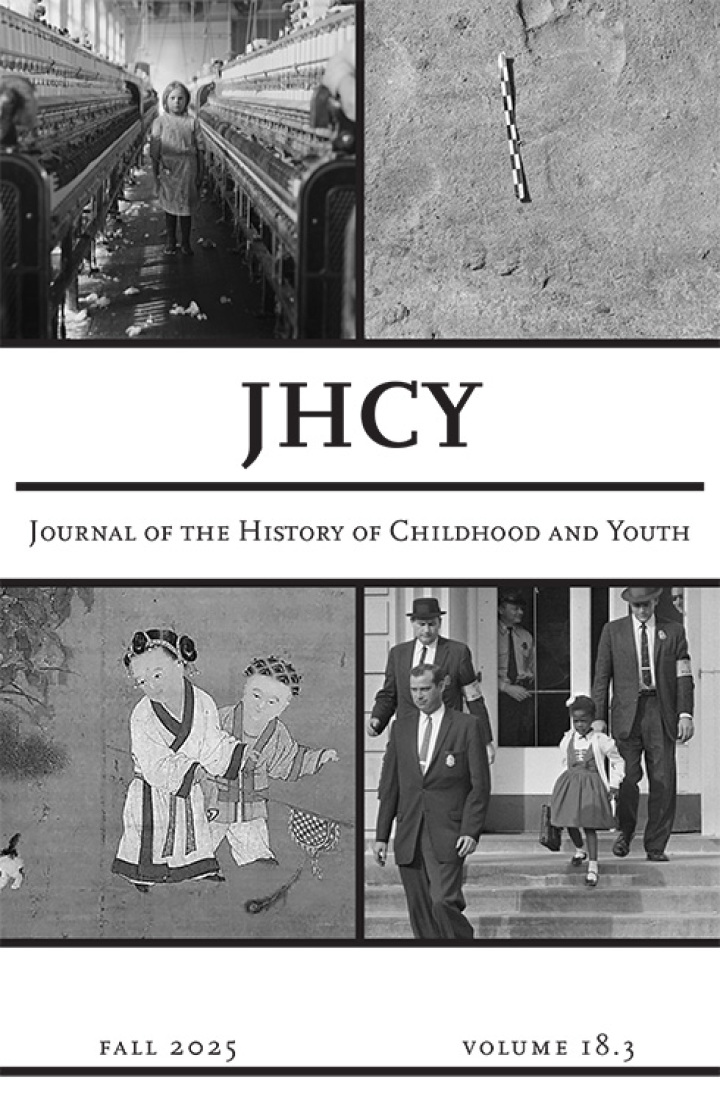
Journal of the History of Childhood and Youth (Rolling Call)
Journal of the History of Childhood and Youth is an international, scholarly, peer-reviewed journal that explores the development of childhood and youth cultures, as well as the experiences of young people across diverse times and places.
Early career authors, first-time authors, and those new to the history of childhood and youth who are interested in examining youth, childhood, and age as analytical categories should consider submitting materials that fit submission guidelines. Those working on topics of intersectionality and childhood including (but not limited to) race, gender, sexuality, sexual identity, class, (dis)ability, and other identity categories are strongly encouraged to submit their work.
Additionally, those who have presented at recent SHCY conferences are especially encouraged to submit articles on their pathbreaking research. Submissions are accepted on a rolling basis. Publishing three issues a year in winter, spring, and summer. Accepted submissions are not subjected to hard-deadlines, and instead will be fitted into the schedule depending on the editorial turn-around.
Contact the editors with any questions: JHCYEditors@gmail.com
For additional information and to submit your work, visit the Journal of the History of Childhood and Youth website.
Contact Information
Julia Gossard and Holly White, Editors, Journal of the History of Childhood & Youth
JHCYEditors@gmail.com
Contact Email
jhcyeditors@gmail.com
URL
https://www.press.jhu.edu/journals/journal-history-childhood-and-youth
Read more
By: Baboki Gaolaolwe-Major
Due Date: Mar, 20, 2025
Youth empowerment
Leave a comment
No Preview Available
The Women, Gender, and Sexuality Network of the Social Science History Association (SSHA) Conference
CFPs The Women, Gender, and Sexuality Network of the Social Science History Association (SSHA) Conference, Chicago, IL, Nov. 20-23, 2025
Call for Papers
February 26, 2025 - March 16, 2025Read More: https://networks.h-net.org/group/discussions/20061164/repost-cfp-women-gender-and-sexuality-network-social-science-history
Read more
By: Baboki Gaolaolwe-Major
Due Date: Mar, 16, 2025
Other
Leave a comment
No Preview Available
JHoK - Call Special Issue 2027
The Journal for the History of Knowledge is now receiving proposals for its 2027 Special Issue. Hereby attached you may find a PDF with all the details. You may also access information about the call and the Journal's scope at the following link: https://journalhistoryknowledge.org/announcement/view/247.
Proposals should contain the following:
A description of the proposed theme (1500-2000 words) highlighting its significance for the history of knowledge
A table of contents (typically 8-12 articles of 8000 words)
Abstracts of the articles
Two-page CVs of the editors; short biographies of the contributors
An outline of the production process up to manuscript submission. All manuscripts must be submitted to the journal by 1 May 2026.
Please send your proposal to: jhokjournal@gmail.com.
Proposal deadline: 1 May 2025Notification of acceptance: by 30 June 2025
Read more
By: Baboki Gaolaolwe-Major
Due Date: May, 1, 2025
Education
Leave a comment

Call for Papers "Disappearances and Preservations" | World History Bulletin | Spring/Summer 2025
Submission Deadline: July 15, 2025
World History Bulletin is seeking quality research essays, experiential learning case studies, and classroom activities for inclusion in its upcoming Spring/Summer 2025 issue, “Disappearances and Preservations in World History.” The issue will explore how our understanding of the past evolves as we revisit, reconsider, and preserve history for future generations.Essays and questions should be directed to Joseph M. Snyder, Editor-in-chief of World History Bulletin, at bulletin@thewha.org .
Contact Information
Joseph M. Snyder
Editor-in-chief
Contact Email
jmsnyder@semo.edu
Read more
By: Baboki Gaolaolwe-Major
Due Date: Jul, 15, 2025
Education
Leave a comment
No Preview Available
Call for Papers: African Intellectual History
Join the conversation marking 25 years since Philip Zachernuk’s Colonial Subjects (2000). Explore the evolution of African intellectual history, from indigenous thought to modern ideas shaping politics, law, culture, and more.
📅 Submission Deadline: January 10, 2025📍 Location: Maryland, USA
Key themes include:✅ Indigenous African political thought✅ Identity and nationhood✅ African medical ideas✅ Biographies of unacknowledged thinkers
Submit a 200-word abstract and bio to jonathan.roberts@msvu.ca Read more: https://networks.h-net.org/group/announcements/20051259/cfp-african-intellectual-history-25-years-philip-zachurnuks-colonial
Let’s reflect, rethink, and reimagine African ideas shaping history!
Read more
By: Baboki Gaolaolwe-Major
Due Date: Jan, 10, 2025
Culture and society
+1
Leave a comment
No Preview Available
CfP Eighth European Congress on Universal and Global History
Greetings Amy Jamison,New items have been posted matching your subscriptions.
Table of Contents
H-Africa: New posted content
Journal of Festive Studies Issue 8 Call for Papers
H-Net Job Guide Weekly Report for H-Africa: 9 September - 16 September [Announcement]
Call for papers: #afrocyberactivism: knowledge production, self-narrations and decolonial strategies in the digital era in France and Spain (Sept 22-25, 2025, U of Constance) [Announcement]
Africa-Asia 3 CfP, Join us in Dakar! (Only two more weeks to submit) [Announcement]
Media Report: Toyin Falola to Inaugurate New Field Called African Ancestral Studies (AAS)
REMINDER: CfP Eighth European Congress on Universal and Global History Critical Global Histories: Methodological Reflections and Thematic Expansions [Announcement]
H-Africa: New posted content
Journal of Festive Studies Issue 8 Call for Papers
Emily Joan Elliott (she/hers)
In addition to our guest-edited section described below, we always welcome submissions on a rolling basis, with no deadline for consideration. Please do think of us if your research or professional background touches on festive practices!
You can also view this announcement as a PDF.
International borders affect you every day. They play a role in determining whether you are a birthright citizen or an unauthorized migrant. They showcase a nation’s ability or inability to guarantee your wellbeing. They factor into immigration, asylum, and national security debates. Media and political analysts often portray borders as places where pathos, illegality, and poverty thrive innately. Yet, they are also places where ordinary citizens make historical claims, or defend, criticize, and even parody immigration and security policy.
While many of those border enactments are rightly serious or even melancholy in tone, some recurring rituals like border festivals foreground whimsical or celebratory narratives. This issue seeks submissions that critically engage with border festivals—recurring ritual enactments performed at, across, or in close proximity to an international boundary line that foster cross-border communication, create opportunities for practical governance, or occasion the memorialization of shared histories. It also provides a platform for scholarly and creative submissions that critically engage how borders and boundaries can be invoked metaphorically through music, literature, performance art, and/or the built environment.
Situated at the crossroads of de-centering the state and embracing the everyday-ness of borders, geographer Chris Rumford’s appeal to “vernacularize” border studies using concepts such as “borderwork” and “seeing like a border” provides an excellent starting point for this invitation to take the study of festive borders and boundaries seriously. His concept of “borderwork” emphasizes “bottom-up” activity and specifically the everyday meaning-making labor, or the bordering practices, of citizens and non-citizens (Rumford 2006, 2008, and 2013). “Seeing like a border” is premised on the idea that borders should be understood as the business of everyone, not just the business of the state. While considerations of state practices are still (and should remain) vital to the study of border festivals, it is safe to say that dominant, static, top-down approaches are incomplete.
Reflecting on anthropological theories that link festive practices to “expected” moments of life transitions (Van Gennep 1960; Turner 1987), David Picard draws attention to the ways in which festivals can also play a role in mediating unanticipated crises such as “the shock of migration” and “environmental disaster”—two global challenges that shape the contemporary study of borders. Indeed, existing studies of border festivals, traditions, commemorations, and enactments elaborate this point on a much larger scale. Methodologically diverse and ranging from festival traditions in the Senegambia and the trans-Volta (Ghana/Togo) that emphasize the “centrality of the margins” (Nugent 2019), to the meticulously choreographed Wagah ceremony that transpires at the India/Pakistan border (Menon 2013), to cultural performances that delineate the Kashmir conflict (Aggarwal 2004), to the long-standing celebration of George Washington’s Birthday on both sides of the U.S.-Mexico border (Peña 2020), to the religiously-inflected and festive revival of historical social groupings between China, Mongolia, and Russia (Billé and Humphrey 2021)—they have underlined how a range of actors make national and ethnic affiliation identity claims public, stage historical memory, recover from natural disasters, and even shape practical governance through stylized acts of crossing and gathering.
Moreover, borders may also be critically invoked in the design and production of “borderless” or “borderlands” celebrations (e.g., No Border Fest, Borderland Music Festival). What stands out across these theorizations (and what makes them the key to study of border festivals) is their inbuilt foundation in performance theory and especially performativity. This special issue invites us to think creatively about the idea that borders are always in the making both at and beyond international boundary lines. In both contexts, they are actualized festively through embodiment and stylized rituals that ffect change in the social world. As the first of its kind, this issue aims to create a generative space for the future study of border festivals. We are looking for a variety of submissions ranging from previously unpublished methodological reflections, artist statements, illustrations, documentaries and interactive media to research reports and evidence-based papers that engage festive border commemorations of any kind.
Some possible themes for exploration include:
conceptualizing borders and boundaries as festive
intangible heritage and cultural memory across borderlands
organization, logistics, and finance
cross-border cooperation and practical governance
global challenges: climate change, mass displacement, public health
participation, reception, conflict, and political efficacy
festive landscapes and built environments
embodiment, choreography, and evolving repertoires
pleasure through collaboration
In line with the interdisciplinary nature of the Journal of Festive Studies, we welcome submissions of original research and analysis rooted in a variety of fields including (but not limited to): social and cultural history, anthropology, archaeology, cultural geography, architecture, technology, musicology, museum studies, literary studies and performance studies. In addition to traditional academic essays, we invite short essays and creative contributions that incorporate digital media such as timelines and maps, photographic essays, digital exhibitions, interactive media, documentaries, illustrations, creative audio, and interviews that engage with festivity.
We invite you to submit an abstract and short bio by January 15, 2025. The submission deadline for completed article manuscripts is August 1, 2025. Please make sure to consult the journal submission guidelines.
If you have any further questions, please contact Elaine A. Peña at penae@wustl.edu.
H-Net: Humanities and Social Sciences Online, the publisher of the Journal of Festive Studies, is committed to open access. All H-Net content, including journals, monographs, and reviews, are freely available to both authors and readers. There are no charges to submit or publish in the Journal of Festive Studies.
References
Aggarwal, Ravina. Beyond Lines of Control: Performance and Politics on the Disputed Borders of Ladakh, India. Durham: Duke UP, 2004.
Billé, Franck and Caroline Humphrey. On the Edge: Life Along the Russia-China Border. Cambridge: Harvard UP, 2021.
Menon, Jisha. Performance of Nationalism: India, Pakistan, and the Memory of Partition. Cambridge: Cambridge UP, 2013.
Nugent, Paul. Boundaries, Communities, and State-Making in West Africa: The Centrality of the Margins. Cambridge, Cambridge UP, 2019.
Peña. Elaine A. ¡Viva George! Celebrating Washington’s Birthday at the U.S.-Mexico Border. Austin: University of Texas Press, 2020.
Picard, David. 2016. “The Festive Frame: Festivals as Mediators for Social Change.” Ethnos 81, no. 4 (2015): 600-616.
Rumford, Chris. “Towards a Vernacularized Border Studies: The Case of Citizen Borderwork.” Journal of Borderlands Studies 28, no. 2 (2013): 169-180.
Salter, Mark B. “Places Everyone: Performativity and Border Studies.” Political Geography 30, no. 2 (2011): 66-67.
Turner, Victor. “Betwixt and Between: The Liminal Period in Rites of Passage.” In Betwixt and Between: Patterns of Masculine and Feminine Initiation, edited by Louise Carus Mahdi, Steven Foster & Meredith Little. pp. 5–22. Chicago, IL: Open Court, 1987.
Van Gennep, Arnold. The Rites of Passage. Chicago, IL: University Chicago Press, 1960.
Read more or reply
Repost
Call for papers: #afrocyberactivism: knowledge production, self-narrations and decolonial strategies in the digital era in France and Spain (Sept 22-25, 2025, U of Constance) [Announcement]
Julia Borst
A continuación encontrará la versión española.
#afrocyberactivismes: production des savoirs, narrations de soi et stratégies décoloniales à l’ère du digital en France et en Espagne
39. Romanistiktag Universität Konstanz | 22.–25. September 2025
Dans cette section, nous nous penchons sur l’émergence du cyberactivisme auprès des collectifs africains et afrodescendants en France et en Espagne. Les deux pays partent de contextes différents, notamment en termes de politique mémorielle par rapport à la colonisation en Afrique d’une part et eu égard à la tradition des mouvements noirs sur le sol européen d’autre part – pensons, p.ex., à la Négritude au début du XXe siècle ou au vif débat autour de l’afropéanité en France. Pour autant, nous assistons, tant en France qu’en Espagne, au boom sans précédent d’une production littéraire et activiste afro au cours des dernières années, dû en partie à une visibilité propice au sein des espaces culturels aussi bien physiques que virtuels, sous la coordination des communautés afrodescendantes et africaines menant de front un activisme à l’intersection, entre autres, de l’antiracisme, du panafricanisme et de l’afroféminisme. De même, consécutivement nous observons l’émergence de nouvelles figures africaines, afrodescendantes et afroeuropéennes assumant leurs identités transversales, politisant ainsi via la littérature, l’art, le digital, etc., les problématiques qui les traversent. C’est le cas, entres autres, de Léonora Miano, Mame-Fatou Niang, Aïssa Maïga, Franklin Nyamsi, Kiyémis et Isabelle Boni-Claverie en France et de Desirée Bela-Lobedde, Lucía Asué Mbomío Rubio, Asaari Bibang, Lamine Thior, Thimbo Samb, Antoinette Torres Soler et Jeffrey Abé Pans en Espagne.
Au-delà des outils traditionnels comme le livre, la presse « classique » ou la télé, les productions qui découlent de l’#afrocyberactivisme puisent aux sources de plusieurs canaux de diffusion parmi lesquels principalement les plateformes numériques, mettant en lumière des épistémologies naguère méconnues. Grâce à l’émergence du « web 2.0 », les consommateur.ices deviennent elleux-aussi des producteur.rices de contenu, participant à la création, production et circulation des savoirs en ligne. En effet, la dimension participative et interactive qu’offre le cybermonde permet aux « groupes minorés » de faire émerger leurs savoirs, discours et modèles culturels grâce à une praxis trop souvent ignorée dans les sphères mainstream. À contre-courant du récit officiel, les différent.e.s acteur.rices proposent des auto-narrations sous des formes aussi bien artistiques, politiques que littéraires. Celles-ci se caractérisent le plus souvent par de mécanismes d’auto-légitimation, notamment la diffusion de grilles de lecture alternatives relevant de façons « autres » de produire de la connaissance et même de faire science à partir d’outils endogènes, affranchis de l’hégémonie de tutelles institutionnelles. On note par conséquent une nouvelle dynamique dans les espaces numériques qui se manifeste par l’émergence exponentielle de blogs/vlogs (p.ex. Desirée Bela, Mrs Roots), de magazines en ligne (Negrxs Magazine, Les pulpeuses magazine), de podcasts (No hay negros en el Tibet, Afrotopiques), de profils et de contenus d’activistes sur différentes plateformes digitales comme YouTube, Facebook, TikTok et Instagram.
L’intérêt scientifique de notre section réside précisément dans l’enjeu épistémique qu’elle soulève : placer les collectifs afroeuropéens au cœur de la réflexion en faisant du cyberespace un cadre d’agentivité. En s’inscrivant dans l’innovation de la recherche académique, nous mettons en lumière les débats autour des nouvelles subjectivités concernant l’afro(euro)péanité, un lieu de négociation qui ravive les tensions à rebours des héritages en vigueur du « passé colonial ». Suivant une perspective décoloniale, la section souhaite accueillir des propositions portant sur des voix « rebelles », dissonantes ou discordantes, en ligne, qui sont symboles d’une résistance, à même de faire émerger des auto-récits afroeuropéens au cœur du cyberactivisme. Nous nous intéresserons notamment à la création de nouvelles stratégies (auto)narratives par lesquelles les acteurs.trices rendent compte de leurs expériences et récits. Par conséquent, la section entend étudier les discours et épistémologies, les subjectivités et corporalités, les routes et réseaux, les imaginaires et esthétiques, les positionnalités et connectivités, etc. qui se manifestent dans les articulations littéraires, artistiques, culturelles, activistes dans l’espace digital et ses intersections avec le monde non-numérique.
Les propositions (en français ou en espagnol) exploreront le phénomène actuel de l’#afrocyberactivisme en France et en Espagne du point de vue épistémique, en discutant des possibilités et des défis de l’espace digital en tant que moyen de décolonisation des savoirs tout en tenant compte des biais algorithmiques. De même, elles se consacreront à de cas concrets –en se focalisant sur un espace culturel ou en adoptant un point de vue comparatif– pour étudier comment ces acteur.rices se racontent elleux-mêmes afin d’explorer leurs stratégies poétiques et esthétiques. Il s’agira de se questionner sur les manières dont les corps racialisés sont racontés, rendus visibles et décolonisés sur les plateformes digitales à travers une « auto-déstéréotypisation » du sujet racialisé. Les participant.e.s analyseront les manières alternatives dont les expériences des personnes africaines, afrodescendantes et afroeuropéennes sont articulées en marge ou hors des filtres du marché littéraire traditionnel en étudiant les nouveaux espaces culturels digitaux et les récits non hégémoniques qui y circulent, ainsi que les poétiques alternatives et les intertextes afro qui sont utilisés pour traduire les imaginaires des communautés marginalisées par le prisme eurocentrique. Des propositions portant sur des questions similaires en Afrique, dans les Caraïbes et les Amériques francophones et hispanophones ainsi que la circulation transnationale des savoirs sont également les bienvenues.
Sans prétendre à l’exhaustivité, les propositions de communication pourront prendre en compte les axes de réflexion indicatifs suivants :
Cyberactivisme, co-productions, décolonisation et désacadémisation des savoirs
Récits contre-hégémoniques et auto-narrations via les plateformes digitales (entre autres, les retentissements des épistèmes antiracistes, panafricanistes, afroféministes etc.)
Stratégies de résistance, esthétiques subversives et justice épistémique articulées aux textes littéraires, artistiques, culturels, activistes en ligne
Afrocyberidentités : afroespagnolité, afrofrancité, afropéanité et récits de soi
Hashtag viral, emoticones, buzz, corps-politique, collectifs afro et cybermétadiscours dans les régions respectives
Littérarisation de l’espace numérique et nouvelles poétiques et stratégies de narration de soi
Contact : afroeuropecyberspace@uni-bremen.de
Cette section est organisée dans le cadre du projet ERC Starting Grant “Afroeurope and Cyberspace : Imaginations of Diasporic Communities, Digital Agency and Poetic Strategies – Unravelling the Textures” (AFROEUROPECYBERSPACE, 101110473), PI : Julia Borst.
#afrocyberactivismos: producción de saberes, auto-narraciones y estrategias decoloniales en la era digital en Francia y España
En esta sección, examinaremos la emergencia del ciberactivismo de colectivos africanos y afrodescendientes en Francia y España. Ambos países subyacen contextos diferentes, sobre todo en cuanto a las políticas de memoria en relación con la colonización en África, por un lado, y la tradición de movimientos negros en territorio europeo, por otro – piénsese, por ejemplo, en la Négritude de principios del siglo XX o en el vivo debate sobre la afropeanidad en Francia. Sin embargo, tanto en Francia como en España, en los últimos años hemos presenciado un auge sin precedentes de la producción literaria y activista afro, en parte debido a una visibilidad favorable en espacios culturales tanto físicos como virtuales, bajo la coordinación de comunidades afrodescendientes y africanas comprometidas con un activismo en la intersección del antirracismo, panafricanismo y afrofeminismo, entre otros. También estamos asistiendo la aparición de nuevas figuras africanas, afrodescendientes y afroeuropeas, que abrazan sus identidades transversales, politizando las cuestiones que les afectan a través de la literatura, el arte, los medios digitales, etc. Entre ellas se encuentran Léonora Miano, Mame-Fatou Niang, Aïssa Maïga, Franklin Nyamsi, Kiyémis e Isabelle Boni-Claverie en Francia y Desirée Bela-Lobedde, Lucía Asué Mbomío Rubio, Asaari Bibang, Lamine Thior, Thimbo Samb, Antoinette Torres Soler y Jeffrey Abé Pans en España.
Además de los canales mediales tradicionales como libros, la prensa ‘clásica’ y la televisión, las producciones resultantes del #afrociberactivismo se inspiran en fuentes de varios canales de distribución, entre los que destacan las plataformas digitales, sacando a la luz epistemologías hasta ahora poco conocidas. Gracias a la aparición de la ‘web 2.0’, lxs consumidorxs también se han convertido en productorxs de contenido, participando en la creación, producción y circulación de saberes en línea. De hecho, la dimensión participativa e interactiva que ofrece el cibermundo permite a los ‘grupos minorizados’ sacar a la luz sus conocimientos, discursos y modelos culturales mediante una praxis que con demasiada frecuencia se ignora en las esferas del mainstream. A contracorriente de la narrativa oficial, lxs diferentes actorxs proponen auto-narrativas artísticas, políticas e incluso literarias. Se plasman en forma de mecanismos de autolegitimación, en particular, la difusión de miradas alternativas, basadas en ‘otras’ formas de producir conocimiento e incluso de hacer ciencia con herramientas endógenas, liberadas de la hegemonía de los guardianes institucionales. Como resultado, vivimos una nueva dinámica en los espacios digitales con la aparición exponencial de blogs/vlogs (por ejemplo, Desirée Bela, Mrs Roots), revistas en línea (Negrxs Magazine, Les pulpeuses magazine), podcasts (No hay negros en el Tibet, Afrotopiques) y perfiles y contenidos activistas en diversas plataformas digitales como YouTube, Facebook, TikTok e Instagram.
El interés científico de nuestra sección reside precisamente en la cuestión epistémica que plantea situar a los colectivos afroeuropeos en el centro de la reflexión, haciendo del ciberespacio un marco de agencia. Inscribiéndonos en la innovación de la investigación académica, destacamos los debates en torno a las nuevas subjetividades relativas a la afro(euro)peanidad, un lugar de negociación que reaviva las tensiones frente a los legados imperantes del ‘pasado colonial’. Desde una perspectiva decolonial, la sección desea acoger propuestas que aborden las voces ‘rebeldes’ en línea, disonantes o discordantes, que son símbolos de resistencia y capaces de hacer emerger autonarrativas afroeuropeas en el seno del ciberactivismo. En particular, nos interesa la creación de nuevas estrategias (auto)narrativas a través de las cuales lxs actorxs dan cuenta de sus experiencias y narrativas. En consecuencia, la sección pretende estudiar los discursos y epistemologías, subjetividades y corporalidades, rutas y redes, imaginarios y estéticas, posicionalidades y conectividades, etc., que se manifiestan en las articulaciones literarias, artísticas, culturales y activistas en el espacio digital y sus intersecciones con el mundo no digital.
Las ponencias (en francés o en español) explorarán el fenómeno actual del #afrociberactivismo en Francia y España desde un punto de vista epistémico, discutiendo las posibilidades y desafíos del espacio digital como medio para descolonizar el conocimiento, teniendo en cuenta los sesgos algorítmicos. También se analizarán casos concretos –centrándose en un espacio cultural o adoptando una perspectiva comparativa– para estudiar cómo estxs actorxs se narran a si mismxs con el fin de explorar sus estrategias poéticas y estéticas. El objetivo será examinar las formas en que los cuerpos racializados son narrados, visibilizados y descolonizados en las plataformas digitales a través de una ‘auto-destereotipación’ del sujeto racializado. Lxs participantes explorarán los modos alternativos en los que las experiencias de personas africanas, afrodescendientes y afroeuropeas se articulan en los márgenes o fuera de los filtros del mercado literario tradicional, estudiando los nuevos espacios culturales digitales y las narrativas no hegemónicas que circulan en ellos, así como las poéticas alternativas y los intertextos afro que se utilizan para traducir los imaginarios de las comunidades marginadas por el prisma eurocéntrico. También son bienvenidas las propuestas que aborden cuestiones similares en África, el Caribe y las Américas francófonos e hispanohablantes, así como la circulación transnacional del conocimiento.
Sin pretender ser exhaustivas, las propuestas de ponencias pueden tener en cuenta las siguientes líneas indicativas:
Ciberactivismo, coproducciones, descolonización y desacademización del conocimiento
Narrativas contrahegemónicas y autonarrativas a través de plataformas digitales (entre otros, el impacto de epistemes antirracistas, panafricanistas, afrofeministas, etc.)
Estrategias de resistencia, estética subversiva y justicia epistémica articuladas en textos literarios, artísticos, culturales y activistas en línea
Afrociberidentidades: afroespañolidad, afrofrancidad, afropeanidad y auto-narrativas
Hashtags virales, emoticones, buzz, política del cuerpo, colectivos afro y cibermetadiscurso en las respectivas regiones
Literarización del espacio digital y nuevas poéticas y estrategias de autonarración
Contacto: afroeuropecyberspace@uni-bremen.de
Está sección está organizada como parte del proyecto ERC Starting Grant “Afroeurope and Cyberspace : Imaginations of Diasporic Communities, Digital Agency and Poetic Strategies – Unravelling the Textures” (AFROEUROPECYBERSPACE, 101110473), PI : Julia Borst.
Contact Information
Organizers:
Odome Angone (U Cheikh Anta Diop de Dakar)
Julia Borst (U Bremen)
Merveilles Mouloungui (U Bremen)
Contact Email
afroeuropecyberspace@uni-bremen.de
URL
https://www.romanistiktag.de/xxxix-romanistiktag/sektionen/sektion-2/
Read more or reply
Repost
Back to top
Africa-Asia 3 CfP, Join us in Dakar! (Only two more weeks to submit) [Announcement]
M.C. van den Haak
Announcement Type
Call for Papers
Location
Senegal
ConFest dates: 11 - 14 June 2025Location: Dakar, SenegalWebsites: English, Français, PortugaisSubmission deadline proposals: 1 October 2024 (only two weeks left!)Building on the multiple encounters, interactions and dialogues initiated at the first Africa-Asia conference (Accra, Ghana, 2015) and the second Africa-Asia Conference (Dar es Salaam, Tanzania, 2018), this third edition of the ‘Africa-Asia, A New Axis of Knowledge’ event seeks to deepen the explorations of new realities and long histories connecting Africa and Asia.The collaborative mission of Cheikh Anta Diop University (UCAD, Dakar, Senegal), Collective Africa-Southeast Asia Platform (CASAP, Bangkok, Thailand) and the International Institute for Asian Studies (IIAS, Leiden, The Netherlands) aims to stimulate inquiry into the rich resources offered by the city of Dakar and its surroundings. In this way, the city itself enables the materialisation of an experiential Conference-Festival (ConFest) that celebrates diversity within academia, but that also extends beyond academia into civil society and the arts.Take this opportunity to engage with other participants thinking both comparatively and holistically about the challenges and possibilities of cross-continental and trans-regional encounters!The proposal deadline (1 October) for Africa-Asia, A New Axis of Knowledge 3 (Africa-Asia 3) is fast approaching. Don’t miss the chance to participate in this exciting event!
Discover the Africa-Asia 3 ClustersThe ConFest aims to facilitate transdisciplinary conversations among participants. There are 12 thematic clusters that correspond to academic trends within the global context. These clusters are meant to be general starting points for your intervention. Explore the 12 Africa-Asia 3 clusters now!
Diverse FormatsThe Africa-Asia 3 ConFest clusters can be explored through various formats, including papers, panels, roundtables, posters, as well as audio-visual and other media. We also welcome suggestions for activities and workshops that will enrich the exchange of knowledge and experiences.
Submit your ProposalsWith less than two weeks left (deadline 1 October), now is the time to submit your proposal! We are inviting proposals in English, French and Portuguese. The full Call for Proposals can be found here: https://www.iias.asia/event/africa-asia-new-axis-knowledge-third-edition
Africa-Asia Book, Craft and Food Fair Publishers and institutes are invited to exhibit at the Book, Craft and Food Fair at Africa-Asia 3 ConFest to present their work to the large number of attendees. Should you be interested in exhibiting at Africa-Asia ConFest 3, please email us: AfricaAsia@iias.nl
Contact Information
For queries about Africa-Asia Confest 3, please visit our website or contact us at AfricaAsia@iias.nl
Contact Email
AfricaAsia@iias.nl
URL
REMINDER: CfP Eighth European Congress on Universal and Global History Critical Global Histories: Methodological Reflections and Thematic Expansions [Announcement]
Christoph Gümmer
CfP Eighth European Congress on Universal and Global History
Critical Global Histories: Methodological Reflections and Thematic Expansions
Linnaeus University, Växjö, Sweden, 10−12 September 2025
Keynote Speakers
Laura de Mello e Souza
Fe Navarrete Linares
Call for Panels and Papers
Since its foundation in 2002, the European Network in Universal and Global History (ENIUGH) has emerged as the leading international association for research and teaching in world and global history. Following seven successful congresses in Leipzig, Dresden, London, Paris, Budapest, Turku, and The Hague, the next ENIUGH congress will be held at Linnaeus University in Växjö, Sweden. The congress will be on site only, although panel chairs may in exceptional cases allow participants to present their papers remotely.
Under the overall theme of “Critical Global Histories” we aim to further discussion, self-reflection, and the exploration of new avenues in global history. Over the past decade, global history has expanded internally (quantitatively and thematically, as well as methodologically and theoretically) and has, in doing so, influenced many other fields of research in the humanities and social sciences. At the same time, the expansion has led to debate and criticism, not least within the field. Objections have been raised against global history’s alleged macro-historical emphasis, connectivity bias, Eurocentrism, Anglophone dominance, and lack of attention to gender perspectives and Indigenous methodologies. Global history has also been accused of being imbued with neo-imperial, teleological, globalizing, exoticizing and neoliberal leanings. In recent years, decoloniality as a research practice and method has raised further questions regarding the situatedness of knowledge and the role of local sources for global history. At the same time, a current nationalist backlash in many countries has led to calls for a return to national history, thereby challenging the fundamental premises of global history.
At the Eighth ENIUGH Congress, we aim to pick up on these discussions and take a step forward by opening a space of dialogue, both between global historians and between global historians and their colleagues in other disciplines who are involved in the study of the global human pasts or who work with transnational, transregional, transcultural approaches in their respective fields. The Eighth ENIUGH-Congress will be a meeting place for scholars from all of the fields that go beyond methodological nationalism and Eurocentrism. We believe that critical thinking – both in the sense of impartial and intellectually disciplined thinking and in the sense of an augmented awareness of the many pitfalls associated with global history – can provide some of the means by which the field can evolve and retain its intellectual vigor and contemporary relevance. By framing the theme in terms of “global histories” in the plural, we aim to promote the inclusion of a broad range of voices, perspectives and orientations within the field, while forcefully rejecting the possibility of insisting on a single, dominating story or grand narrative of global history. The overall theme of the congress will be explored in a series of keynote events, roundtables, and panel discussions and in several of the regular panels and presentations at the congress.
Aside from the events related to the overall theme of the congress, we expect the congress to reflect the entire span of current research in global history, and we look forward to welcoming to Växjö scholars from all over world working on global and world history and related fields of study. Proposals can include a wide range of topics related to global, entangled, and transnational historical processes and phenomena, with no geographic or chronological limitations. While we expect most of the congress delegates to be historians, we also welcome scholars from other disciplines engaged in the study of humanity’s global pasts.
We invite contributions consisting of presentations of original research and empirically grounded work in progress, as well as theoretical, methodological, ethical, and historiographical reflections. We particularly encourage contributions that reflect on how critical thinking can be applied in global historical investigations. Although the main language of the congress will be English, individual presentations and panels in other languages can be accommodated (see further below).
In particular, we welcome contributions (both panels and individual papers) tailored to one of the following themes:
Temporalities and periodizations in global history
Ethical aspects of doing global history
Expanding the global archive
Multivocality in global history
Global history and decoloniality
Transdisciplinary approaches
Indigenous perspectives and methodologies
Challenging modernity from the perspective of global history
National history, nationalist backlash, and identity politics
Global environmental history
Nordic colonialism
In addition to the main conference themes, we also invite proposals dealing with relations, transfers and entanglements between states, peoples, communities and individuals located in or spanning different parts and regions of the world.
Proposals
We invite proposals for panels, double panels, roundtables, and individual papers. Papers and presentations may be in any language, but abstracts for all panels, roundtables, and papers must be provided in English. Panel chairs must ensure the openness, accessibility, and coherence of their panel, and it is recommended that Q&A sessions be held in English regardless of the language of the presentations. All congress delegates are expected to participate on site in Växjö. In exceptional circumstances, panel chairs may allow a minority of presentations to be held remotely.
Panels may comprise up to four presentations, and double panels may comprise up to eight presentations, in addition to commentators and chairs. Panels must consist of scholars representing at least two different institutions in at least two different countries. Double panels must include participants from at least three different institutions in at least three different countries.
Roundtables may include up to five participants, in addition to commentators and chairs. Like double panels, roundtables must include scholars from at least three different institutions in at least three different countries.
We also welcome proposals for individual papers, which, if accepted, will be assigned to a panel by the steering committee of ENIUGH. Papers that speak to one or several of the themes listed above are particularly welcome, and the theme of most relevance to the proposal should be indicated in the submission form.
Submissions
All abstracts for panels and papers must be submitted by October 15 2024 via the registration tool on our website. Please note that all speakers of a panel must submit their papers individually in addition to the collective panel submission.
Abstracts for panels should be 250 – 300 words long and should indicate all panelists, their institutional affiliations as well as their paper titles. Additionally, panel abstracts should be pertaining to one of the conference themes.
Abstracts for papers should be 200 – 250 words long and indicate whether the paper is submitted as an individual paper or as part of a panel. In the latter case the abstract should name the panel title as well as the convenor’s name.
All abstracts should be in English. If the presentation is in a language other than English, please state this in the abstract. (Papers are selected solely on the basis of content, not linguistic criteria.)
Abstracts should also indicate whether you plan to participate in person or online. Please note that the convenor and a majority of participants in each panel must participate on site.
Selected panels and papers will be notified in December 2024.
Contact Information
Panel/Paper Submission and Registration: https://research.uni-leipzig.de/~eniugh/congress/registration-tool/
Read more
By: Jayden Hewitt
Due Date: Oct, 15, 2024
Education
Leave a comment
No Preview Available
Associate or Full Professor of International History and Politics
The Graduate Institute of International and Development StudiesGeneva, Switzerland
invites applications for a full-time position at the rank of
ASSOCIATE OR FULL PROFESSOR of INTERNATIONAL HISTORY AND POLITICS with a specialisation in European History – “Europe and the World”
starting on 1 September 2025 or on a mutually agreed-upon date.
The Graduate Institute of International and Development Studies is seeking to recruit an Associate or Full Professor of International History and Politics for the Pierre du Bois Chair “Europe and the World”. Candidates must hold a Ph.D. in history. They must have an outstanding teaching and research track record and be able to make a significant long-term contribution in the field “Europe and the World”.
The selected candidate will be appointed as the Pierre Du Bois Chair. They must show an openness to comparative analyses and an interest to innovate from a methodological point of view. We prioritise candidates whose expertise is linked to Europe’s historical relationships and interactions with the rest of the world. We are particularly interested in candidates who work on1) the history of European imperialisms, empires and colonialism2) aspects of transnational history connecting Europe and other parts of the world (including but not restricted to the circulation of ideas and the impact of migratory flows)3) the impact and interaction of developments in Europe (broadly understood) with global security
The successful candidate will teach postgraduate courses and supervise master’s theses and doctoral dissertations in the Department of International History and Politics. They will also be called upon to teach classes and supervise master’s theses in the Graduate Institute’s Interdisciplinary Programme. The ability to work with colleagues from the other disciplines researched and taught at the Institute – International Economics, International Relations & Political Science, Anthropology & Sociology, and International Law – is expected.
The teaching language is either English or French. Prior knowledge of French is not required, but the successful candidate is expected to acquire at least a passive knowledge of it within two years of being hired.
Candidates are required to submit a motivation letter, a CV and a list of publications. Long-listed candidates will be asked for additional documents, including three reference letters.
Application deadline: 12 August 2024
To apply: https://erecruit.graduateinstitute.ch/professeurs/
Please note that applications received by post will not be considered.
For more information, candidates are encouraged to consult the Institute’s website, as well as the site of the Department of International History and Politics:https://www.graduateinstitute.ch/https://www.graduateinstitute.ch/international-history-politics
The Institute is an equal opportunity employer and value diversity. We do not discriminate on the basis of age, marital status, disability status, race, national origin, colour, gender, sexual orientation or religion.
Contact:
https://erecruit.graduateinstitute.ch/professeurs/
Website:
https://erecruit.graduateinstitute.ch/professeurs/
Primary Category:
European History / Studies
Secondary Categories:
World History / Studies
Posting Date:
06/11/2024
Closing Date
08/11/2024
Read more
By: Jayden Hewitt
Due Date: Aug, 11, 2024
Education
Leave a comment
No Preview Available
Cornell University, History Mellon Postdoctoral Fellowship
With the sponsorship of the Society for the Humanities, the Department of History invites applications for a two-year Mellon Postdoctoral Fellowship position beginning August 1, 2025. The fellowship carries a stipend of $62,000/year.
We seek a scholar with a PhD in History who is also grounded in theoretical and methodological public history approaches, in particular Museum Studies, Historic Preservation, or digital history. This position will involve developing new directions in public history teaching and research, and joining an interdisciplinary group of scholars and students whose projects focus on historic sites, digital media, museums, libraries, archives, and/or local communities. Geographic area and historical era open, but we prefer candidates who focus on climate or energy history, African American women’s history, or LGBTQ+ history in the Americas. The postdoc will teach a lower-level and an upper-level course each year that engage with public history topics and methods (involving, for instance, monuments, museums, oral history, historic preservation, walking tours, historically engaged performance, or documentary film). These courses would emphasize applied forms of historical engagement by undergraduates such as conducting archival research, learning and practicing oral history methods, developing curatorial skills, actively engaging with local and global individuals and communities, and asking theoretical questions about history as a process of knowledge production. The postdoc would play a central role in the Public History Initiative (PHI) and the Critical Inquiry into Values, Imagination, and Culture (CIVIC) initiative, by offering interdisciplinary courses and programming (such as lecture series) relevant to their specific field.
Applicants eligible for the Mellon Postdoctoral Fellowship for the 2025-26 and 2026-27 academic years include those who have received the Ph.D. degree after August 1, 2021 and no later than June 30, 2025. Applicants who do not have the Ph.D. in hand at the time of application must include a letter from the committee chair or department stating that the Ph.D. degree will be conferred before the term of the fellowship begins. International applicants are welcome to apply, contingent upon visa eligibility.
Application materials must be submitted via Academic Jobs Online position #27746 by October 1, 2024.
Contact:
Michael Williamson
mdw84@cornell.edu
Website:
https://academicjobsonline.org/ajo/jobs/27746
Primary Category:
Public History
Secondary Categories:
African American History / StudiesEnvironmental History / StudiesWomen, Gender, and Sexuality
Posting Date:
06/14/2024
Closing Date
10/01/2024
Read more
By: Jayden Hewitt
Due Date: Oct, 1, 2024
Education
Leave a comment

No Preview Available
Call for Papers: Colonialism and Development
Yearbook for the History of Global Development
ed. Iris Borowy, George Bob-Milliars, Nicholas Ferns, and Corinna R. Unger
Colonialism and Development
Joseph Hodge, Miguel Bandeira Jerónimo, and Sarah Stockwell, coords.
Call for Papers
The historical understanding of the multifaceted trajectories of development – as a set of contested discourses, as multiple institutional complexes and as a heterogenous repertoire of policies and practices – has evolved significantly in the past few years. This scholarship has included a fresh historical assessment of ‘colonial development’, critically engaging with its varying chronologies and dynamics; geographies and actors; motivations and ends; and its repertoires and consequences, planned and unintended. We now have a rich literature that engages with the diverse contexts, dynamics and problems of development and its intersection with other major historical phenomena of the twentieth century, such as the institutionalization of international organizations, the intensification of urbanization and industrialization, the widening of globalizing dynamics and global integration, decolonization, and the emergence of the ‘Cold War’ and the ´Third World’. This volume aims to register many of these historiographical achievements specifically as they relate to colonialism offering a critical overview of existing scholarship and documenting its variety and richness, while also probing existing chronologies (e.g., the colonial/postcolonial) and geographies of development.
While engaging with established fields of interest (for example, those related to international development; the relationship between science and development; and the connected histories of politics and development in a context of global decolonization), the volume seeks to open up new avenues of enquiry by adopting a more capacious approach to ‘colonial development’. It proposes to do this, first, by incorporating a wide range of empires and sites of development and exploring their connected histories, focusing on the circulation, and selective appropriation, of ideas, knowledge, human resources, and of capital and goods associated with development. Secondly, the volume will foreground a greater variety of state actors than usual (the military, for example) as well as the non-state actors that alongside colonial, international, and trans- and inter-imperial organizations were key players in the historical unfolding of development in colonial contexts. These non-state actors include missionaries, churches, NGOS, and philanthropic agencies; and banks, commercial organizations, and especially, mining and plantation companies. Finally, the volume will explore development in all its different modalities. These might include representations and other cultural expressions of development (from literature and film to advertising); the techniques, technologies and the business of development (including infrastructures, patent history, and companies); ecological issues (from environmental consequences to the birth of ‘sustainable development’); the gendered dynamics associated with developmental discourses and practices; or the role played by racism and forms of racialization in the formulation and enactment of development policies (including in relation to population politics, and the spatialization of difference and welfare policies).
The expansive approach taken by our volume will be underpinned by two methodological goals. The first is to promote the cross-fertilization of historiographies focused on (colonial) development and those dealing with human rights, humanitarianism, philanthropy, welfare, security, and business. For example, contributions to the volume might explore the intersection between developmental projects and educational and welfare schemes (e.g., housing or public health). Second, the edited collection seeks to incorporate local voices and arguments, expanding the number of individuals and communities (men and women) understood as contributing to the dynamics of development (e.g., farmers, workers, ‘traditional’ authorities and white settlers, diverse ‘middleman groups’, and ‘experts’). It will seek to recover their inspirations and expectations, resources and agency, aims, solidarities and commitments. In short, a (plural) view from the ‘global south’, including its articulation with wider individual and institutional networks (in the ‘global north’, but also in other geographies of the ‘global south’) is fundamental to new, critical histories of (colonial) development.
The editors would welcome contributions dealing with these questions and addressing the following themes (including contributions that connect two or more themes), to be published at the series Yearbook for the History of Global Development (De Gruyter: https://www.degruyter.com/serial/yhgd-b/html?lang=en#volumes ), in early 2025:
(1) Genealogies of colonial development: chronologies and periodizations
(2) Geographies colonial development: the spatialities, scales, and sites of developmentalism
(3) The internationalization of (colonial) development: national, international, transnational, inter-imperial and trans-imperial, connected histories of development
(4) Trajectories of colonial development: experts and expertise, networks and careers;
(5) Cultures and manifestations of colonial development: representations and materialities of development
(6) Gendered development: women and the historical dynamics of developmentalism
(7) The political economy of development: techniques, technologies, and the business of developmentalism
(8) The sciences of development: knowledge, institutions, practices
(9) The racialization of development: race and racism in the idioms and repertoires of development
(10) The agents of developmentalism: state and non-state actors
(11) Ecologies of development: environmental problems and consequences
(12) Development and the ‘social question’ in colonial contexts: connected histories of welfare, education, humanitarianism, human rights, housing.
(13) The infrastructures of development: communication, energy, logistics
(14) Repressive developmentalisms: the intersections between security and development
If interested, please send your proposal (title, abstract of 300–500 words, and a 2-page CV) to colonialism.development@gmail.com by August 30, 2023.
Read more
By: Raquel Acosta
Due Date: Aug, 30, 2023
Culture and society
Leave a comment
Call for papers "Women and the history of state building in postcolonial African countries"
Conference - 6-7 June 2024 - Department of African Studies - University of Vienna, Austria
As African countries became independent, being represented in state institutions was a political goal for many women, but undoing the legacy of colonial politics and gaining public visibility in the political field was no easy task. Despite serious difficulties and challenges, women vied for offices, campaigned, talked and wrote about politics, voted, and expressed their ideas within various institutions (organizations, political party, unions, local and national assemblies…). They were strategic actors in the processes of postcolonial state building. Yet, their history has remained confined to a separate section of African politics, the “women’s section”. While African political history has long been dominated by male actors, the history of African women in politics has been primarily written from the perspective of grassroots politics and women’s role in social and economic development projects. A new wave of scholarship has recently begun to address this discrepancy in the historiography, with scholars exploring the ways women have challenged established political orders “from the top”, from creative writing to frontal opposition to presidential rule (see for example (Tchouta Mougoué, 2019; Musila, 2020; Adima 2022). This literature shows that African women’s politics must be placed at the heart of narratives of state building, party politics, governance and presidential rule, that political narratives need to be complexified, concepts rethought, and that new sources must be sought to acknowledge African women’s complex modes of political imagination, action, and language.Building on this trend, this conference aims to retrieve histories of African women’s contribution to the postcolonial politics of state building. Who were the women who vied for positions of power, how/why did they campaign (or were appointed), for which ideas? What did they achieve during their political mandates, which challenges did they face? What did they do afterwards, what impact did they have? Which sources are available to document their stories? What are the methodological challenges that emerge when retrieving these sources and/or writing these histories?
Case studies focusing on specific leaders, historical periods and/or countries are welcome. Papers may explore (but are not confined to) the following themes:
· Documenting generations of African female politicians: pioneers, outsiders, through the lens of elite reproduction…
· Documenting women’s modes of action in elite politics: via state and non-state organizations; informal and formal networks; African women’s roles in connecting multiple political spaces: at home, in local, national, or international politics.
· Documenting the lives of non-conventional actors and the politics of silencing, cooptation, or amnesia.
· Sources & Methodologies to retrieve women’s postcolonial political history; oral, visual, and/or material sources; personal testimonies.
· Political languages: use of symbolic political languages (motherhood, politicization of the body…); how precolonial forms of politics inform African women’s postcolonial politics/activism; feminist discourses (applying a longue durée perspective).
· Conceptual reflections: exploring the politics of “empowerment” and “disempowerment”; “women’s political space”…
Please send an abstract (250 words max) and a short biography (100 words) to womenafricanhistory2024@univie.ac.at before 15th October 2023. Limited funding is available to cover hotel and travel costs for participants based in African countries. Please indicate in your proposal if you require financial assistance. Thank you!
Read more
By: Raquel Acosta
Due Date: Oct, 15, 2023
Culture and society
+1
Leave a comment
CALL FOR APPLICANTS: Sport, Leisure, and the Body in African History Writing Workshop
Publishing in highly ranked international academic journals is increasingly seen as a marker in personal career advancement and development, as is citation, which is more common from higher ranked journals. These journals are usually linked to institutions in, and normally dominated by scholars from, the Global North, resulting in significant barriers to publication for scholars from the Global South. This intentional and unintentional silencing of scholars and perspectives from the Global South perpetuates the dominance of outlooks and understandings grounded in the Global North across most subject areas.
With a goal to increase publication of African sports histories by scholars in Africa within The International Journal of the History of Sport and Sport in History, the editors of the two journals, with support from the British Academy, are organizing a writing workshop in Johannesburg, South Africa. The writing workshop on History of Sport, Leisure, and the Body in Africa would take place over two years. This writing workshop invites Early Career Scholars based in Central and Southern Africa who are working on sport history broadly conceived to transform their research into articles that will be published in special issues of The International Journal of the History of Sport and Sport in History. Individuals selected will participate in a series of three workshops held in November 2023, April 2024, and January 2025.
The workshop aims to bring the emerging African sport historians together, have their articles workshopped, prepare scholarship for English-language publications in top sport history journals, and build potential collaborations among an engaging group of sports scholars. The workshop is intended to be practice-based with a view to developing high quality outputs and facilitate publication. It is our hoped that this will provide the basis of an enduring scholarly network.
This workshop will support up to 12 scholars who reside in the 23 countries of Central and Southern Africa (please see the list of eligible countries below) who work on sport history conceived broadly, including the histories of physical education, leisure, and the body.
Selected participants will be expected to submit a 5,000-word draft of an article by 1 October, 2023. The draft will be workshopped at the three-day workshop in Johannesburg in November 2023, with participants reading another participant’s article prior to the workshop. The organisers will work with the participants to develop their articles at this workshop with time allocated to discuss, reflect, write, and revise with their peers. The organisers will also devote time to developing future publication and funding opportunities for participants to further advance their careers.
The second workshop will be a one-day online event in April 2024 will present their near complete manuscripts and will receive comments on how to get them ready to submit to the journals in the summer of 2024. The final event will be a 1.5-day workshop in Johannesburg to discuss the writing, editing, peer-review and publication process and future publication opportunities for participants.
All travel, accommodation, subsistence, and visa costs for the two trips to Johannesburg will be covered for all participants. To support scholars with caring responsibilities, the organisers are also able to pay for childcare (either in the participant’s home country or on site in Johannesburg) for up to five participants. The organisers are also able to support up to two scholars for whom English is not their primary working language with the full editing service from Taylor and Francis.
Applicant requirements:--must be late stage doctoral student or have received the PhD within the previous five years (from 2018-2023)--must reside in one of the following countries: Angola, Botswana, Burundi, Cameroon, Central African Republic, Comoros, Democratic Republic of the Congo, Equatorial Guinea, Eswatini, Gabon, Kenya, Lesotho, Madagascar, Malawi, Mozambique, Namibia, Tanzania, Republic of Congo, Rwanda, South Africa, Uganda, Zambia, Zimbabwe
Applicants should email the following by 15 June 2023:• 1 page abstract of research for proposed article• 2 page curriculum vitae• if residing outside of South Africa, please note the passport held and whether a visa for South Africa is required, along with the preferred airport departure• please note in application if childcare is needed
Timeline:Application submission deadline: 15 June 2023Announcement of selection: late June 20235000 words First Draft due: 1 October 2023Workshop #1 (Johannesburg): 20-23 November 2023Workshop #2 (online): April 2024 (date tbc)Workshop #3 (Johannesburg): January 2025 (dates tbc)
Any questions should be directed to Dr. Heather Dichter at heather.dichter@dmu.ac.uk
Organisers:Dr. Heather Dichter, De Montfort UniversityDr. Tarminder Kaur, University of JohannesburgDr. Malcolm MacLean, University of Gibraltar and De Montfort UniversityProfessor Kay Schiller, Durham University
Read more
By: Raquel Acosta
Due Date: Jun, 15, 2023
Culture and society
+1

Leave a comment