

Results for "research"
113 Results
No Preview Available
Jennifer Ward Oppenheimer Research Grant Program
Donor: Jennifer Ward Oppenheimer Research Grant
Grant Type: Grant
Grant Size: $100,000 to $500,000
Countries/Regions: Algeria, Angola, Benin, Botswana, Burkina Faso, Burundi, Cameroon, Cape Verde, Central African Republic, Chad, Comoros, Congo (Brazzaville), Congo DR, Cote DIvoire (Ivory Coast), Djibouti, Egypt, Equatorial Guinea, Eritrea, Ethiopia, Gabon, Gambia, Ghana, Guinea, Guinea-Bissau, Kenya, Lesotho, Liberia, Libya, Madagascar, Malawi, Mali, Mauritania, Mauritius, Mayotte, Morocco, Mozambique, Namibia, Niger, Nigeria, Reunion, Rwanda, Saint Helena, Sao Tome And Principe, Senegal, Seychelles, Sierra Leone, Somalia, South Africa, Sudan, Swaziland, Tanzania, Togo, Tunisia, Uganda, Western Sahara, Zambia, Zimbabwe, South Sudan
Area: Biodiversity, Conservation, Environment, , PhD Holder, Research
The Jennifer Ward Oppenheimer Research Grant Program is currently accepting applications to support early career scientists to conduct impactful research projects focused on biodiversity and conservation in Africa.
For more information, visit https://jworesearchgrant.org/grant-application/
Premium Link: https://grants.fundsforngospremium.com/opportunity/op/jennifer-ward-oppenheimer-research-grant-program
Read more

By: Aaron Dorner
Due Date: May, 1, 2026
Agri-food systems
+3
Leave a comment
No Preview Available
CFPs: Evaluating Scalability and Impact of GenAI and Agentic AI in the Water and Wastewater Sector
Donor: Water Research Foundation
Grant Type: Grant
Grant Size: $100,000 to $500,000
Countries/Regions: All Countries
Area: Artificial Intelligence, Research, Water
The Water Research Foundation invites proposals for a research initiative aimed at assessing the scalability, reproducibility, and impact of Generative AI and Agentic AI in the water and wastewater sector.
For more information, visit https://portal.waterrf.org/outbound-grant-details/3324
Premium Link: https://grants.fundsforngospremium.com/opportunity/op/CFPs-Evaluating-Scalability-and-Impact-of-GenAI-and-Agentic-AI-in-the-Water-and-Wastewater-Sector
Read more
By: Aaron Dorner
Due Date: May, 20, 2026
Agri-food systems
+2
Leave a comment
No Preview Available
RFPs: Alternative Approaches to Water Shutoffs
Deadline: May 20, 2026
Donor: Water Research Foundation
Grant Type: Grant
Grant Size: $100,000 to $500,000
Countries/Regions: All Countries
Area: Water
The Water Research Foundation is inviting proposals for a research project focused on identifying sustainable alternatives to water shutoffs for nonpayment while maintaining service continuity and financial stability.
For more information, visit https://portal.waterrf.org/outbound-grant-details/74
Premium Link: https://grants.fundsforngospremium.com/opportunity/op/rfps-alternative-approaches-to-water-shutoffs
Read more
By: Aaron Dorner
Due Date: May, 20, 2026
Agri-food systems
+2
Leave a comment

No Preview Available
Call for Nominations: Emerging Leader Award
Donor: The Mark Foundation for Cancer Research
Grant Type: Awards, Prizes and Challenges
Grant Size: $100,000 to $500,000
Countries/Regions: All Countries
Area: Cancer, , , Leaders, PhD Holder, Innovation, Research, Science
Applications are now open for the Mark Foundation Emerging Leader Awards to support innovative cancer research from the next generation of leaders.
For more information, visit https://themarkfoundation.org/emerging-leader-award-2/
Premium Link: https://grants.fundsforngospremium.com/opportunity/op/call-for-nominations-emerging-leader-award
Read more
By: Aaron Dorner
Due Date: Apr, 30, 2026
Health and nutrition
+2
Leave a comment

No Preview Available
Entries open for IBRO Rising Stars Awards
Donor: International Brain Research Organization
Grant Type: Awards, Prizes and Challenges
Grant Size: $10,000 to $100,000
Countries/Regions: Afghanistan, Albania, Algeria, Andorra, Angola, Antigua and Barbuda, Argentina, Armenia, Australia, Austria, Azerbaijan, Bahamas, Bahrain, Bangladesh, Barbados, Belarus, Belgium, Belize, Benin, Bhutan, Bolivia, Bosnia And Herzegovina, Botswana, Brazil, Brunei, Bulgaria, Burkina Faso, Burundi, Cambodia, Cameroon, Canada, Cape Verde, Central African Republic, Chad, Chile, China, Colombia, Comoros, Congo (Brazzaville), Congo DR, Costa Rica, Cote DIvoire (Ivory Coast), Croatia, Cuba, Cyprus, Czech Republic, Denmark, Djibouti, Dominica, Dominican Republic, Ecuador, Egypt, El Salvador, Equatorial Guinea, Eritrea, Estonia, Ethiopia, Fiji, Finland, France, Gabon, Gambia, Georgia, Germany, Ghana, Greece, Grenada, Guatemala, Guinea, Guinea-Bissau, Guyana, Haiti, Honduras, Hong Kong SAR, Hungary, Iceland, India, Indonesia, Iran, Iraq, Ireland, Israel, Italy, Jamaica, Japan, Jordan, Kazakhstan, Kenya, Kiribati, South Korea, North Korea, Kuwait, Kyrgyzstan, Laos, Latvia, Lebanon, Lesotho, Liberia, Libya, Liechtenstein, Lithuania, Luxembourg, Macedonia, Madagascar, Malawi, Malaysia, Maldives, Mali, Malta, Marshall Islands, Mauritania, Mauritius, Mexico, Micronesia Federated States Of, Moldova Republic Of, Monaco, Mongolia, Morocco, Mozambique, Burma(Myanmar), Namibia, Nauru, Nepal, Netherlands, New Zealand, Nicaragua, Niger, Nigeria, Norway, Oman, Pakistan, Palau, Palestinian Territories, Panama, Papua New Guinea, Paraguay, Peru, Philippines, Poland, Portugal, Qatar, Romania, Russia, Rwanda, Saint Kitts And Nevis, Saint Lucia, Saint Vincent And The Grenadines, Samoa, San Marino, Sao Tome And Principe, Saudi Arabia, Senegal, Seychelles, Sierra Leone, Singapore, Slovak Republic, Slovenia, Solomon Islands, Somalia, South Africa, Spain, Sri Lanka, Sudan, Suriname, Swaziland, Sweden, Switzerland, Syria, Taiwan, Tajikistan, Tanzania, Thailand, East Timor (Timor-Leste), Togo, Tonga, Trinidad And Tobago, Tunisia, Turkey, Turkmenistan, Tuvalu, Uganda, Ukraine, United Arab Emirates, United Kingdom, United States, Uruguay, Uzbekistan, Vanuatu, Venezuela, Viet Nam, Yemen, Zambia, Zimbabwe, Montenegro, Serbia, Kosovo, South Sudan
Area: Capacity Building, , , Research
The IBRO Rising Stars Awards provide start-up grants to support early career neuroscientists in establishing independent research laboratories and advancing their professional trajectories.
For more information, visit https://ibro.org/grant/rising-stars-awards/
Premium Link: https://grants.fundsforngospremium.com/opportunity/op/entries-open-for-ibro-rising-stars-awards
Read more
By: Aaron Dorner
Due Date: Apr, 15, 2026
Health and nutrition
+3
Leave a comment
No Preview Available
West Africa and Sahel Social Science Research Incubator Program
Countries/Regions: Benin, Burkina Faso, Cameroon, Cape Verde, Chad, Cote DIvoire (Ivory Coast), Eritrea, Ethiopia, Gambia, Ghana, Guinea, Guinea-Bissau, Liberia, Mali, Mauritania, Niger, Nigeria, Saint Helena, Senegal, Sierra Leone, Sudan, Togo
Area: Economic Development, Researchers, Research, Technology, Social Sciences
The Global Development Network is inviting applications to support diverse stakeholders to align digital knowledge with public policy priorities in West Africa and the Sahel.
For more information, visit https://www.gdn.int/appel-à-manifestation-d’intérêt-«-transformations-numériques-et-reconfigurations-des-enjeux-de
Premium Link: https://grants.fundsforngospremium.com/opportunity/op/west-africa-and-sahel-social-science-research-incubator-program
Read more
By: Aaron Dorner
Due Date: Apr, 25, 2026
Culture and society
+1
Leave a comment

No Preview Available
Request for Proposals: Clinical Cancer Research Grant Program
The Clinical Cancer Research Grant Program has announced its applications to support innovative, patient-centered interventional clinical trials aimed at improving cancer treatment options and quality of life.
For more information, visit https://www.risingtide-foundation.org/clinical-cancer-research-how-to-apply/
Premium Link: https://grants.fundsforngospremium.com/opportunity/op/request-for-proposals-clinical-cancer-research-grant-program
Read more
By: Aaron Dorner
Due Date: Jun, 22, 2026
Agri-food systems
+5
Leave a comment
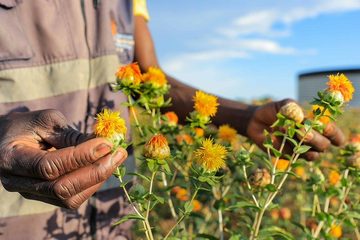
CALL FOR RESEARCH GRANT PROPOSALS UNDER THE SUPPORT TO REGIONAL MULTI-ACTOR RESEARCH NETWORK (RMRN)
1.0 Background
Agroecology has emerged as a critical and transformative approach for addressing Africa’s persistent food and nutrition security challenges while simultaneously safeguarding environmental sustainability, biodiversity, and climate resilience. Across Sub-Saharan Africa, food systems are increasingly under pressure from climate variability, land degradation, declining soil fertility, loss of biodiversity, and socio-economic inequalities that disproportionately affect smallholder farmers, women, and youth. Conventional agricultural approaches have often struggled to respond adequately to these complex and interconnected challenges, highlighting the need for more holistic, inclusive, and sustainable food system solutions.
Agroecology offers such a pathway by integrating ecological principles, local knowledge, and socio-economic considerations into agricultural production and food system transformation. By promoting biodiversity, improving soil health, strengthening resilience, enhancing resource recycling, and fostering synergies within farming systems, agroecology contributes not only to increased and more stable productivity but also to improved livelihoods, nutrition outcomes, and environmental integrity. Importantly, agroecology emphasizes co-creation and sharing of knowledge among farmers, researchers, policymakers, and other stakeholders, making it particularly relevant for Africa’s diverse agro-ecological and socio-cultural contexts. Despite growing evidence of the benefits of agroecology, its systematic integration into national agricultural policies, investment plans, and development strategies across Africa remains limited. This gap is often attributed to weak science-policy interfaces, insufficient policy-relevant evidence, and limited platforms for dialogue between researchers, practitioners, and decision-makers. As a result, agroecology is frequently under-represented in public investment frameworks and national agricultural development agendas, constraining its scaling and wider adoption.
Under the NDICI AFRICA/2023/447-700 programme, the Forum for Agricultural Research in Africa (FARA), in collaboration with the Regional Universities Forum for Capacity Building in Agriculture (RUFORUM), is implementing a set of coordinated actions aimed at addressing these gaps. The programme seeks to strengthen science–policy interfaces, support advocacy efforts, and enhance evidence-based decision-making to ensure that agroecology becomes an integral component of national and regional agricultural and food system strategies in Sub-Saharan Africa. By leveraging FARA’s continental science agenda and RUFORUM’s extensive network of universities, researchers, and Regional Multi-stakeholder Research Networks (RMRNs) and Regional Centres of Excellence for agroecology (RCoEs), the programme creates a platform for sustained engagement between science, policy, and practice.
A key element of this initiative is the provision of targeted financial support to selected researchers and scientists to generate applied, policy-relevant agroecology research outputs. This support is intended to enable the production of decision-support information, policy-oriented studies, and knowledge products that respond directly to the needs of policymakers, practitioners, and advocacy actors. The supported research will contribute to raising awareness, strengthening advocacy, and informing the integration of agroecology principles and practices into national agricultural investment plans, sector policies, and development programmes.
Through this approach, the programme aims to amplify African-led research and innovation in agroecology, strengthen the role of researchers as contributors to policy processes, and support evidence-based advocacy for sustainable, inclusive, and resilient food systems. Ultimately, these efforts will contribute to advancing agroecology as a recognized and prioritized pathway for achieving food security, environmental sustainability, and socio-economic development across the continent.
2.0 Objectives of the Call
The primary objective of this grant is to provide financial support to researchers and experts to conduct specialized studies that will contribute to the advocacy work and
Feed into decision-support information systems for science-policy interfaces.
Disseminate and publicize selected agroecology scientific/research outputs.
Increase awareness and policy support for agroecological principles and practices.
Demonstrate the contribution of agroecology to the transformation of African food systems.
3.0 Scope of Studies & Priority Areas
Proposals must directly address agroecology principles and align with African agricultural priorities.
Key areas include:
Agroecological Principles, including but not limited to Biodiversity, soil health, recycling, synergies, resilience, and co-creation of knowledge.
Policy Advocacy, strategies for the recognition of agroecology as an activity of national interest.
The role of agroecology in food and nutrition security.
Gender-sensitive outreach and social inclusion in agroecological practices.
4.0 Eligibility Criteria
This is a closed-competitive call restricted to applicants who meet the following criteria:
Applicants must be members of the RMRN/RCoE Consortium, PANAP Networks Member institution. Confirmation of institutional or network affiliation confirmation is required.
The call is open to students, early-career researchers, academic staff, farmer organizations, NGOs, or research institutes.
Applicants must be based in Africa, either through citizenship or institutional affiliation.
Applicants must demonstrate the ability to conduct applied research or community-based projects, including access to research sites and/or farmer networks.
Applicants must demonstrate compliance with research ethics standards, particularly when engaging with indigenous communities and traditional knowledge systems.
5.0 Financial Support & Modalities
Maximum Grant Amount: Up to EUR 5,000 per selected proposal. A maximum of ten (10) proposals will be funded under this call
Eligible costs: Funds may be used to cover:
Monthly stipend support special studies
Travel costs to attend national or international conferences for the presentation of research findings,
Costs associated with organizing visibility and advocacy meetings.
No-Profit Principle: Grants are awarded in accordance with the no-profit principle as stipulated under the PRAG guidelines.
Financial Accountability: All expenditures must be fully justified, reasonable and supported by appropriate documentation.
Duration of the Studies: Up to 30th November 2026
6.0 Application Requirements
Interested applicants must submit a complete proposal package comprising the following:
Technical Proposal: A detailed description of the proposed research, including the methodology, alignment with agroecology principles, and the expected policy and /or community impact.
Budget: A detailed and itemized budget outlining the requested funding (up to a maximum of EUR 5,000), with clear justification for each cost item.
Work Plan: A realistic timelines indicating key activities, milestones and deliverables.
Curriculum Vitae: CV of the Lead Applicant, highlighting relevant experience and expertise and any others that will handle key research areas, indicating 3 references
Proof of Affiliation: Documentary evidence confirming membership in the PANAP Network or RMRN/RCoE Consortium.
7.0 Application Submission
Please submit your proposal through the official RUFORUM Information Management System (https://rims2.ruforum.org/).
Instructions for submission can be accessed on this link
8.0 Selection and Evaluation Process
Proposals will undergo a rigorous internal evaluation conducted jointly by FARA and RUFORUM. To be considered for selection, applicants must meet the set eligibility and quality criteria.
Note: Final selection is subject to approval by the EC/INTPA Project Manager. Successful applicants will be required to sign a formal grant contract prior to project commencement.
9.0 Expected Outputs
Selected grantees will be expected to deliver the following outputs:
Submission of high-quality research reports and/or publication of findings in reputable journals or other recognized knowledge platforms
Presentation of research results at national and or international conferences, workshops or scientific forums.
Active participation in agroecology dialogues, policy roundtables and stakeholder consultations to promote uptake of findings
Contribution to the development or strengthening of decision-support information systems relevant to agroecology and sustainable food systems.
Timelines
Milestone
Date
Call Launch
27th February 2026
Information Sharing Session with PANAP Network, RMRNs
11th March 2026
Application Deadline
30th March 2026
Evaluation Period
By 20th April 2026
Contract Signing
10th May 2026
Onboarding
15th May 2026
For more information: Please contact:cgs@ruforum.org
Read more
By: Aaron Dorner
Due Date: Mar, 30, 2026
Agri-food systems
+1
Leave a comment
2027 Fulbright Research Awards for African Scholars
U.S. Embassy Uganda is accepting applications for the 2027 Fulbright African Research Scholar Program. This award funds African university faculty, administrators, and research institute professionals to conduct postdoctoral research or curriculum development and research at a U.S. academic or research institution during the 2027-2028 academic year.
Please review the award types and eligibility requirements carefully below. Awards are open without regard to academic discipline, faculty rank, sex, or age. All applications are due by April 10, 2026. All applications should be submitted at https://apply.iie.org/fvsp2027.
Note: Proposals involving dissertation research or general professional travel are not eligible for this program. Curriculum development grants contribute to the development of new courses, curricula, or programs upon the participant’s return to their home institution.
Applications are currently being accepted for:
Research Grants (awards of three to nine months in duration)
Applicants should have a productive scholarly record, and a specific detailed project statement directly related to their ongoing teaching and/or research responsibilities. Funding is normally for one term/semester of about four months. Longer grants may be possible if the research proposal clearly demonstrates that the project requires more time. Applicants must have a Ph.D.
Program and Curriculum Development Grants (awards of three to five months in duration)
Applicants will conduct reading and research of benefit to both the scholar and their home institution. Proposals should be linked to the applicant’s professional duties (classroom instruction, student advising, and university outreach) and should provide specific details that demonstrate how the scholar would use the knowledge gained to update / develop new courses, curricula, or other academic programs at their home institution. A doctorate degree is not required for this grant, but applicants must hold a minimum of a master’s or equivalent graduate degree at the time of application.
In addition, applicants can choose to apply directly for a Notre Dame Visiting Scholar Award.
Notre Dame Visiting Scholar Award
The University of Notre Dame will host two Fulbright Scholars from Uganda in the 2027-2028 academic year. Prospective applicants interested in the following fields will be hosted at the University of Notre Dame.
Sustainability, resilience, mitigation and adaptation
Peacebuilding, including peace processes, religion and peacebuilding, and the role of new technologies
Global Health including WASH (water, sanitation, and hygiene), nutrition and maternal health
A letter of support from a faculty member at Notre Dame is recommended but not required for consideration. Please contact kampalaexchanges@state.gov for added questions related to the Notre Dame opportunity.
Fulbright Research Awards for African Scholars: Eligibility and Selection
Applicants must be Ugandan citizens.
Awards are open without regard to academic discipline, faculty rank, sex, or age.
Proposals for clinical medical research involving patient contact cannot be approved under the Fulbright Program.
Preference will be given to those proposals that best promote the spirit and goals of the Fulbright Program: to increase and enhance mutual understanding between the United States and other countries through interpersonal contact and the sharing of professional/academic experience and expertise among the widest possible audience. Applicants must provide a detailed project statement to help facilitate the U.S. host placement process and address why their research needs to take place in the United States.
Applicants must include a bibliography of one to three pages of references relevant to the proposed activities/research within their project statement.
Preference will be given to applications that include a letter of support from a potential U.S. host institution willing to support your project proposal.
Applicants open or interested to have host placement at University of Notre Dame should indicate this as their preferred U.S. host within their applications.
For research applicants, preference is given to individuals who have at least three years of university teaching experience and a productive scholarly record.
Plagiarism in any part of an application will result in disqualification from participation in the program.
Applications for doctoral dissertation research, postdoctoral research immediately following the completion of a doctorate degree, or general professional travel, are ineligible.
Preference is given to individuals who have not visited the United States within the past five years.
Applicants must have a strong command of the English language.
Applications are reviewed by a local selection panel. Final nominations are reviewed in the United States and selections are made by the J. William Fulbright Foreign Scholarship Board. Whenever possible, scholars should plan to travel beginning August 2027 or January 2028 to coincide with U.S. university schedules. Only short-listed candidates will be contacted after review of submitted applications.
Read more
By: Aaron Dorner
Due Date: Apr, 10, 2026
Agri-food systems
+5
Leave a comment
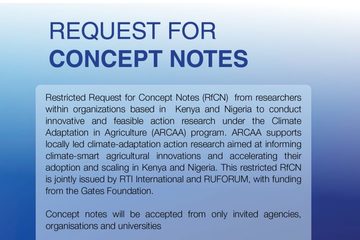
Call for Concept Notes: Action Research for Climate Adaptation in Agriculture
Website LinkIntroductionThe purpose of this Request for Concept Notes (RfCN) is to invite concept notes fromresearchers within organizations based in Kenya and Nigeria to conduct innovative andfeasible action research under the Climate Adaptation in Agriculture (ARCAA) program.ARCAA supports locally led climate-adaptation action research aimed at informingclimate-smart agricultural innovations and accelerating their adoption and scaling in Kenyaand Nigeria. This RfCN is jointly issued by RTI International and RUFORUM, with fundingfrom the Gates Foundation.About RTIRTI International is an independent, scientific research institute dedicated to improving thehuman condition by turning knowledge into practice. RTI publishes more than 1,000 peerreviewed journal articles annually, often in collaboration with global research partners, with afocus on informing decision-making and public policy. RTI also implements internationaldevelopment programs, with experience in more than 100 countries around the world. RTI'sagriculture and food systems practice conducts research and implements programs thatsustain the environment and support equitable, thriving communities. RTI has worked withclients across the public, private, foundation, and nonprofit sectors globally.About RUFORUMRegional Universities Forum for Capacity Building in Agriculture (RUFORUM) is a network ofuniversities across 40 countries in Africa. RUFORUM collaborates globally with otheruniversity networks, development partners, policymakers, and leaders to leverage synergiesand work towards shared objectives in delivering science solutions for development, humancapital development, and institutional reform in the African Higher Agricultural Educationsystem. The network is African owned, aligned with country goals, and thrives in multistakeholder engagement that promotes equity and implements gender responsiveinterventions. RUFORUM is nested within continental and global frameworks, including theComprehensive Africa Agriculture Development Programme (CAADP), Africa’s Agenda2063, and the United Nations Sustainable Development Goals. We recognize that youth arethe driving force behind change and are leading the charge for a better Africa.Background on ARCAAAfrica is disproportionately vulnerable to the impacts of climate change, yet most climateresearch on the continent is led by scientists based outside Africa.1 This imbalance limitsrepresentation of local perspectives and perpetuates dependency on external solutions.To address this gap, RTI and RUFORUM, with funding from the Gates Foundation, havelaunched the ARCAA program. ARCAA aims to support locally led action research thatincreases adoption and scaling of innovations and technologies to strengthen farmers’adaptation to climate change in Kenya and Nigeria. Ultimately, the results of the actionresearch funded through ARCAA are expected to meet the needs of small-scale producersby enhancing their productivity, income, and nutrition in the face of climate shocks andenvironmental stresses.The program takes an “action research” approach. ARCAA expects funded action researchto be guided by the following principles set out by the Adaptation Research Alliance:
Read more
By: Aaron Dorner
Due Date: Apr, 17, 2026
Agri-food systems
+2
Leave a comment
No Preview Available
ICGEB BiotechNet Grants 2026 CRP – Collaborative Research Programme
Funding opportunities are made available through the Collaborative Research Programme (CRP) – ICGEB Research Grants, a dedicated source of funding that aims to finance projects addressing original scientific problems of particular relevance for the host country and of regional interest. The BiotechNet CRP scheme foresees the award of 2-year Research Grants to local investigators in Ethiopia, Djibouti, Kenya and Uganda to conduct original research projects having national/regional relevance. Through these grants, beneficiary research institutes will be supported in the creation and/or upgrading of appropriate research facilities.
Closing Dates for Applications:30 APRIL 2026, 23:59 CET
Apply
Biotechnet Grants Guidelines 2026
CRP online submission Guidelines
Download poster
FAQ
Read more
By: Aaron Dorner
Due Date: Apr, 30, 2026
Science, Technology an...
Leave a comment
No Preview Available
ARUA Early Career Research Fellowships
Early-Career Research Fellowships - ARUA.
^This link contains full description of fellowship and the application form.
By: Aaron Dorner
Due Date: Jul, 15, 2025
Agri-food systems
+2

Leave a comment