

Results for "ai"
34 Results
Postgraduate Training Opportunities under the RUFORUM Graduate Teaching Assistantship Program (GTA)
During the annual meeting of Vice Chancellors/Presidents/Principals/Rectors of RUFORUM Member Universities (see links about RUFORUM flier and RUFORUM at a Glance) held on 11th November 2020, the Vice Chancellors re-affirmed their commitment to the Graduate Teaching Assistantship Program that they initiated in 2014. The objectives of the GTA are to: i) Improve the quality of higher education and increase the pool of PhD-level trained academic staff in African universities; ii) Provide opportunities for the doctoral research to contribute more directly to African development; iii) Strengthen inter- university collaboration in the field of higher education in Africa; and iv) Promote staff mobility among RUFORUM member universities, and across Africa.
Following the meeting of the Vice Chancellors on 11th November 2020, the RUFORUM Secretariat is pleased to announce the availability of training opportunities at the different Member Universities as part of the GTA arrangement. The Secretariat invites for more offers from the other member universities to train GTA candidates.
Under the GTA arrangement:
The sending universities nominate the staff to be trained and RUFORUM Secretariat helps to get them placed in receiving (host) Universities.
The sending universities commit to pay for travel, health insurance, upkeep and research of their staff under training.
The receiving/host universities waive the fees and associated costs, and provide accommodation for the admitted GTA Fellows
Once admission process is completed, the sending and host universities and the nominated GTA Fellow sign a Tripartite Agreement to guide the hosting and training of the Fellow
In some cases where opportunities exist, the host University may attach the GTA Fellow to the research program at the hosting university.
The RUFORUM Secretariat facilitates the GTA arrangement and follows up on the GTA training
The nominations by the Vice Chancellors for the available positions should be submitted to RUFORUM Executive Secretary at secretariat@ruforum.org as soon as possible.
https://ruforum.wordpress.com/2021/05/10/postgraduate-training-opportunities-under-the-ruforum-graduate-teaching-assistantship-program-gta-3/?utm_source=RUFORUM%20Mailing%20List
By:
Madeleine Futter
Monday, Aug 16, 2021
EDUCATION
No Preview Available
Leave a comment
Creating Sustainable U.S. - East Africa Partnerships for Disability Inclusion
Professional Fellows Alumni Webinar:Creating Sustainable U.S. - East Africa Partnerships for Disability InclusionThursday, May 27, 2021, 12:00 p.m. – 1:30 p.m. ET
Webinar Description:
The Association of University Centers on Disabilities (AUCD) and Humanity & Inclusion (HI) invite you to join a Professional Fellows alumni webinar on how universities, DPOs, and other disability rights groups in the United States and East Africa can create independent, sustainable partnerships that promote inclusive employment and education in lasting ways.
By interacting with a panel of U.S. outbound and Professional Fellows alumni, attendees will learn:
How universities and disability rights leaders in East Africa can exchange inclusive practices and empower communities.
How to create professional development opportunities and low-cost trainings that let disability professionals in the U.S. and East Africa learn from each other during the pandemic.
How to build expertise in inclusive employment and education among teachers and service providers in East Africa remotely.
Panelists:
Dr. Martin Blair, Executive Director, University of Montana Rural Institute for Inclusive Communities
Dr. Margo Izzo, Transition Services Director, The Ohio State University Nisonger Center
Dr. Macdonald Metzger, Director of Outreach, Education, and Interdisciplinary Training, University of Minnesota Institute on Community Integration
Elizabeth Shiakamiri, Innovation to inclusion (i2i) Programme Manager, Leonard Cheshire, Nairobi, Kenya
Bijal Lal, Founder and Special Educator, Tujumuishe Tanzania, Dar es Salaam, Tanzania
Please Note:
CART transcription will be available for all attendees. Please contact Siddarth Nagaraj (snagaraj@aucd.org) for any accommodations needs or general inquiries.
There is no cost for this webinar.
CEUs are not offered for this webinar.
This webinar will be held on the Zoom Platform. You can test your connection with Zoom before joining the meeting here.
This webinar will be archived.
By:
Derek Tobias
Monday, Aug 16, 2021
EDUCATION

Leave a comment
Call for submissions: Faith, Religion and Global Higher Education
Special Issue Information
Dear Colleagues,
The history of higher education in both Western and non-Western cultures finds direct roots in religion—from Buddhist monasteries in ancient India to Islamic madrasas in the Arab region, and to Christian seminaries in Europe and the colonial US. Through a process of secularization of the state apparatuses and their major educational institutions in the post-Industrial Revolution Europe and their colonies, most colleges and universities today are secular. Still, an estimated 2000 religious higher education institutions operate worldwide, and evidence suggests that the numbers are expanding. For example, sub-Saharan Africa has seen the largest growth in private higher education institutions with religious affiliations in recent times (Karram 2011 citing Thayer 2003).
A primary contemporary research interest reflects a recognition and avenues for further exploration that religious beliefs and praxis play significant roles in re-imagining the higher education spheres at individual and institutional levels. In the last few decades, scholars have argued that there is a “return” of religion in higher education (Jacobsen and Jacobsen 2012). Studies suggest that there is a higher level of interest in spirituality among US undergraduate students. Student-led religious organizations and places of worship have increased in college campuses. There has been a “resurgence” of studying religion in American colleges and universities (Hill 2009). In addition, there is an increasing number of proponents for “holistic student development” among student affairs scholars who argue that students’ spiritual growth is equally important (Mayrl and Oeur 2009). Some scholars go as far as naming the current higher education epoch as a “post-secular” campus (Jacobsen and Jacobsen 2012; Sommerville 2006).
While there is a growth in interest among scholars to understand how religion intersects with the academic lives of students, there is also room to explore whether and how religious higher education institutions influence and (re)produce knowledge, what the challenges faced by these institutions are, and how they envision the ways forward—particularly in the post-COVID-19 pandemic reimagination and reformation of the world. Simultaneously, both secular and religious universities and colleges grapple with continuous debates over academic freedom and autonomy, freedom of speech, gender identities, equality issues, radicalization, university governance and finances, and negotiation with state and other broader communities. A further area to explore is higher-level education focused on future religious leaders. Finally, given the interest in religious literacy across a wide spectrum of professions, continuous adult learning focused on related issues is worth exploration.
This Special Issue aims to speak to these current debates and go beyond them, particularly from a global perspective, by featuring empirical research papers, reviews of research studies, theoretical/conceptual discussions, and technical reports. The broad goals of the Special Issue are to explore whether and how religion is an important factor in higher education student affairs, how to (re)conceptualize religion and the ways in which it is negotiated at the institutional levels with other pervasive factors such as globalization, and to highlight interventions as well as innovations in both knowledge (re)production and dissemination—all from an international and comparative education perspective.
Dr. Katherine MarshallDr. Sudipta RoyGuest Editors
Manuscript Submission Information
Manuscripts should be submitted online at www.mdpi.com by registering and logging in to this website. Once you are registered, click here to go to the submission form. Manuscripts can be submitted until the deadline. All papers will be peer-reviewed. Accepted papers will be published continuously in the journal (as soon as accepted) and will be listed together on the special issue website. Research articles, review articles as well as short communications are invited. For planned papers, a title and short abstract (about 100 words) can be sent to the Editorial Office for announcement on this website.
Submitted manuscripts should not have been published previously, nor be under consideration for publication elsewhere (except conference proceedings papers). All manuscripts are thoroughly refereed through a double-blind peer-review process. A guide for authors and other relevant information for submission of manuscripts is available on the Instructions for Authors page. Religions is an international peer-reviewed open access monthly journal published by MDPI.
Please visit the Instructions for Authors page before submitting a manuscript. The Article Processing Charge (APC) for publication in this open access journal is 1200 CHF (Swiss Francs). Submitted papers should be well formatted and use good English. Authors may use MDPI's English editing service prior to publication or during author revisions.
Click here to learn more!
By:
Elaina Lawrence
Monday, Aug 16, 2021
EDUCATION
No Preview Available
Leave a comment
9 PhD Scholarships Available with Animal Health Innovation Lab
The Animal Health Innovation Lab in partnership with the University of Nairobi is offering 9 PhD scholarships. The fully funded positions, offered by USAID, will develop research and lab-based solutions to the East Coast Fever. In Kenya and East Africa, this tick-borne disease of cattle has created constraints to human nutrition and economic welfare. The multi-institutional and multi-disciplinary environment offers a unique opportunity for those seeking a PhD in a main research project at the Animal Health Innovation Lab.
The application deadline is Feb. 10, 2021 at 23:59pm. Review the link and photo to apply!
https://uonbi.ac.ke/news/feed-future-animal-health-innovation-lab-phd-scholarships
By:
Madeleine Futter
Monday, Aug 16, 2021
AGRI-FOOD SYSTEMS
+2

Leave a comment
Check out these rising stars! Michigan Fellows Agribusiness Initiative (MFAI)
Congratulations to the Michigan Fellows Agribusiness Initiative (MFAI) on receiving a Professional Fellows Program alumni award signifying your growth and continued success. We are delighted for the success of the 2nd Agribusiness Apprenticeship Program and can't wait to see how these young agribusiness professionals make their marks in Uganda and beyond.
A special thanks to St. Lawrence University for hosting the training, the US Department of State Bureau of Educational and Cultural Affairs for its financial support, and to MFAI’s ongoing partners: the Empowerment Initiative for Women and Youth, Uganda; the US Mission in Kampala; Kyambogo University; and, the Africa 2000 Network, Uganda!
https://www.newvision.co.ug/news/1536048/us-embassy-st-lawrence-university-partner-promote-agribusiness
By:
Elaina Lawrence
Monday, Aug 16, 2021
EDUCATION
Leave a comment
Webinar: Retrieving Women's Voices in African Political History 12/01/2020
Since the 1970s, scholars have raised awareness about the gender biases of archival sources, especially when it comes to colonial, postcolonial, national or diplomatic archives. They have shown that women’s invisibility did not mean an absence of traces, and advocated innovative methodologies and the search for unusual sources to reconstruct women’s lost voices in African history.
Our guest speakers work on African women's voices in various historical, geographical and more importantly political contexts, and with many different sources (public archives, literature, autobiographies...). They will share their insights on how to retrieve, create or re-interpret sources about women’s power and how to find new conceptual tools to complicate political narratives
Speakers: Anna Adima (Doctoral researcher, University of York), Marciana Nafula Were (Lecturer, Tom Mboya University/Stellenbosch University) & Immanuel Harisch (Doctoral researcher, Department of African Studies, University of Vienna).
The discussion will be informal (short presentation of archives/sources; Q&A). This working group doesn’t mean you have to work: just come join us to listen and/or contribute to a friendly discussion where students, researchers and professors are all welcome!
Registration to access the online meeting here: https://www.eventbrite.com.au/e/beyond-silences-retrieving-womens-voices-in-african-political-history-tickets-132949793411
By:
Elaina Lawrence
Monday, Aug 16, 2021
EDUCATION
No Preview Available
Leave a comment
Call for papers for a special issue of Journal of Student Affairs in Africa is now open!
The Journal of Student Affairs in Africa is preparing a special issue on "The Impact of COVID-19 on Higher Education and Student Affairs in Africa" in which they will be publishing the reflections of student affairs practitioners, university leaders, policy makers, researchers, students, and journalists on the impact of COVID-19 in the context of African higher education and other relevant contexts.
Click the link below to learn more.
https://www.journals.ac.za/index.php/jsaa/announcement/view/31">https://www.journals.ac.za/index.php/jsaa/announcement/view/31
By:
Elaina Lawrence
Monday, Aug 16, 2021
HEALTH AND NUTRITION
Leave a comment
COVID-19 and the Risks to Food Supply Chains in Africa
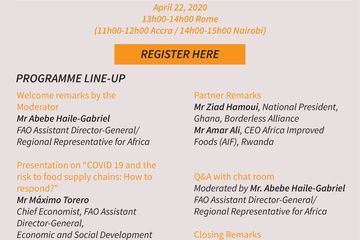
On April 22, the Food and Agriculture Organization (FAO) will be hosting a webinar on COVID-19 and the Risks to Food Supply Chains in Africa.
Click on the link below to register for this webinar.
https://fao.zoom.us/meeting/register/tJcqcOCsrD8tH9TXMlxuCam2Vj2bMl4xFO9x">https://fao.zoom.us/meeting/register/tJcqcOCsrD8tH9TXMlxuCam2Vj2bMl4xFO9x" rel="nofollow">https://fao.zoom.us/meeting/register/tJcqcOCsrD8tH9TXMlxuCam2Vj2bMl4xFO9x
By:
Elaina Lawrence
Monday, Aug 16, 2021
HEALTH AND NUTRITION
Leave a comment
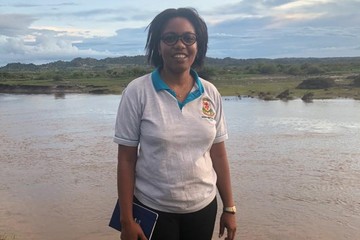
AAP Supports Freshwater Research Through the African Women in Science Campaign
The Alliance for African Partnership (AAP) is proud to support the African Women in Science campaign by the African Center for Aquatic Research and Education. Four women from various AAP member institutions have been selected to take part in the program, which aligns with AAP's goal of addressing the gap of African women in the sciences. The program seeks to enhance the participation of women scientists through the creation of a comprehensive, long-term, collaborative network of freshwater experts.
The first component of the program is sending a group of promising students and early career researchers to the International Association for Great Lakes Research Conference in Winnipeg, Canada. Here, each participant will give oral presentations on their areas of research, attend networking events with academic, managerial, and policy experts from global freshwater community, and visit regional research facilities to further their exposure to research being done around the world.
The four participants from AAP member institutions are:
Christine Nyagaya, Egerton University, MS Student, from Kenya, working on Lake Victoria
Christine Nyagaya Owino is a Kenyan, currently pursuing a master’s degree in Limnology at Egerton University Kenya and an undergraduate background in biotechnology. I am interested in biogeochemical processes in inland wetlands, their ecological and economic services and emissions of greenhouse gases from the wetlands. As a limnologist I am passionate about sustainable use of wetlands since I understand important ecological roles especially in acting as nutrient sinks and purifying water (buffer zones) that enters our lakes. I am also interested in sustainable use of inland lakes since these lakes are primary source of water to some people. One of my major goals is to contribute towards the achievement of sustainable development goals number 6 which is to (Ensure availability and sustainable management of water and sanitation for all” and numb
er 13 on “Taking urgent action to combat climate change and its impacts
Madalitso Magombo Chatsika, LUANAR, PhD Student, from Malawi, working on Lake Malawi/Nyasa/Niassa
Mrs. Madalitso Magombo Chatsika an experienced and accomplished fisheries biologist for over 14 years. Currently, Madalitso is working as a lecturer in Fish Biology and Fisheries Management at the Lilongwe University of Agriculture and Natural resources (LUANAR), at the Department of Aquaculture and Fisheries Science where she is involved in teaching, research, consultancy and outreach. She is currently in her final year at Michigan State University (MSU), Department of Fisheries and Wildlife, studying towards attaining a PhD in Fisheries Biology and Management. As part of her PhD dissertation, Madalitso studied the “Effects of climate change on fisheries of the Southeast arm of Lake Malawi where she incorporated environmental variables like temperature and rainfall into the convectional Surplus Production Models to assess the impact of climate change on fisheries resources in Lake Malawi. Recently, Madalitso also conducted a study to assess the ecological impacts of climate change in capture fisheries: a case of Lake Chilwa in Zomba district, Malawi.Madalitso also conducted a research on the “Effect of seasonal variations and mesh sizes on the estimated length at 50% maturity of fish from Lake Kariba for her MSc degree at University of Bergen in Norway. She has also been involved in a WorldFish and World Vision project on “Developing creative approaches to fight HIV/AIDS in the fisheries sector in Malawi” in partnership with the World Bank and the International Monetary Fund. She has also been a team member for the CTA project on Technology Innovation System for the Fisheries and Aquaculture sub-sectors case study in Malawi.
As a fisheries scientist, Madalitso has a passion to contribute towards natural resource management (fisheries), food security and poverty reduction in Malawi through sustainable use of fisheries resources. She loves to see herself as a person who can provide solutions to the problems that are being faced by the fisheries sector in Malawi.
Outside my career as a fisheries scientist, Madalitso is a wife and a mother of three boys. She comes from a lake district called Mangochi in Malawi (probably one of the reasons she got interested in fisheries). She likes cooking and travelling and her favorite travel destination is Japan. Her favorite sport is netball and she likes listening to traditional gospel music.
Dr. Lulu Kaaya, University of Dar es Salaam, Recent Graduate, from Tanzania, working on Lake Victoria
Dr Lulu Kaaya is a Lecturer in Freshwater Ecology in the Department of Aquatic Sciences and Fisheries Technology at the University of Dar es Salaam, Tanzania where she teaches limnology and watershed management. She is also a lecturer of stream ecosystems concepts and streams integrity assessment in the International Joint Master’s degree in Limnology and Wetland Management Programme (Boku University-Austria, Egerton University-Kenya and UNESCO-IHE, The Netherlands).Dr Kaaya has been doing research in the rivers and lakes of Tanzania since 2005. Her research area cores around the ecological role and functions of freshwater ecosystems in the management of water resources.
She has been providing professional consultation on the integration of ecology into watershed management approaches in Tanzania i.e. Environmental Flow Assessments, River Health Assessments and establishment of integrated water resources management and development plans. Her PhD thesis titled “Biological Assessment Of Tropical Riverine Systems Using Aquatic Macroinvertebrates In Tanzania, East Africa” provides a detailed analysis of
bioassessment from the regional perspective. She has published seven peer-reviewed articles based on freshwater ecosystems of Tanzania, supervised seven masters students in the area of aquatic sciences and conducted several outreach programmes on bioassessment.On a personal note, Dr Kaaya is a wife, mother of four, loves nature and sports (swimming and running), enjoys gardening and making new contacts. She is also a Rotarian.
Dr. Suzan Luyiga, Makerere University, Recent Graduate, from Uganda, working on Lake Victoria
Suzan Luyiga is a Ugandan Limnologist associated with the Department of Zoology, Entomology and Fisheries Sciences of Makerere University, having over 15 years of freshwater ecological research and teaching experience. She has a PhD (Zoology-Limnology) of Makerere University, and a MSc. (Environmental Science and Technology - Limnology and Wetland Ecosystems) of UNESCO-IHE. As a professional limnologist, Suzan has conducted research on various aspects of freshwater environmental management, focusing on great lakes ecosystems particularly the anthropogenic impact on plankton communities, Environmental Impact Assessments and developing and optimizing integrated technologies to management of wastewater e.g. constructed wetlands and wastewater reuse for food production to prevent water pollution. She is passionate about freshwater environmental sustainability, and this has directed her to acquire skills including but not limited to: - Designing and implementing ESIA activities, Developing and implementing community awareness programs; Collecting information and developing of technical and training manuals; Teamwork building and management, and Networking with multi-disciplinary and inter-cultural groups.
By:
Elaina Lawrence
Monday, Aug 16, 2021
WATER
+2
Leave a comment
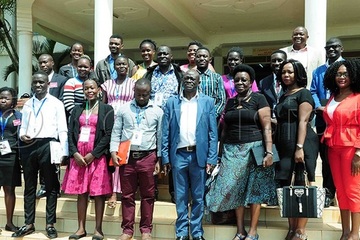
ARUA meeting in Nairobi
https://www.universityworldnews.com/post.php?story=20191130044914804">ARUA Annual Conference in Nairobi
By:
Amy Jamison
Monday, Aug 16, 2021
EDUCATION


Leave a comment