The Business of Water: A COIL Project By AAP
Collaborative Online International Learning (COIL) is a method of education which fosters intercultural learning and development through shared values, presented perspectives, and mutual understanding despite geographical and cultural barriers. It connects students and professors in different countries for collaborative projects and discussions carried out virtually as part of their coursework. As an educational innovation, it reflects the values and goals of the Alliance for African Partnership (AAP) to foster mutually beneficial programs which catalyze lasting partnerships among our consortium members, which is why AAP launched the COIL Faculty Fellows Program-Africa in 2023. Since 2023, AAP along with Michigan State University’s (MSU) Global Youth Advancement Network have supported 14 teams of faculty to design and implement COIL projects.
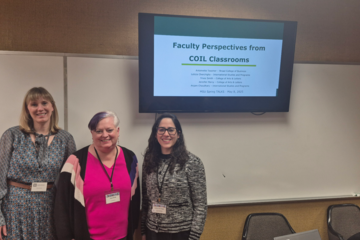
The highly successful“The Business of Water” COIL project implemented by faculty from MSU and the University of Nigeria Nsukka is a great example of the type of impact COIL can have on both faculty members and students The project comprised 30 students from UNN and MSU, and led by Antoinette Tessmer OF THE Broad College of Business (Finance Dept.), Michigan State University and Nkadi Onyegegbu, Faculty of Education (Science Education Dept.), University of Nigeria Nsukka (Nigeria). It’s aim was to teach students the factors and events that control “The Business of Water” both in their universities and in their communities. UNN and MSU students communicated through online methods such as Zoom or WhatsApp, and they collected data through site visits and interviews among other methods.
Over the course of six weeks, the students learned the intricacies of specific water-based businesses, such as the drinking water industry and the water recycling industry, using the Environmental Social Governance (ESD) framework to structure their research and to later propose a call to action based upon their findings.
By the end of the COIL project, the students and facilitators had engaged and collaborated to such a degree that contacts, bonds and partnerships were formed, breaking through the cultural and international barriers. When giving their experiences on the project, some students wrote the following:
“At the end of the day, we pushed others in new ways of understanding and collaboration that will impact us after we graduate”
“This was my first experience collaborating with international students overseas and I can gladly say that COIL was the online tool that made it possible”
“This experience has highlighted mutual respect and honesty, allowing us to work together on relevant and environmentally sustainable solutions...I feel more equipped to contribute to global discussions”
“These problems also taught me how to communicate with people from different cultures and helped grow my interpersonal skills”
By the metric of engaging students in the “Business of Water” as well as forming intercultural bonds, the AAP has deemed this COIL project another success, among many, and is excited to champion more COIL projects to come.
By:
Baboki Gaolaolwe-Major
Wednesday, Jul 23, 2025


Leave a comment