


Results for "community"
6 Results
Bridging Traditional Medicine and Data Science: A Transcontinental Approach to Diabetes-Related
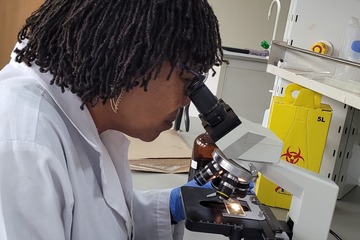
As the global health community increasingly recognizes that the most persistent health challenges require collaborative interdisciplinary solution, the intersection of traditional knowledge and modern statistical innovation offers particularly promising avenues for advancement. Through the Alliance of African Partnership’s (AAP) African Futures Program, my year as a visiting scholar at Michigan State University in (MSU) has embodied this collaborative spirit, marrying Africa’s rich ethnobotanical heritage with innovative biostatistical methodologies to address one of the continent’s most pressing, yet often overlooked, diabetes complications.
Diabetes-induced erectile dysfunction (DIED) affects an estimated two-thirds of male diabetic patients globally, with prevalence rates exceeding 71% in African populations. Despite these staggering figures, conventional pharmacological interventions, primarily phosphodiesterase type 5 inhibitors, offer merely symptomatic relief while failing to address underlying hormonal and metabolic dysregulation. Moreover, these treatments remain inaccessible to many due to cost, adverse effects and contraindications in cardiovascular compromised patients. This clinical gap has driven my research focus toward evaluating indigenous medicinal plants that have supported African communities for generations, specifically Mondia whitei (Mw) and Withania somnifera (Ws), traditionally renowned for their adaptogenic and aphrodisiac properties.
The African Futures Program has provided the essential infrastructure to transform this research from a localized inquiry into a globally informed investigation. I have spent the 2025 academic year collaborating closely with my two mentors: Prof. Yuehua Cui in MSU's Department of Statistics & Probability and Prof Calvin Omolo of USIU-Africa, Department of Pharmacy Practice & Public Health. This partnership has been instrumental in elevating our methodological approach by moving beyond standard herbal efficacy testing to implement mixture design experiments and advanced regression analyses that can detect subtle synergistic interactions between bioactive compounds.
Our recent study, conducted at USIU - Africa Pharmacy Laboratories represents a paradigm shift in phytotherapeutic research methodology. Rather than testing herbs in isolation, a common limitation in traditional medicine research, we employed advanced mixture design methodologies to evaluate the combined effects of Mondia whitei and Withania somnifera in alloxan-induced diabetic rat models. The results have been compelling. While the individual extracts showed modest improvements in testosterone restoration and glycemic control, an optimized herbal combination demonstrated statistically significant synergistic effects producing the greatest improvement in testosterone levels and substantial reductions in fasting blood glucose compared to single-herb treatments. These findings suggest that strategic combination of these herbs may simultaneously address the metabolic deregulation and vascular dysfunction underlying DIED through complimentary pathways, Withania somnifera improving insulin sensitivity and systemic metabolic health while Mondia whitei enhances local nitric oxide critical for erectile function. Further research is underway to identify optimal formulation ratios and validate these effects in clinical settings.
What distinguishes this research within the global health landscape is its commitment to methodological rigour that meets international standards while remaining culturally grounded and accessible. During my tenure at MSU, I have actively disseminated these findings through high-impact academic channels including presentations at the Dahshu Data Science Symposium on "Innovative Frontiers: AI and Data-Driven Advances in Drug Development" and at the 2025 Women in Statistics and Data Science Conference. These platforms have not only amplified African pharmaceutical research within global scientific discourse but have also facilitated crucial networking with biostatisticians and epidemiologists exploring similar One Health intersections between plant-based interventions and chronic disease management.
Beyond the laboratory and conference podium came other openings through this fellowship. Our research team was recently selected for the 3rd cohort of the Collaborative Online International Learning (COIL) Faculty Fellows Program. This will enable us to develop virtual exchange curricula that will train the next generation of African Epidemiology and Public Health researchers in advanced biostatistical methods. Additionally, I have engaged extensively with MSU’s research ecosystem through workshops hosted by the American Statistical Association, the Department of Epidemiology & Biostatistics, and specialized training in machine learning applications for healthcare data skills that are already informing grant proposals aimed at securing sustainable funding for this research trajectory.
As we look toward translating these preclinical findings into clinical applications, the importance of sustained international partnership becomes increasingly evident. Current pharmacological solutions for DIED remain inadequate for Africa’s growing diabetic population, projected to double by 2045. The development of evidence-based Phytomedicines, validated through rigorous statistical frameworks yet derived from accessible indigenous resources, represents a uniquely African solution to a global health challenge. However, realizing this potential requires continued collaboration between African research institutions and international partners who can provide advanced analytical capabilities, funding access, and platforms for global advocacy.
The AAP’s version of advancing health through collaboration finds its truest expression in such transcontinental research partnerships. By connecting USIU - Africa’s ethno-botanical expertise with MSU’s statistical progress, we are not merely studying herbal extracts; We are modeling a new approach to global health research, one that respects traditional knowledge systems while demanding scientific excellence. As we finalize our first publication and prepare grant applications for expanded clinical trials, I am reminded that the most powerful innovations in health often emerge not from isolated laboratories, but from the fertile intersection of diverse perspectives, methodologies, and shared commitment to healing.
In an era where pharmaceutical accessibility remains profoundly equitable, partnerships that validate and optimize Indigenous medicinal resources offer more than academic advancement, they offer hope for sustained, culturally congruent healthcare solutions. Through the African Futures Program, we are demonstrating that when African traditional medicine meets rigorous biostatistical science, the result is not just better research, but a pathway toward health equity that honors both our scientific aspirations and our cultural heritage.
Gladys G. Njoroge is a research scholar with the Alliance for African Partnership at Michigan State University and faculty member at USIU-Africa, Department of Pharmacy Practice & Public Health. Her research focuses on phytotherapeutic interventions for diabetes complications and the application of advanced statistical methodologies in traditional medicine research.
By:
Baboki Gaolaolwe-Major
Tuesday, Mar 3, 2026
HEALTH AND NUTRITION
+1
Leave a comment
A Journey of Academic Excellence through Community Engagement
Translating scientific knowledge for societal benefit has long posed a challenge in research. Until about two decades ago, this crucial aspect of science received limited emphasis. However, community engagement—often referred to as public engagement or science communication—has now become a critical component that facilitates the application of research by end users. The scientific community has increasingly recognized that research is incomplete without involving key stakeholders and end users, necessitating a human-centric approach to research and development.
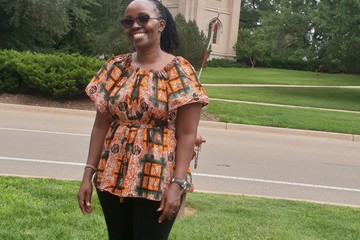
Dr. Mercy Kaburu, an accomplished Assistant Professor of International Relations at Kenya’s United States International University (USIU), exemplifies this approach. She is dedicated to using community engagement to effectively translate research on Kenya’s foreign policy, its role in regional and global politics, regional integration within the East African Community (EAC), and women’s political participation, especially in Kenya.
As an emerging leader in science and her community, Dr. Kaburu has achieved notable successes, has led impactful research initiatives, and has engaged with her community in ways that underscore her impressive academic journey. Her research focuses on three core areas: Kenya’s foreign policy, regional integration within the EAC, and enhancing women’s political participation in Kenya. Over the last three years, she has published articles on key topics such as Kenya's elections, gender-based violence, and regional integration. One of her most notable achievements was securing a prestigious publication in the Washington Post on regional integration within the EAC, along with a forthcoming book chapter on Kenya's foreign policy.
In addition to her publications, Dr. Kaburu is leading a joint research initiative between USIU, the University of Nairobi, and the Free Pentecostal Fellowship in Kenya. This five-year project, which focuses on child protection in Busia County, highlights her dedication to community engagement and research that has a real-world impact. "This project will allow me to make a difference, especially on issues relating to policy and child protection," she explains with enthusiasm.
AAP’s Role in Her Journey
After participating in the Alliance for African Partnership (AAP) program at Michigan State University (MSU), Dr. Kaburu was promoted to Assistant Professor. Reflecting on the impact of AAP, she says, “One of the biggest things AAP did for me was open my spaces for conferencing and partnership, attending academic conferences, and creating new collaborations.”
Her time at MSU, supported by AAP, broadened her academic horizons through conference presentations and the establishment of crucial partnerships. Dr. Kaburu expressed her gratitude for the mentorship she received, particularly from Professor Caroline Logan, who played an instrumental role in guiding her conference participation and subsequent publications. “Thanks to my mentor, I was able to attend key conferences, which played a major role in helping me meet the guidelines for promotion,” she adds.
Looking Ahead
Dr. Kaburu’s future shines brightly as she continues to expand her academic and community-based endeavors. Recently appointed by Afrobarometer as the Coordinator for Capacity Building for Early Career Scholars in Africa, Dr. Kaburu is excited about furthering her research and mentoring new scholars. “I am looking at myself engaging more with the community,” she shares. “I believe I can have my fingerprint on policy, especially regarding women and political participation in Kenya.”
Her current focus includes securing more research grants and influencing policy. Looking ahead, she aspires to become an Associate Professor within the next three years. “I am giving myself the next three years to meet the requirements of an Associate Professor. Growth, for me, is very important,” she says confidently.
Dr. Kaburu’s inspiring story serves as a testament to the transformative power of opportunities like the AAP program. Her advice to other scholars, particularly women, is to seize opportunities for growth and mentorship. “When a woman scholar gets the opportunity, please take it up, and always try to build lasting relationships with your mentor,” she advises.
As she continues to make strides in her career and community involvement, we look forward to seeing the incredible impact she will undoubtedly continue to make.
By:
Baboki Gaolaolwe-Major
Tuesday, Nov 12, 2024
EDUCATION
+1
Leave a comment
Centering Community: Enacting Culturally Responsive-Sustaining YPAR During COVID-19
Abstract
Purpose – This paper aims to provide insights for educators seeking to enact culturally responsive-sustaining education and research in the midst of the COVID-19 global pandemic. The authors examine what happened when the community-based Youth Participatory Action Research (YPAR) initiative they engaged with traditionally marginalized high school students was interrupted as a result of physical distancing necessitated by COVID-19.
Design/methodology/approach – Data for this inquiry were taken from a broader on-going ethnography of youth’s participation in the YPAR project and included audio and video recordings from meetings of the YPAR initiative and messages exchanged between and among authors and youth. Authors used components of culturally responsive-sustaining education and theories related to student voice as an analytic frame through which they considered how the COVID-19 pandemic influenced their work. Findings – Three findings are examined in this paper. They consider: how youth participants and the authors stayed connected after they were no longer able to meet in person; how youth chose to center the needs of the subsidized housing community where they lived while continuing their work; and how youth and authors navigated the uncertainties they encountered in looking ahead to future possibilities for their study as the pandemic continued. Originality/value – This study provides urgently needed insights for educators and researchers grappling with how they may enact culturally responsive-sustaining education and research during the COVID-19 global pandemic and beyond.
By:
Joanne E. Marciano
Thursday, Apr 4, 2024
YOUTH EMPOWERMENT
+1

Leave a comment
"Our Voice and Dreams Matter": Supporting Youths' Racial Literacy
This qualitative study examines how youth participants in an ongoing community-based
literacy initiative sought to increase awareness of racial justice among residents of their subsidized housing community in support of the Black Lives Matter movement in summer 2020 and throughout the 2020–2021 academic year. We utilize theories of racial literacy and critical arts-based literacy to examine youths’ engagement in 44 weekly two-hour-long Zoom sessions of the literacy initiative held between June 2020 and June 2021. Specifically, we examine how youths designed, facilitated, and participated in critical arts-based literacy projects related to children’s and young adult literature they chose to read focused on racial justice. Findings contribute new insights into youths’ enactments of racial literacy, possibilities for art-making to support youths’ racial literacy, and the urgent need for literacy
instruction responsive to youths’ voices and dreams, particularly during
times of crisis.
By:
Joanne E. Marciano
Thursday, Apr 4, 2024
YOUTH EMPOWERMENT
+1
Leave a comment
Farm credit giving Omoro and Amuru women farmers a lifeline
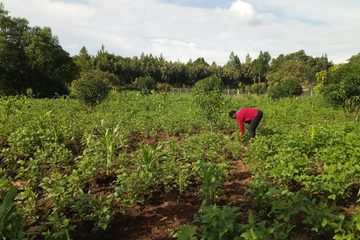
OMORO – Dero-she capital, a local community-based organization (CBO) is helping more than 170 rural women in Amuru and Omoro districts to profitably engage in agriculture by extending farm credit to them.
Instead of cash, the organization gives farmers credit in form of services like ploughing and inputs or farm implements like seeds and hand hoes.
Innocent Piloya, the Chief Executive Officer (CEO) of Dero-she capital told theCooperator that most times, rural women have agribusiness ideas but lack support to implement them.
“What we do is lend them support like hire a tractor to plough land for them, give them seeds and hand hoes to engage in farming. We also help them look for market for the crops. We then recover the money after they have sold off their harvest,” Piloya said.
“Our organization does not give actual credit to the farmers because the money can end up being diverted elsewhere once received. Much as a farmer may want a hoe or seeds, they might have more urgent needs like transport or treatment so they could end up using the money for a different purpose,” she explained.
Piloya explained further that, before the farm credit is extended to the women, they are trained on good agronomic practices and business skills to help them transform from subsistence to commercial farming before they are given the farm credit.
Continue reading on The Cooperator News website
By:
Derek Tobias
Wednesday, Oct 13, 2021
AGRI-FOOD SYSTEMS
Leave a comment
Reducing stigma and discrimination in access to HIV health care for gay and bisexual men....
This case study highlights two examples of community-led monitoring using mystery patient methods to document stigma and discrimination in the provision of HIV health care. The process and outcomes of using these methods in Cameroon and Zimbabwe are described. In each country over a period of 10-12 months, gay and bisexual men and transgender women documented their experiences of seeking care in select health care facilities. In Cameroon, the data were used to to create sensitization trainings for health care workers. In Zimbabwe, health care workers, health care facilities, and the local LGBT community created a continuous improvement feedback system to improve the quality of care for gay and bisexual men.
By:
Robin Lin Miller
Monday, Aug 16, 2021
HEALTH AND NUTRITION

Leave a comment