

Results for "culture"
51 Results
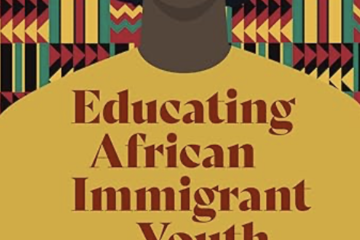
Educating African Immigrant Youth: Schooling and Civic Engagement in K–12 Schools (June, 2024)
This book illuminates emerging perspectives and possibilities of the vibrant schooling and civic lives of Black African youth and communities in the United States, Canada, and globally. Chapters present key research on how to develop and enact teaching methodologies and research approaches that support Black African immigrant and refugee students. The contributors examine contours of the Framework for Educating African Immigrant Youth, which focuses on four complementary approaches for teaching and learning: emboldening tellings of diaspora narratives; navigating the complex past, present, and future of teaching and learning; enacting social civic literacies to extend complex identities; and affirming and extending cultural, heritage, and embodied knowledges, languages, and practices. The frameworks and practices will strengthen how educators address the interplay of identities presented by African and, by extension, Black immigrant populations. Disciplinary perspectives include literacy and language, social studies, civics, mathematics, and higher education; university and community partnerships; teacher education; global and comparative education; and after-school initiatives.
Book Features:
A focus on honoring and affirming the range of youth and community’s diverse, embodied, social-civic literacies and lived experiences as part of their educational journey, reframing harmful narratives of immigrant youth, families, and Africa.
Chapter authors that include Black African scholars, early-career, and senior scholars from a range of institutions, including in the United States and Canada.
Chapters that draw on and extend a range of theoretical lenses grounded in African epistemologies and ontologies, as well as postcolonial and/or decolonizing approaches, culturally relevant and sustaining frameworks, language and literacy as a social practice, transnationalism, theater as social action, transformative and asset-based processes and practices, migration, and emotional capital, and more.
A cross-disciplinary approach that addresses the scope and heterogeneity of African immigrant youth racialized as Black and their schooling, education, and civic engagement experiences. Implications are considered for teachers, teacher educators, and community educators.
By:
Vaughn W. M. Watson
Thursday, Apr 4, 2024
CULTURE AND SOCIETY
+2
Leave a comment
Attached to the Soil
Attached to the Soil was begun during my 7-month Fulbright Scholar service in South Africa in 2019, inspired by the aspirational metaphor that President Nelson Mandela shared in the first words of his 1994 Inaugural Address. Collaborating with youth who proposed their own soil-related metaphors regarding their perception of realities in South Africa's past, present, or future, the stories of their fellow South Africans were told through portraiture and stories drawn from oral history interviews. The 50 works have been exhibited in 6 university art galleries across South Africa, and hung for 8 months in the Nelson Mandela Foundation's Centre of Memory, Houghton, Johannesburg. It is a model that I would like to extend not only in South Africa but in service to youth across Africa.
By:
Peter Glendinning
Thursday, Apr 4, 2024
CULTURE AND SOCIETY
+1
Leave a comment
Technology as a Tool of Enhancing Public Confidence in Elections in Africa | AAP Dialogue Series
Recorded on October 27, 2022 as part of AAP Public Dialogue Series
By:
Justin Rabineau
Tuesday, Feb 21, 2023
CULTURE AND SOCIETY
Leave a comment
New open access book: Rethinking Heritage for Sustainable Development (UCL Press)
UCL Press is delighted to announce the publication of a new open access book that may be of interest to list subscribers.
Rethinking Heritage for Sustainable Development, by Sophia Labadi.
The Sustainable Development Goals (SDGs) adopted by the UN in 2015 have influenced the actions of international and intergovernmental organisations and governments around the world, and have dictated priorities for international aid spending. Culture, including heritage, is often presented as fundamental to addressing the SDGs: since 2010, the United Nations has adopted no fewer than five major policy recommendations that assert its importance as a driver and enabler of development. Yet, heritage is marginalized from the Sustainable Development Goals.
Rethinking Heritage for Sustainable Development constitutes a substantial and original assessment of whether and how heritage has contributed to three key dimensions of sustainable development (namely poverty reduction, gender equality and environmental sustainability) within the context of its marginalisation from the Sustainable Development Goals and from previous international development agendas.
Sophia Labadi adopts a novel, inclusive, large-scale and systematic approach, providing the first comprehensive history of the international approaches on culture (including heritage) for development, from 1970 to the present day. This book is also the first to assess the negative and positive impacts of all the international projects implemented in sub-Saharan Africa by a consortium of UN organisations that aimed to provide evidence for the contribution of heritage for development in time for the negotiation of the SDGs. The book’s conclusions provide recommendations for rethinking heritage for development, while reflecting on the major shortcomings of the selected projects.
Free download: https://bit.ly/3m10NRK
By:
Raquel Acosta
Monday, Jun 13, 2022
CULTURE AND SOCIETY

No Preview Available
Leave a comment
MSU Scholar gives fresh insights on redesigning agricultural hand tools to Egerton University
The Faculty of Agriculture was honored to host Dr Susan Wyche from Michigan State University (MSU) for a one-week visit to Egerton University that ran from 1 to 8 March 2022. Dr. Susan held a public lecture for staff and held a 3-day training workshop on “Considering Human-Centered Design (HCD) in Development Research” to students from diverse backgrounds including in Computer science, Agronomy and Engineering disciplines at CMRT building, Njoro Main Campus. The students developed and designed 6 project prototypes which include: Innovative and Efficient Water harvesting and treatment for communities, Utilization of solar energy in drying and preservation of indigenous vegetables, Development of a drone for scaring Quelea qualea birds in rice irrigation schemes in Kenya, Queen bee rearing technology for increasing colonization of hives in drylands, Innovative technology for waste management in peri-urban areas to improve human health among others. Deputy Vice Chancellor Academic Affairs Prof Bernard Aduda commented the students for excellent ideas which can be deployed to solve farmers and societal problems in Kenya and promised to support. He also thanked the organizers of the training, Prof Susan for supporting student projects with USD 1400 as seed money for the projects and MSU for strong collaboration with Egerton University in all areas including joint projects, staff exchange and postgraduate supervision and value chain and policy analysis with Tegemeo Institute of Egerton University.
Dr Wyche’s main objective through the public lecture and workshop was to give insights on solving real community problems using the human centered design (HCD) approach. She gave an example of her project ‘redesigning agricultural hand tools for small holder farmers in Western Kenya. Lecturers and scientists from Egerton also shared opportunities they can collaborate with MSU in agronomy, breeding and crop protection, agricultural mechanization, clean energy, agribusiness and ICT and computer applications and community development .
Before her workshop on 1 March, Dr Wyche paid a courtesy call to the Vice-Chancellor Prof Isaac Kibwage. She was accompanied by Prof. Patience Mshenga, Dean Faculty of Agriculture Prof. Paul Kimurto Director, Marketing and Resource Mobilization and Dr Miriam Charimbu, a researcher from the Department of Crops, Horticulture and Soils. Dr Charimbu doing her postdoctoral research at MSU within the Alliance for African Partnership (AAP) and is mentored by Dr Wyche and Prof. Kimurto. Prof. Alexander Kahi who is the focal person for AAP at Egerton University also hosted the team at CoELIB Centre.
Egerton University is part of the Alliance for African Partnership, a consortium of MSU, ten leading African universities, and a distinguished network for African research institutes. The AAP Consortium is currently composed of ten member institutions: Michigan State University and eleven African institutions. Lilongwe University of Agriculture and Natural Resources (LUANAR) (Malawi), Makerere University (Uganda); L’université des Lettres et des Sciences Humaines de Bamako (ULSHB) (Mali), United States International University (USIU) (Kenya); University of Botswana, University of Dar es Salaam (Tanzania); University of Pretoria, l’Université Cheikh Anta DIOP de Dakar (UCAD) (Senegal) and University of Nigeria, Nsukka (Nigeria).
The vice chancellor and university management board wishes to than Prof Susan Wyche and MSU community for strong collaboration and supporting Egerton University staff and students in various engagements.
To read more: Michigan State University Visiting Scholar gives fresh insights on redesigning agricultural hand tools to Egerton University
By:
Raquel Acosta
Monday, Mar 21, 2022
EDUCATION

No Preview Available
Leave a comment
Feminist Africa, Volume 2, Issue 2 (2021): Gender and Sexuality in African Futurism
The newest issue of Feminist Africa is now available! The theme of the issue is "Gender and Sexuality in African Futurism." You can access the full issue at Current Issue - Feminist Africa. Learn more about Feminist Africa here.
TABLE OF CONTENTS
Editorial: Gender and Sexuality in African Futurism
· by Jacqueline-Bethel Tchouta Mougoué
Feature Articles
“How to Save the World from Aliens, Yet Keep Their Infrastructure”: Repurposing the “Master’s House” in The Wormwood Trilogy
· by Jenna N. Hanchey and Godfried Asante
When the Lagoons Remember: An Afroqueer Futurist Reading of “Blue Ecologies of Agitation”
· by Kwame Edwin Otu
“One Foot on the Other Side”: An Africanfuturist Reading of Irenosen Okojie’s Butterfly Fish (2015) and Akwaeke Emezi’s Freshwater (2018)
· by Kelsey Ann McFaul
Haunted Airports and Sexual Anxieties in Nana Nyarko Boateng’s “Swallowing Ice”
· by Delali Kumavie
Africanfuturism and the Reframing of Gender in the Fiction of Nnedi Okorafor
· by Arit Oku
Standpoint
The Liquid Space where African Feminism and African Futurism Meet
· by Minna Salami
Fiction
Land of My Dreams
· by Juliana Makuchi Nfah-Abbenyi
Exhibition
The Afrofuturist Village
· by Masiyaleti Mbewe
Reviews
“Liberation is Necessarily an Act of Culture”: A Review of Spirit Desire
· by Luam Kidane
Methodologies in Caribbean Research on Gender and Sexuality
· by Sylvia Tamale
Fashioning Postfeminism: Spectacular Femininity and Transnational Culture
· by Rosemary Oyinlola Popoola
By:
Raquel Acosta
Tuesday, Jan 4, 2022
CULTURE AND SOCIETY
+1
No Preview Available
Leave a comment
AAP Members engage SADC Chief
Four members of the Alliance for African Partnership (AAP) – the Lilongwe University of Agriculture and Natural Resources (LUANAR), University of Pretoria (UP), University of Botswana (UB) and University of Dar re Salaam (UDSM) – have engaged the SADC secretariat for partnership in a number of areas of development for the region.
The delegation, which included LUANAR Vice Chancellor Prof. Emmanuel Kaunda, engaged the recently elected SADC Executive Secretary Elias Magosi to discuss collaboration.
SADC Executive Secretary Elias Magosi
The leaders sought the attention of SADC, in partnering with universities on research in seven areas including youth empowerment which is also the focus of SADC Chairperson, Malawi President Lazarus Chakwera.
In his remarks, Professor Kaunda said LUANAR is a Center of Excellence in a number of areas including aquaculture and fisheries which is recognised by the World Bank and yet has no significant recognition from the regional bloc.
“We have seen a little bit of disjoin there on how these centers can support the regional SADC agenda. Already we are offering PhDs and Master to students from 19 countries,” he emphasised.
This was echoed by Professor Swanepoel who represented UP, touching on the importance of collaboration as being key to regional integration.
Further, the universities want to work with SADC in areas of Human Capital Development, Centers of Excellence and Specialization, Policy dialogues, Gender, Science and Technology, Trade and Regional Integration and Engagement and empowerment of civil society organizations and other non-state actors,
According to Prof. Mkandawire, AAP Africa Director, who hosted the meeting, this is the first time a group of VCs has dated SADC and hoped that “this move will improve the way SADC works with universities.”
“Universities are key in human capital development for Africa through education and training. In addition, universities play a key role in the generation of knowledge through research, policy analysis and other types of analytical work,” he said.
Accordingly, said Mkandawire, VCs from SADC universities have joined efforts to deepen conversations with a focus on how institutions of higher learning can better contribute towards the advancement of SADC’s development frameworks.
In his immediate response, SADC ES, Magosi, said the meeting and the VCs' asks are “a very encouraging starting point” between the universities and SADC secretariat.
He noted the importance of Centers of Excellence as an important aspect to advance collaboration at a regional level suggesting a need to identify the available to build on and start others to close available gaps with focus on specific specialisation.
Among other calls, the VCs pointed out the need to define mechanisms of engagement between SADC secretariat and institutions of Higher learning, Centers of Excellence, and research Institutes in the implementation of SADC’s Regional Indicative Strategic Development Plan (RISDP).
Further, VCs propose to engage with SADC on how expertise within the universities, Think Tanks and Centers of Excellence can be utilized to shed light on the impact of processes related to regional integration and the Africa Free Trade Agreement.
The leaders also want to work with SADC on a region wide program to develop the capacity of early career female researchers to initiate and manage research projects as well as communicate research to policy makers and broader audiences.
By:
Raquel Acosta
Wednesday, Nov 17, 2021
CULTURE AND SOCIETY
+1

Leave a comment
USAID Administrator Samantha Power: A New Vision for Global Development
USAID Administrator Samantha Power delivers remarks outlining a bold vision for the future of the U.S. Agency for International Development (USAID) and inclusive development around the world. The speech takes place as USAID celebrates its 60th anniversary. Administrator Samantha Power's remarks will be followed by a conversation with 2020 USAID Payne Fellow Katryna Mahoney
By:
Derek Tobias
Thursday, Nov 4, 2021
AGRI-FOOD SYSTEMS
+5
Leave a comment
2021 Africa Agriculture Status Report
AAP would like to highlight MSU Assistant Professor and Coordinator of the AAP/GYAN Youth Transformation Platform Kwame Yeboah’s recent collaboration with colleagues from @Making Cents International and the @Bureau of Integrated Rural Development at the Kwame Nkrumah University of Science and Technology, Ghana, to author Chapter 8 of the report: "Capturing the Synergies Between Youth Livelihoods and Resilient Agri-food Systems". During this meeting, Kwame Yeboah and AAP partners discussed many issues facing agri-food system development in Africa. Some of these topics included:
Building sustained and resilient agri-food systems in Africa.
The impacts of youth livelihoods in Africa that are intricately intertwined with the performance of the agri-food systems.
How to foster youth engagement.
Address policies that facilitate youth access to productive resources.
Harnessing youth potential for resilient agri-food systems.
AAP recognizes the significance of the Africa Agricultural Status Report and continues to share our support for Assistant Professor Kwame Yeboah’s work on these vital topics.
By:
Raquel Acosta
Thursday, Sep 23, 2021
AGRI-FOOD SYSTEMS

Leave a comment
Mali’s roadmap for lasting peace has laudable goals: but it doesn’t go far enough
Steve Esquith, one of the PIs during the first round of AAP Transformation Institutions Strategic Partnership Grants and an African Futures mentor, has recently published an article within @TheConversation. This article is related to his peace-building work achieved under the grant. We encourage colleagues to read through his review of Mali’s new government action plan.
Read the article: https://theconversation.com/malis-roadmap-for-lasting-peace-has-laudable-goals-but-it-doesnt-go-far-enough-166419
By:
Raquel Acosta
Tuesday, Sep 14, 2021
CULTURE AND SOCIETY

Leave a comment
Empowering Youth in Agriculture with Youth-focused Initiatives Webinar
African Fertilizer and Agribusiness Partnership (AFAP) is hosting a webinar 26 Aug 08:00-10:00 EST (14:00-16:00 CAT). This webinar's objectives include:
Provide a platform for knowledge and experience exchange on the importance of Agricultural Technological Innovation for food security and as a catalyst to boost productivity and economic growth on the African continent.
Focuses on entrepreneurship, innovation, and education. It is designed specifically for AGRISME Entrepreneurs and aspiring entrepreneurs.
Awareness creation on the opportunities and how to maximize the opportunities.
Promote an Entrepreneurial mindset as a job generation tool
Showcase AGRISME success stories - Success breeds success
Promote partnerships and leverage strengths among actors in the Agriculture sector
The webinar consists of a two-hour live streamed meeting, open to the public, with an expert panel and the opportunity for Q&A.
To Register: http://events.r20.constantcontact.com/register/event?oeidk=a07eifrlae2a9592f0f&llr=m5euwduab
By:
Madeleine Futter
Friday, Aug 20, 2021
YOUTH EMPOWERMENT
No Preview Available
Leave a comment
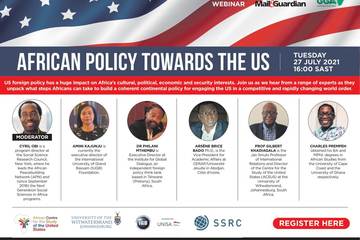
African Policy towards the US webinar
The African Centre for the Study of the United States, in collaboration with Good Governance Africa,
The Institute for Global Dialogue, Social Science Research Council and the Mail and Guardian, present: African Policy towards the US webinar
Date: 27 July 2021
Time: 4:00pm SAST / 10:00am EDT
US foreign policy has a huge impact on Africa’s cultural, political, economic and security interests. Join us as we hear from a range of experts as they unpack the steps Africans can take to build a coherent continental policy for engaging the US in a competitive and rapidly changing world order.
Registration Link for Webinar
https://mg.co.za/africa-us-policy/
For more information on the African Centre for the Study of the United States visit: https://www.wits.ac.za/acsus/
For further inquiries, please contact ACSUS.research@wits.ac.za
Find us on Twitter Facebook and Linkedin
By:
Madeleine Futter
Monday, Aug 16, 2021
CULTURE AND SOCIETY

Leave a comment