


Results for "learning"
6 Results
Empowering Black Youth: From Listening to Learning to Meaningful Action
Black children and adolescents hold valuable knowledge about what supports their well-being and positive development. It’s this understanding that influences much of my research, which focuses on engaging Black youth’s voices to inform how families, schools, and communities understand youth thriving. My commitment to youth-engaged research approaches stems from the belief that young people know how to name their needs, experiences, and hopes for the future—we just need to listen.
Listening to Black Youth to Reimagine the Contexts They Navigate
bell hooks (1991) reminds us that theory emerges from lived experience. In this spirit, Black youth theorize as they navigate the relationships, systems, and environments that shape their growth. Recognizing young people as experts challenges adults, including researchers, educators, and community leaders, to take seriously the insights they can offer about their lives and well-being.
One way this perspective has informed my work is through my involvement with the Family Voices Project, led by Dr. Emilie Smith, Professor of Human Development and Family Studies and College of Social Science Distinguished Scholar. Through focus groups with Black children ages 5–12 in mid-Michigan, our team explored youth’s experiences of racism and coping, as well as what they identify as necessary for their success in school, family, and community contexts. Even at early ages, Black youth in our study offered thoughtful and deeply perceptive reflections on what they need to thrive. Perhaps most importantly, their responses pointed to tangible policies and programs that could better foster their positive development.
For example, participants consistently emphasized the importance of strong relationships and supportive environments. They described how caring family members, encouraging teachers, positive peer connections, and mentors would positively contribute to their sense of well-being and belonging. Many shared that more individualized attention and encouragement at school would strengthen both their motivation and confidence to do well in class. At the same time, children identified several barriers to their well-being. Bullying and teasing surfaced frequently, alongside a desire for more effective adult intervention and support. Concerns about community safety also emerged, particularly fears related to gun violence, highlighting a need for coordinated community safety efforts and responsive firearm policies. In addition, several children described a need for improved food access, underscoring the importance of universal school meals, summer and after school meal programs, community gardens, and other place-based initiatives that promote food security among youth and families.
Listening Responsibly, Acting Responsively
When Black youth articulate their needs and desires, they offer a roadmap for reshaping the environments that matter most in their lives. Their perspectives provide important insight into the conditions that support their success, as well as the barriers that may hinder their growth and well-being. Creating intentional opportunities for young people to share their experiences and perspectives helps us move beyond adult assumptions and toward programs, practices, and policies that are more responsive to the realities they navigate every day.
Even so, listening alone isn’t enough. While creating space for Black youth voice is an important step toward empowerment, it is equally important that their perspectives meaningfully inform the decisions adults often make on their behalf. When youth insights are taken seriously and translated into action, we move closer to creating school, neighborhood, and community environments that are aligned with their lived experiences and developmental needs.
Centering Black Youth Expertise to Create Thriving Developmental Contexts
As they navigate family, school, and community life, Black youth are continually making sense of who they are, how they relate to others, and how the world responds to them. In doing so, they generate insights that can transform developmental contexts into environments that affirm their identities, respond to their needs, and support their holistic well-being. However, these possibilities can only be realized when adults commit to intentional listening and engage young people as partners in change.
Through my scholarship, I aim to affirm Black children and adolescents as active contributors to envisioning healthier and more equitable communities. I’m guided by the belief that when we recognize youth expertise and act on the knowledge they share, we move closer to creating environments where young people—and the communities around them—can truly thrive.
____________________________________
Reference
hooks, b. (1991). Theory as liberatory practice. Yale Journal of Law and Feminism, 4(1), 1–12.
By:
Yasmine Ben Slimane
Thursday, Jun 4, 2026
CULTURE AND SOCIETY
+2
Leave a comment
From Lens to Learning: Alex Mkwizu’s Transformative MSU Journey
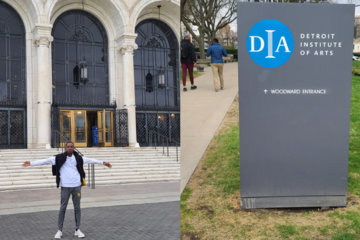
When Ibn Battutah said, “Traveling—it leaves you speechless, then turns you into a storyteller,” in his famous volumes Travels of Ibn Battutah, little did I know how profoundly this wisdom would echo throughout my eight-day experience at Michigan State University (MSU), East Lansing. I had the honor of attending as the overall winner of the InVision Africa Photography Competition, curated and sponsored by the Alliance for African Partnerships. This MSU initiative champions collaboration with African universities in art, culture, language, and other fields.
My time at MSU was eye-opening, filled with warm introductions to professors and artists. I met Professor Peter Glendinning from the Kresge Art Center, whose expertise in photography was inspiring; Professor Susan Wyche, who specializes in Human-Computer Interaction (HCI); and Mr Vadu Rodrigues, a Master of Fine Arts candidate, from whom I learned how his personal influences shaped his narrative and storytelling in photography. I also met many other colleagues, learning from their diverse experiences and creative processes.
These key encounters with experts and practitioners across different artistic disciplines opened doors for me to continue exploring, collaborating, and discovering new opportunities as a multidisciplinary creative artist passionate about the intersection of data, technology, and human-centered storytelling.
One of the most memorable encounters was with Professor Peter Glendinning and his body of work Attached to the Soil, a brilliant photographic project consisting of fifty portraits, oral history-based stories, and metaphoric representations of South African youth. He shared fascinating insights into his process, including an old, rare tool he once used to achieve a stroboscopic effect before the era of advanced cameras and editing software. What stood out most to me was that each photograph’s story was told from the perspective of the subject themselves, a powerful approach to narrative photography.
Another remarkable interaction was with Mr. Vadu Rodrigues and his artistic initiative Positive Africa, which seeks to challenge negative and biased narratives about Africa through photography and other art forms. Spending time with him in his studio was deeply insightful. I admired his practice of carrying a small notebook to document daily experiences and visual ideas that later influence his creative work. Observing his process from conceptualization to a finished art piece was a masterclass in intentional storytelling.
The culmination of this experience profoundly influenced my growth as a creative technologist and multidisciplinary artist. It also opened new doors for collaboration, one of which came through the MSU Museum CoLab Studio. I learned about a call for artists to create a piece exploring AI singularity in all its forms. Having subscribed to the studio’s newsletter, I received the announcement and decided to apply with a concept for a Virtual Reality immersive experience: a VR tribunal where sentient AIs bring cases against humans. Participants take the role of the defendant, while a generative AI judge, UbuntuBot, presides, modelled on African communal justice systems. The project merges storytelling, ethics, and digital futures.
As the old proverb goes, “Luck is when opportunity meets preparedness.” Fortunately, I was selected as one of the artists to collaborate with the MSU CoLab Studio, supported by a seed grant to bring this piece to life and exhibit it at the MSU Museum.
While the journey has only just begun with MSU Art Community, the experience with the Invision Africa Photography Competition and the exposure and connections made within MSU’s artistic community have left a lasting and transformative impact. It will continue to shape my creative path and remain a defining part of my artistic journey.
By:
Baboki Gaolaolwe-Major
Tuesday, Dec 9, 2025
CULTURE AND SOCIETY
+1
Leave a comment
Co-Creating Feasible and Sustainable Play-based Learning: A 2024 PIRA Award Winning Initiative
Every year, the Alliance for African Partnership (AAP) runs an initiative known as the Partnerships for Innovative Research in Africa (PIRA). It is an opportunity for researchers to earn the funding needed to carry out collaborative, supportive and multidirectional projects which are aimed towards improving Africa. The research ideas put forward by each PIRA awardee have shown the potential to change the future of Africa for the better.
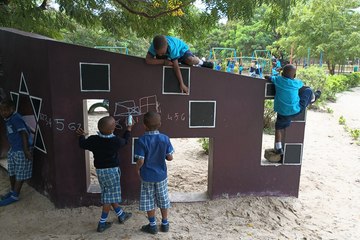
The project created by Dr. Bethany Wilinski of Michigan State University (MSU) and Dr. Subilaga M Kejo of the University of Dar es Salaam (UDSM) is no exception. Collaborating, they are researching “Co-Creating Feasible and Sustainable Play-based Learning Approaches in Tanzania”. Based on a decade of collaboration in research into teaching in Tanzania, they have understood that play based teaching is essential for development of the global youth. It allows children to exercise skills across all academic areas, while developing them within authentic contexts, which in turn develops an enthusiasm for young students to continue learning more advanced subjects.
Play based learning has been acknowledged on a global scale, especially so once the United Nations Convention on the Rights of the Child recognized that this approach to learning will support countries’ progress toward achieving Sustainable Development Goal (SDG) 4: quality education for all. Be that as it may, while on paper it has proven to be the superior teaching model, some countries have been unable to put this into practice, such as Tanzania. Cultural differences, time and staff restraints, and even ignorance to it’s benefits, have stopped this learning style from being used in Tanzanian classrooms.
That is why the aim of Dr. Bethany Wisinki and Dr. Subilaga M Kejo’s project is to “transform pre-primary teaching and learning in Tanzania by supporting teachers’ ability to use play-based approaches effectively.” Their project consists of a three-phase plan:
1: Building a community of practice (CoP) using pre-primary teachers of UDSM’s demonstration schools, university faculty, teacher development experts and more to create a shared understanding of play based learning.
2: Together they will experiment, test and develop a professional development (PD) program about play-based for Tanzanian pre-primary teachers.
3: Pilot the PD with pre-primary teachers in Dar es Salaam and Musoma
As of this article, the team have made promising headway into phase one of their project. 7 modules have been developed, and the teachers of the CoP have already completed 6. The feedback has been positive, with the teachers stating that “they find the training to be beneficial especially because of the modality where they have opportunity to read, practice, reflect and discuss about their experiences which has enhanced their understanding…Generally, the teachers see the benefits of play and seem more motivated and confident to use play-based learning approach.”
There are already plans in place to move phase two of the project on schedule, and both Dr. Bethany Wisinki and Dr. Subilaga M Kejo feels that their work will leave a positive impact on Tanzania’s teaching methods and youth moving forward.
Upon the project’s completion, they plan to use their findings “to inform the development of a research-practice partnership with the Tanzania Institute of Education focused on improving the quality of preservice preparation for pre-primary teachers.”
By:
Baboki Gaolaolwe-Major
Tuesday, Jul 15, 2025
YOUTH EMPOWERMENT
+1
Leave a comment
The Business of Water: A COIL Project By AAP
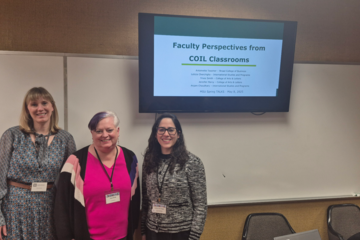
Collaborative Online International Learning (COIL) is a method of education which fosters intercultural learning and development through shared values, presented perspectives, and mutual understanding despite geographical and cultural barriers. It connects students and professors in different countries for collaborative projects and discussions carried out virtually as part of their coursework. As an educational innovation, it reflects the values and goals of the Alliance for African Partnership (AAP) to foster mutually beneficial programs which catalyze lasting partnerships among our consortium members, which is why AAP launched the COIL Faculty Fellows Program-Africa in 2023. Since 2023, AAP along with Michigan State University’s (MSU) Global Youth Advancement Network have supported 14 teams of faculty to design and implement COIL projects.
The highly successful“The Business of Water” COIL project implemented by faculty from MSU and the University of Nigeria Nsukka is a great example of the type of impact COIL can have on both faculty members and students The project comprised 30 students from UNN and MSU, and led by Antoinette Tessmer OF THE Broad College of Business (Finance Dept.), Michigan State University and Nkadi Onyegegbu, Faculty of Education (Science Education Dept.), University of Nigeria Nsukka (Nigeria). It’s aim was to teach students the factors and events that control “The Business of Water” both in their universities and in their communities. UNN and MSU students communicated through online methods such as Zoom or WhatsApp, and they collected data through site visits and interviews among other methods.
Over the course of six weeks, the students learned the intricacies of specific water-based businesses, such as the drinking water industry and the water recycling industry, using the Environmental Social Governance (ESD) framework to structure their research and to later propose a call to action based upon their findings.
By the end of the COIL project, the students and facilitators had engaged and collaborated to such a degree that contacts, bonds and partnerships were formed, breaking through the cultural and international barriers. When giving their experiences on the project, some students wrote the following:
“At the end of the day, we pushed others in new ways of understanding and collaboration that will impact us after we graduate”
“This was my first experience collaborating with international students overseas and I can gladly say that COIL was the online tool that made it possible”
“This experience has highlighted mutual respect and honesty, allowing us to work together on relevant and environmentally sustainable solutions...I feel more equipped to contribute to global discussions”
“These problems also taught me how to communicate with people from different cultures and helped grow my interpersonal skills”
By the metric of engaging students in the “Business of Water” as well as forming intercultural bonds, the AAP has deemed this COIL project another success, among many, and is excited to champion more COIL projects to come.
By:
Baboki Gaolaolwe-Major
Wednesday, Jul 23, 2025
YOUTH EMPOWERMENT
+1
Leave a comment
The Role of Science, Institutions of Learning, and Training on Africa’s Fertilizer and Soil Health.
Summary: African soils are in danger, and this crisis threatens to disrupt food security and ecosystems, potentially leading to famine and nutritional challenges. Healthy soil is essential for human existence on earth. Healthy soils have biological, physical and chemical properties found in their top layer, or topsoil, that sustain plant and animal productivity, soil biodiversity and environmental quality.
Healthy topsoil is a key factor in bolstering agriculture productivity in Africa. Yet it is known that African soils are in a crisis. Addressing this urgent issue requires a collaborative effort involving policy and regulation, funding, private and community interventions, and, crucially, the leadership of African research and training institutions. These entities are pivotal in restoring Africa’s soil health and ensuring the appropriate use of fertilizers.
The Africa Fertilizer and Soil Health Summit (AFSHS), held in Nairobi, sought to address these pressing issues. The Summit’s primary goal was to establish an Africa Fertilizer and Soil Health Action Plan, a roadmap designed to tackle the challenges of declining soil health and low fertilizer efficacy across the continent. This plan, envisioned to guide efforts until 2030, aims to enhance agricultural productivity through sustainable practices and robust policy frameworks.
During the Summit, the Alliance for African Partnership (AAP), in collaboration with Michigan State University (MSU) and the Africa Network of Agricultural Policy Research Institutes (ANAPRI), organized a critical side event. This event underscored the indispensable role that African research and training institutions play in shaping and implementing policy reforms for fertilizer and soil health programs.
The Vital Role of African Research and Training Institutions
African research and training institutions are custodians of knowledge and expertise, uniquely positioned to drive sustainable agricultural practices and to address ongoing soil degradation. Their role in promoting sustainable practices and conducting extensive research is central to the success of the Africa Fertilizer and Soil Health Action Plan. These institutions, including universities, scientific crop and livestock institutes, and policy research think tanks, are essential in providing thought leadership, policy engagement, and the development of key solutions and implementation strategies.
Professor Thom S. Jayne of MSU highlighted this during his keynote presentation at the side event. He emphasized that effective implementation of soil health initiatives requires the involvement of trusted local institutions. “The message coming from established local actors will generate much greater trust and commitment than the same message from externally funded outside interests,” he noted. This sentiment reflects a broader recognition that African-led initiatives are crucial for achieving lasting impact and engagement with African governments.
Challenges and Collaborative Efforts
Implementing these initiatives is not without challenges. African food systems face pressures from climate change, population growth, conflict, and land degradation. Innovation is necessary to adapt to these conditions, and this innovation must be driven by robust agricultural research and extension systems. As Thomas Jayne stated, “Innovation is required for African founding populations to survive and remain competitive and productive in the face of all these changes.”
However, the adoption of innovative soil fertility practices among smallholder farmers remains low. Many farmers struggle to consistently implement practices like crop rotations, intercropping legumes, and recycling organic matter. To address this according to Thom Jayne, there must be strong bi-directional learning systems where farmers benefit from new technologies, and scientists understand and address the barriers to adoption.
Path Forward: Empowering Local Institutions
The need for empowering local African institutions will be key to responding to the call implementation of the actions plans. However the local institutions will need to take into account challenges such as; the need for building national coalitions of stakeholders and defining local level coordination mechanisms as well as resources including human and financial These institutions must be supported to fulfill their mandates, drive research and innovation, and implement policies that reflect the realities and needs of African agriculture on the ground. Professor Titus Awokuse from MSU underscored the importance of these partnerships. “Stakeholders must collaborate and contribute to the success of the action plans, from providing leadership and coordination to investing resources and actively participating in the implementation process,” he said. This collaborative approach ensures that the action plans are not just theoretical but are translated into tangible outcomes that benefit farmers and communities across Africa.
Conclusion
The Africa Fertilizer and Soil Health Summit and its associated events highlighted the critical need for a concerted effort to address soil health and fertilizer use in Africa. By leveraging the expertise and leadership of African research and training institutions, supported by a collaborative network of stakeholders, there is a real opportunity to create a more sustainable and productive agricultural future for the continent. The success of these initiatives will not only restore soil health but also enhance food security and resilience, ensuring a prosperous future for Africa and its people. Inherently, this is not a small feat, given the diverse multistakeholder partnerships, alongside the complex nature of various governments, it requires careful navigation. Titus Awokuse reminded everyone that “even though our conversations may take many forms and go in different directions, we need to always remember it's about the people. It's about families, children and individuals that don't have a voice, therefore in our conversations we need to think carefully on how to leverage our positions of privilege to make their voices heard”
By:
Baboki Gaolaolwe-Major
Wednesday, Jul 10, 2024
HEALTH AND NUTRITION
+2
Leave a comment
Young Ugandan entrepreneurs get hands-on experience with digital tools
Seven young entrepreneurs belonging to four teams from Uganda participated in a hands-on learning course to familiarise themselves with the solar-powered smart projector kit that they had won through the Access Agriculture Young Entrepreneur Challenge Fund initiative. The smart projector contains the entire library of Access Agriculture farmer-training videos in local and international languages and can be easily updated as new videos become available.
The winners of the Challenge Fund, known as Entrepreneurs for Rural Access (ERAs), are part of a network of innovative young people who design sustainable business models based on using the smart projector in rural areas to bring about a positive change in the lives of farmers, especially women and youth, in their communities through promoting sound agroecological practices.
The course was held at Gudie Leisure Farm, Wakiso district in Uganda as part of the Knowledge Centre for Organic Agriculture in Africa (KCOA) project funded by GIZ. It was facilitated by Access Agriculture ERA Entrepreneur coaches based in Uganda, in association with a local partner, The Farmers Media, and colleagues from KCOA project and the Participatory Ecological Land Use Management (PELUM) network in Uganda.
Simon Negro Adriko, who has been an ERA in Uganda since 2019, was invited to share his entrepreneurship experiences with the newly recruited ERAs. One of the ERAs from AgroMush team who is just completing his studies in Algeria, Azaria Kamusiime, participated virtually in all the sessions.
The training consisted of presentations, classroom and practical field sessions, including:
Group presentations of assignments given by the ERA coach before the training relating to key topics of the sessions
Demonstration of COVID-19 prevention guidelines that ERAs should follow during the training and in their enterprise-related activities
Hands-on experience with the smart projector
Data collection tools to monitor and track performance
Practical field tasks which involved all the elements that they learnt in the classroom – from youth mobilisation to screening of videos using the smart projector and data collection
Session on basic business skills and development of work plans
Continue to accessagriculture.org's website for more information!
By:
Derek Tobias
Monday, Aug 16, 2021
AGRI-FOOD SYSTEMS


Leave a comment