

Browse
Archives of Afro-Asia: Excavating the Cultural Politics of the Early Decolonisation Era
CALL FOR PROPOSALS
The Bandung Conference of 1955 is commonly described as a pivotal moment in international politics – both a critical space of political articulation of the “Third World” and a prelude to the Non-Alignment Movement of the 1960s. While an earlier historical literature on the “Bandung moment” and the era of Afro-Asian solidarity has tended to primarily focus on interstate diplomacy and international cooperation, in the last decades, and especially since the conference’s fiftieth anniversary in 2005, scholars from the humanities and social sciences have been working in re-thinking and opening up the field in creative and productive directions. As the cultural and literary turns prompted a pluralisation of research agendas and methodologies in historical scholarship more broadly, scholars of Afro-Asian encounters have been moving away from perspectives that reify the nation-state as the locus of historical narration, to focus instead on cultural and discursive production and circulation as deeply constitutive of the politics of decolonisation and Afro-Asian solidarity. This includes promising research on the “cultural Cold War” and a rising interest in modes of writing and representation that cut across – and complicate – the cultural and racial boundaries and political formations of the decolonising world. Likewise, scholars have been increasingly aware of the “archive” not as a reservoir of information to be mined, but as a political and dynamic space to be critically engaged, questioned and subverted. A particularly exciting avenue of research is focused on the silences, absences, and exclusions produced by the colonial archive, leading to a critical engagement with marginalised institutional spaces – such as underexplored public and private archives in the Global South – and other registers and practices of archive making, beyond conventional textual and documental forms.
In order to grasp the heterogeneous nature and non-linear dynamics shaping the Afro-Asian movement, especially in view of the relative dearth – but increasing number – of studies that examine the everyday performance of Afro-Asian solidarity, this Special Issue of Itinerario will excavate the material, textual, affective, and performative dimensions of Afro-Asia in the early decolonisation era. We are interested in mapping out the imaginative geographies and political formations produced and inhabited by Afro-Asian writers, activists, and intellectuals; in taking account of the pragmatics of transnational interactions and dialogue; and in exploring the multiple archives and registers of the Afro-Asian movement.
We invite proposals considering the “Archives of Afro-Asia” problematic in the following terms:
Beyond Textual Register: we encourage papers interrogating historical sources and archival registers that cannot be captured, limited, and subsumed to textual forms. We are especially interested in studies exploring the critical possibilities associated with integrating records of orality, musicality, visual cultures, performance, and the senses in our understandings of the early decolonisation era.
Beyond Colonial Temporality: We invite papers exploring the creative and critical potential of marginalising “the colonial era” and moving towards innovative approaches to the “precolonial register” and Afro-Asian futurities. We also welcome papers that explore how AfroAsian actors mobilised notions of the “pre-colonial” and various forms of “futurology” in the early decolonisation era.
Beyond Territorial Locations: colonial archives are territorially bounded institutions, in both material and epistemic terms. They reside in buildings, cities, nations, and their practices of organisation of knowledge are shaped by the territoriality of the state itself. Yet, AfroAsia is a fluid de-territorialised arena marked by circulations. We welcome papers invested in displacing territorial imaginations to re-centre the “oceanic” as productive space.
Beyond the Human: modern colonialism was a deeply anthropocentric affair, as it produced not only the dehumanisation of Europe’s racial “other”, but also the marginalisation of non-human actors through processes of capitalist extraction and environmental degradation. We invite papers that interrogate the process by which the boundaries of humanity were being re-negotiated during the early decolonisation era, as well as papers exploring the agency or role of non-human actors in the Afro-Asian moment.
Complicating Authorship: We welcome papers that expand the “canon” of AfroAsian authorship beyond the male, bourgeois, and European(ised) self, to include texts, discourses and forms of representations speaking to inner experiences of Afro-Asian otherness and uttered from marginalised positions (e.g. voices of feminist, working class and queer subjects).
Pluralising Textual Forms: AfroAsian print cultures were necessarily diverse. They included statements, resolutions, and other texts produced at conferences, symposia and gatherings of activists and intellectuals, as well as a number of periodicals and books involving fictional and non-fictional writing. In addition to these highly visible materials, we invite papers dealing with personal or marginalised archives of Afro-Asia – such as diaries, letters, and other forms of self-writing that went unpublished or circulated outside main publishing networks.
Epistemic Creativity and Disobedience: AfroAsianism has more frequently been studied as an eminently political project. We know relatively less about how intellectuals, thinkers and researchers of the decolonising world engaged academic discourse and the labour of theory. As intellectual, social, and student movements demand the decolonisation of the University and of the disciplines in our current moment, we invite papers interrogating the practices of epistemic creativity and disobedience undertaken by Afro-Asian actors during the decolonisation era.
The Social and Material Lives of Texts: books, periodicals, newspapers, and texts in general are material objects and commodities in their own right, emerging from the convergence of cultural, political and economic forces. We welcome contributions interested in following the material lives of texts and exploring their historical role as concretised expressions of relations of textual and cultural production. We are interested in papers that interrogate the notion of AfroAsian print culture and readerships, especially looking at the circulation and consumption of printed texts across transnational and local scales.
If you wish to contribute to this Special Issue, please submit proposals containing title, institutional affiliation, and an abstract of no more than 500 words to the editors, Caio Simões de Araújo (caio.simoesdearaujo@wits.ac.za) and Luca Raimondi (luca.raimondi@wits.ac.za) by 15 January 2021. Notifications of acceptance will be sent out by 22 January 2021. Full papers are expected by 1 May 2021.
Contact Info:
Caio Simões de Araújo (caio.simoesdearaujo@wits.ac.za) and Luca Raimondi (luca.raimondi@wits.ac.za)
By:
Elaina Lawrence
Monday, Aug 16, 2021
EDUCATION

Leave a comment
AFAP Transforming Lives Publication
AFAP is proud to present the digital version of the “Transforming lives stories” publication for 2020. This e-publication features AFAPs successes and impact on Agribusiness and smallholder farmers in Burkina Faso, Ghana, Malawi, Mozambique, Tanzania and Uganda.
We would like to extend a heartfelt gratitude to all our colleagues and editors who efficiently documented the stories. Finally, we deeply thank our donors that have financially supported AFAP’s work in the agricultural inputs and agribusiness value chain in Africa. With your support we are in changing lives, empowering families and transforming communities.
Click here to read our e-publication
Download a pdf copy
By:
Elaina Lawrence
Monday, Aug 16, 2021
AGRI-FOOD SYSTEMS

No Preview Available
Leave a comment
Uganda – From hate to love: Ochakolong’s agricultural journey
Growing up, Ochakolong Esukaya, a now second-year student of agribusiness management at Busitema University in Soroti, detested farming. To him, farming was a form of punishment. Back in primary school, he explained, farming and especially weeding were activities for latecomers and students who misbehaved.
Having grown up in a farming household, Ochakolong continued to farm. In February and May 2020 during the long rains, he was selected by Acila Enterprises Ltd to be one of two host farmers for a demonstration garden at Busitema University. Acila Enterprises is one of the AFAP-supported hub agro dealers that received funds for demand creation. He was allocated 600 tomato seedlings of the Kilele F1 variety. With the provided seedlings, Ochakolong managed to achieve 95% germination. On a 40m by 20m plot, he grew 1300kg from the garden, which was worth 1.3 million shillings ($ 371). The cost of production on his side was zero apart from his time since the demo plot was fully funded through AFAP funds. As a result of his commitment,
Acila Enterprises allocated him the funds earned to reinvest and also to buy some sachets of Kilele, which he was to sell to neighbouring farmers. Ochakolong sold 109 sachets of Kilele F1, each of which cost 62 000 shillings (approximately $17). Acila paid him a commission 1000 Ugandan shillings ($0.02) per sachet.
To continue reading, please visit the AFAP website
By:
Derek Tobias
Monday, Aug 16, 2021
AGRI-FOOD SYSTEMS
Leave a comment
Webinar: How can universities improve their social impact?
Tune in to this upcoming webinar on "How can universities improve their social impact?" presented by University World News in partnership with the Mastercard Foundation.
On 25 November, the webinar will bring together experts and practitioners from across the world from the International Association of Universities, the Talloires Network of Engaged Universities and the Mastercard Foundation Scholars Program in an online webinar to discuss the topic.
Make sure to register and tune in on 25 November @ 9am EDT, 2pm GMT and 4pm in Johannesburg.
https://event.webinarjam.com/register/17/rp8qlcy?utm_source=newsletter&utm_medium=email&utm_campaign=webinarnov2020
By:
Elaina Lawrence
Monday, Aug 16, 2021
EDUCATION

No Preview Available
Leave a comment
Call for Papers: Practices of Academic Freedom in Times of Austerity
On Twitter, Kenyan blogger Keguro Macharia (@keguro) regularly poses the question, “How will you practice freedom today?” It is a useful reminder that freedom is not only an ideal but also a practice and lived experience. The question prompts us to ask, How does one practice, rather than merely protect, academic freedom? And how can these practices be expanded and made irresistible?
As these practices are enacted in the context of austerity that curtails academic freedom, we also ask, How can collective and individual responses to austerity redefine available practices of freedom? How might posing academic freedom as a struggle over material means change our ideas and strategies? What is the relationship between academic freedom, other ideas of freedoms, and other freedom struggles? How does academic freedom function for precarious faculty and staff, for students, for tenured and tenure-track faculty from marginalized groups?
For its next volume, scheduled for publication in fall 2021, the Journal of Academic Freedom will consider any original article on the topic of academic freedom, but we are especially interested in the following topics:
Academic Freedom and Freedom Struggles
Black studies scholar Barbara Ransby observes that the Black Lives Matter movement “is nothing less than a challenge to all of us to rethink, reimagine, and reconstruct the entire society we live in.” This includes the university and practices of academic freedom. The ongoing uprisings associated with the Movement for Black Lives demand that we reconsider higher education’s physical spaces and cultural practices, including monuments and public art; classroom curricula and conversations; the peopling of the university; and the relationship between institutions and the communities they serve, or fail to serve.
Sanctuary Campuses
How do calls for sanctuary campuses affect the practice of academic freedom? What are aspirational and actually existing models of sanctuary campuses, and how do these engage broad questions of shared governance and academic freedom? How does the struggle for sanctuary campuses link higher education advocacy to broader social movements?
Pedagogy and Affect
The classroom is an important space for the practice of academic freedom. Contemporary freedom movements raise important questions about access to the classroom and diverse experiences within it. Along with the dynamic challenges posed by teaching during the COVID-19 pandemic, insights from freedom struggles provide new models for teaching and learning. How do LGBTQ, disability rights, and BIPOC formations propose alternative practices of academic freedom? What are the parameters of these new models, and what opportunities and challenges do they convey?
The Material Means of Mental Production
Academic freedom is conditioned on access to resources—libraries, classrooms, research funds, time, access to a community of scholars—that are the tools that Karl Marx called the “material means of mental production.” Though the ideal of the university promises academic freedom to faculty, in reality external boards and state governors are the legal guardians of university property and ultimately control access to the instruments of knowledge production. How do academics fight to wrest control of the material means of mental production? What is the relationship of this struggle to broader social transformations? How has the imposition of austerity budgets at public and private institutions changed the terms of these struggles?
Libraries and Librarians
In the struggle for academic freedom, libraries are essential sites and librarians are essential workers. How can libraries be spaces for the expansion of academic and other freedoms? How do issues around collections, catalogs, access, reference, and information literacy affect academic freedom? How have librarians expanded academic freedom in fights against austerity budgets, profit-driven publishers, and surveillance, and in fights for open access, privacy, and freedom from harassment?
Internationalist Practices
How are practices of academic freedom different in political contexts outside of the United States? What lessons in fighting austerity emanate from other geographic contexts? How are austerity regimes outgrowths of colonial and neocolonial ones? How are practices of academic freedom also practices of decolonization?
SUBMISSION GUIDELINES
Electronic submissions of 2,000–8,000 words should be sent to jaf@aaup.org by February 8, 2021, and they must include an abstract of about 150 words and a short biographical note of one to two sentences about the author(s). Authors using pseudonyms must notify the journal at the time of submission, disclose their real names, and explain their reasons for wishing to keep their identities confidential. Please read our editorial policy and the complete call for papers at https://www.aaup.org/about-jaf prior to submitting. We welcome submissions by any and all faculty, staff, graduate students, and independent scholars. If you have any questions, contact faculty editors Rachel Ida Buff at rbuff@uwm.edu or S. Ani Mukherji at mukherji@hws.edu (please do not send submissions to these addresses).
Please help us get the word out about the call for papers by sharing with your colleagues. Forward this email or share a link to the AAUP website, where a PDF of the Journal of Academic Freedom call for papers is available for download. We look forward to reading your submissions!
By:
Elaina Lawrence
Monday, Aug 16, 2021
EDUCATION
Leave a comment
University of Nigeria, Nsukka 60th anniversary
We are excited to join MSU President Samuel Stanley in congratulating our friends at University of Nigeria, Nsukka
as they celebrate their 60th anniversary. While we wish we could celebrate with them in person, we are thrilled to continue building on the decades-long partnership between MSU and UNN. MSU and UNN worked together to establish the first land-grant institution on the continent in 1960 and both are founding members of the Alliance for African Partnership. African Studies Center | Michigan State University
has established the Nnamdi Azikiwe International African Student Fellowship, in honor of the former president of Nigeria, to support international African student travel to Africa for their research. Congratulations Lions and Lionesses on your milestone, and here’s to the next sixty years!
By:
Elaina Lawrence
Monday, Aug 16, 2021
EDUCATION
Leave a comment
A New Home! | Unveiling Africa's First Women in Agribusiness Digital Marketplace
Click on the link below to register!
https://register.gotowebinar.com/register/7953468402877216268
By:
Elaina Lawrence
Monday, Aug 16, 2021
AGRI-FOOD SYSTEMS
+1

Leave a comment
The world needs the contribution of African scientists
Check out this University World News article on the need for more African scientists.
According to authors Marincola and Kariuki, "African science matters not only because African people matter but also because people everywhere in the world will thrive only if science is driven by the best possible talent and initiative of all the peoples of the world."
Click the link below to read more:
https://www.universityworldnews.com/post.php?story=20201015080006769&fbclid=IwAR3c8vP1yTAOTXW-bH2p_6ak4_mFqREKTBdN9iRlk5jEjz3C0v8a7_wtqtk
By:
Elaina Lawrence
Monday, Aug 16, 2021
HEALTH AND NUTRITION
+2

No Preview Available
Leave a comment
Youth as Catalysts for Agricultural Transformation - Borlaug Dialogue/WFP Side Event
Follow the link to watch the Youth as Catalysts for Agricultural Transformation - Borlaug Dialogue/WFP Side Event recording. This event featured a discussion about research, programmatic and advocacy efforts underway to advance SBAE in Africa, and a call for collaboration across sectors.
Sub-Saharan Africa is home to almost one billion people. By 2050, the population of the region is expected to double, and half will be under the age of 18. Known as the “youth bulge,” this sudden population explosion will exacerbate challenges around youth employment and food security unless policymakers take decisive action, today.
By:
Elaina Lawrence
Monday, Aug 16, 2021
YOUTH EMPOWERMENT
+1
Leave a comment
Governing the Pandemic in Large Cities: From the BRICS and Beyond
The African Cities and Internationalization Group hosted by the African Center for the Studies of the US presents
Governing the Pandemic in Large Cities: From the BRICS and Beyond
Date: 22-23 October 2020
Time: 1:00 PM – 4:00 PM Johannesburg Time
By:
Elaina Lawrence
Monday, Aug 16, 2021
CULTURE AND SOCIETY
+1
Leave a comment
University of Pretoria Upcoming Symposium
The University of Pretoria will be hosting a Symposium: Reflections on the Scientific and Social Impact of the COVID-19 Pandemic, taking place on 22 – 23 October 2020.
The Vice-Chancellor and Principal of the University of Pretoria, Professor Tawana Kupe, and the Centre for the Advancement of Scholarship (CAS) invite you to a two-day symposium, titled ‘Reflections on the Scientific and Social Impact of the COVID-19 Pandemic’, set to take place on 22 and 23 October 2020.
To register for this event, click on the link below:
https://up.everlytic.net/public/forms/h/bWEWqAZhBQE2Loju/ZjFjYWQ0YmMxYmUwYzRjYTJkYjEzNGQ5ZWUxOTQwMTBkOGYxODRlNg==
By:
Elaina Lawrence
Monday, Aug 16, 2021
HEALTH AND NUTRITION

Leave a comment
Africa's rapid economic transformation
Check out this article co-authored by Thom Jayne, Adesoji Adelaja, and one of AAP's co-directors, Richard Mkandawire.
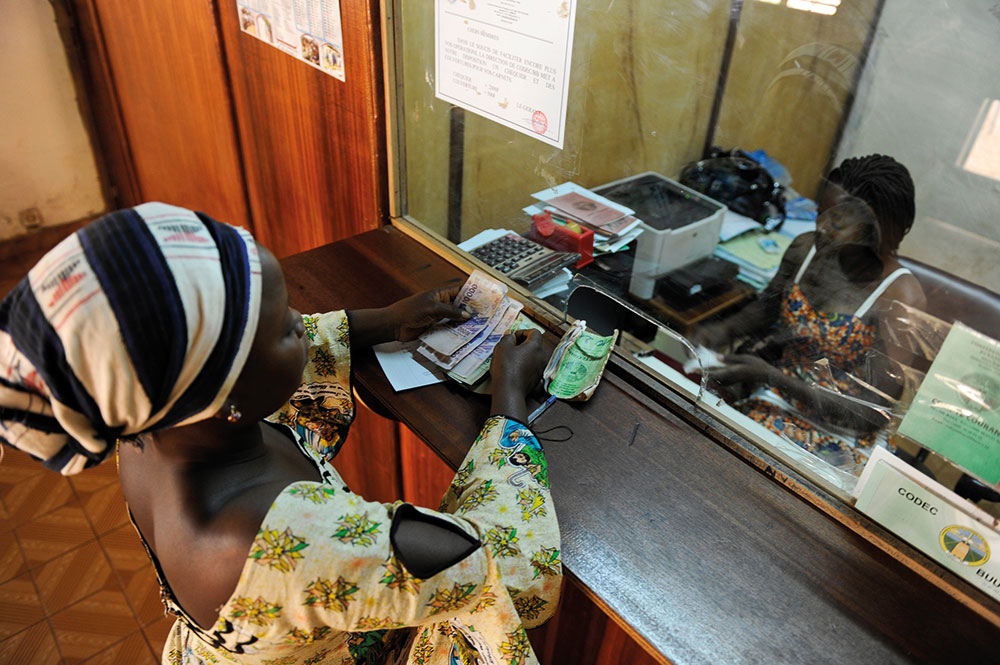
The article provides a powerful message of hope for Africa. In spite of wars, famine and poverty they argue that Africa has made major strides in living standards, there is clearly a new generation that provide promise for the transformation of the continent. The underlying message is that they have in the making a cadre of African entrepreneurs that are delinking from the past.
Click on the link below to read more:
https://www.rural21.com/english/current-issue/detail/article/africas-rapid-economic-transformation.html
By:
Elaina Lawrence
Monday, Aug 16, 2021
CULTURE AND SOCIETY
+2
No Preview Available

Leave a comment