

Browse
Culture And Society
Call for Papers: History of Technology Conference
“Engaging the History of Technology”
International Congress of History of Science and Technology
Annual Meeting
Democritus University of Thrace
Alexandroupolis, Greece
October 8 – 11, 2026
The theme of this conference, “Engaging the History of Technology”, invites critical reflections on how history of technology can engage with evolving methodologies, theories and pedagogies, and other branches of historical study to demonstrate that understanding technologies’ pasts are essential to navigating contemporary challenges. The conference, therefore, seeks contributions across spatial and epistemic boundaries: from the everyday and local to the geopolitical and planetary; from archival practice to classroom teaching and public engagement; and from discipline-specific research methods to interdisciplinary collaborations.
Contributors may engage with one or more of the following themes, or even suggest new ways of thinking about:
1. The History of Technology between the Local, the Regional, and the Global:• Circulation of technologies, expertise, and knowledge across borders• Adaptation and appropriation of technologies in different cultural contexts• Tensions between globalisation and localisation in technological change• Regional networks and their role in shaping technological trajectories• Colonial, postcolonial and decolonial dimensions of technology• Networks of maintenance and repair2. History of Technology, Historiography and Education:• Methodological innovations in researching the history of technology• Interdisciplinary approaches and their challenges• Teaching the history of technology in universities and schools• Public engagement and the communication of technological history• The relevance of technology history to contemporary policy debates• Digital humanities and new forms of historical scholarship3. Intersections between the History of Technology and Other Fields of Historical Study:• Technology and social history: class, labour, gender, and everyday life• Technology and cultural history: representation, identity, and meaning• Technology and environmental history: sustainability, resource use, and ecological change• Technology and economic history: innovation, industrialisation, and development• Technology and political history: governance, regulation, and power• Technology and the history of medicine: cultural values, therapeutic practice, and material conceptions about the human body4. Special Focus: Museums, Material and Intangible Cultural Heritage, and Public Engagement: Given our collaboration with the Ethnological Museum of Thrace, the planners particularly welcome proposals that engage with material and intangible culture, museum practices, and public history. They are interested in innovative session formats that:• Explore tensions and synergies between academic and museum approaches to technological history• Demonstrate object-based learning methodologies• Address the challenges of communicating technological history to diverse publics• Examine the role of museums in preserving and interpreting technological heritage• Study visitor engagements with intangible heritage, particularly those of marginalised and silenced ethno-cultural communities• Critically examine the funding relationships between private technological and industrial interests, and museum
Proposals will be accepted in the following formats:
Paper presentations
Individual and author teams’ presentations.Please, submit an abstract of up to 350 words.
Panel Sessions
Thematically coherent sessions of 3-4 papers. Panel organisers should submit a panel abstract (up to 400 words) describing the theme and its significance; after approval the conference committee and the panel organisers will issue a specific call for proposals (individual or author teams’ paper abstracts up to 350 words each).
Roundtables
Discussion-based sessions with 4-6 participants addressing a specific question or debate. Organisers should submit a description of the topic and format (up to 350 words); names and brief bios of participants (up to 100 words each); key questions to be addressed.
Graduate Student and Early Career Opportunities
ICOHTEC is committed to supporting emerging scholars. We particularly welcome submissions from graduate students and early career researchers. The conference will feature:• Visual Lightning Talk Competitions for graduate students• Mentorship opportunities pairing students with established scholars• Book development workshops
Submissions of abstracts through the conference website: December 15, 2025 - January 31, 2026
Official conferencewebsite: https://icohtec2026.hs.duth.gr
- Peter Alegi, MSU Department of History -“Soccer as Work and Play: A Congolese Life Story, from Colonialism to Globalization” (co-sponsored by the MSU Department of African American and African Studies and the MSU African Studies Center)
Monday, March 23 - Jenelle Thelen – “Smooth as Silk: Working Women of the Belding, MI Silk Mills (1902-1908)” (co-sponsored by the MSU Center for Gender in Global Context)
Friday, April 3 - David Stowe, MSU Religious Studies – “The Musical Tanner: Negotiating Work, Music, and Belief in Revolutionary Boston”
* TBD - Nicholas Sly, MSU Department of History - “Curing the Crisis of Masculinity: Calisthenics and Office Work in the Early Twentieth Century”
Check out all the Our Daily Work/Our Daily Lives brown bag presentation recordings available on the MSU Library website (over 125 and still counting!!- JPB)
Did you miss a brown bag presentation that you really want to hear? Or perhaps you may want to explore the listing of past presentations that you didn't even know about. There's an answer to both quests.
Thanks to all our friends at MSU Vincent Voice Library, there is a new home for all our recorded brown bags. Follow these links and you should be able to tap into all of the recordings we have cataloged thus far: Our Daily Work/Our Daily Lives Channel or https://mediaspace.msu.edu/channel/channelid/209060293. Easy Peasy!! Thanks to everyone for setting us up this way!!!
The deepest note of Thanks to all of the folks at the Vincent Voice Library who have worked with us to create this archived set of recordings. Thanks to Shawn, James, Mike, Rick and the late John Shaw for their work over the years on our behalf.
For over thirty years, "Our Daily Work/ Our Daily Lives" has been a cooperative project of the Michigan Traditional Arts Program and the Labor Education Program.
By:
Aaron Dorner
Thursday, Dec 4, 2025
CULTURE AND SOCIETY
+1

No Preview Available
Leave a comment
Call for Book Proposals: Yorùbá Worlds, New Book Series Edited by Toyin Falola
The University of Wisconsin Press is pleased to announce the launch of a new book series, Yorùbá Worlds, edited by Toyin Falola. Publishing innovative book-length works and privileging Yorùbá voices, this multidisciplinary series is intended to answer urgent calls to decentralize colonial narratives of Africa and its diaspora and elevate Indigenous knowledge systems, oral histories, and community-centered approaches.
“The long and diverse history of the Yorùbá people, from precolonial times to today, included notable achievements in political systems, economic ties, cultural innovations, multireligious interactions, and global continuities,” says series editor Toyin Falola. “This series highlights Yorùbá voices and knowledge systems, focusing on agency and communities in both Africa and the diaspora, to deepen understanding of ongoing developments and potential related to identity, spirituality, decolonization, and transnationalism. I am excited about the opportunity to showcase and curate a wide range of innovative, cutting-edge, and multidisciplinary scholarship that offers new insights into the history, cultures, and intellectual contributions of what is perhaps Africa’s most significant and most widely dispersed group, the Yorùbá.”
The Yorùbá people have a long history of producing remarkable cultural forms, intellectual traditions, and influential historical narratives. The history of Yorùbá civilization is exemplified by precolonial urbanized city-states such as Ilé-Ifẹ̀, Ọ̀yọ́, and Ibadan, each of which had administrative structures in place. As Yorùbá people dispersed globally, their religious beliefs, languages, and cultures were foundational to forming Afro-diasporic identity in Brazil, Cuba, Trinidad, Haiti, and the United States. Yorùbá legacy, both within the African continent and among members of the global diaspora, has intensified in the contemporary period, as seen in the vibrancy of the religious expressions of Santeria and Candomblé, the explosion of Afrobeats, Yorùbá films, and transnational repatriation projects, among others.
Yorùbá Worlds is a multidisciplinary series that aims to showcase this vibrant legacy by compiling various perspectives. In addition to rigorous analyses of Yorùbá contributions to global intellectual, political, and cultural histories, the series will collapse some distance between academic inquiry and the wider world. The series will also be essential for understanding how African epistemologies continue to shape contemporary conversations about identity, spirituality, decolonization, and transnationalism.
Editor in chief Dan Crissman notes, “The University of Wisconsin Press is a recognized leader in publishing groundbreaking and essential work in African studies. We are very pleased to partner with Dr. Falola to shine a spotlight on Yorùbá history and culture.”
Series editor Toyin Falola is Distinguished Teaching Professor and Jacob and Frances Sanger Mossiker Chair in the Humanities at the University of Texas at Austin. Falola is the author or editor of more than 150 books on African history, politics, and society. He is the recipient of twenty-eight honorary doctorates from around the world as well as more than forty lifetime achievement awards.
The series advisory board includes Olufunke Adeboye (University of Lagos), Akintunde Akinyemi (University of Florida at Gainesville), Andrew Apter (University of California, Los Angeles), Matt D. Childs (University of South Carolina),Henry Lovejoy (University of Colorado Boulder), Akin Ogundiran (Northwestern University), Bola Sotunsa (Babcock University), Aribidesi Usman (Arizona State University), Olufemi Vaughan (Amherst College), and John Thabiti Willis(Grinnell College).
The first book in the series, Joseph Odùmósù’s Book of Healing, edited and translated by Michael Ọládẹ̀jọ Afọláyan and Helen Tilley, will be published in January 2026.
For more information about submissions, please contact Dan Crissman, editor in chief, at dcrissman@wisc.edu. For other inquiries, please contact the series editor, Toyin Falola, at toyinfalola@austin.utexas.edu.
About the University of Wisconsin Press
The University of Wisconsin Press is a not-for-profit publisher of books and journals. With more than 1,500 titles and 8,000 peer-reviewed articles in print, its mission embodies the Wisconsin Idea by publishing work of distinction that serves the people of Wisconsin and the world.
Contact Information
Dan Crissman, Editor in Chief, University of Wisconsin Press
Contact Email
dcrissman@wisc.edu
By:
Aaron Dorner
Friday, Nov 21, 2025
CULTURE AND SOCIETY

No Preview Available
Leave a comment
African Futures Research Leadership Program - Cohort 6 Call for Applicants
AAP AFRICAN FUTURES RESEARCH LEADERSHIP PROGRAM
Artificial Intelligence in Africa: Transdisciplinary Innovations for Sustainable Futures
Cohort 6 Call for Applicants
Alliance for African Partnership (AAP) invites applications for the sixth cohort of the African Futures Research Leadership Program. This competitive visiting scholar program supports early career researchers from AAP consortium universities to collaborate for one year with faculty members at Michigan State University (MSU) and their home institutions. The program focuses on strengthening skills in impactful research, curriculum development, innovative teaching, scholarly and policy writing, dissemination of research results, and grant proposal development. Scholars will also participate in a structured professional development program while building meaningful and lasting connections with MSU faculty and fellow scholars.
The primary goal of the African Futures Program is to strengthen the capacity of emerging African researchers to become scientific leaders in their communities. The program seeks to foster long-term partnerships with MSU faculty, co-create innovative solutions to Africa’s challenges, and cultivate the next generation of research mentors and leaders.
AAP invites applications from early career researchers to join the upcoming cohort, which will begin virtually in February 2026. Scholars will spend September through December 2026 at MSU for the in-person phase of the program, followed by continued virtual collaboration through early 2027. Each scholar will receive a small grant to support research, teaching, and professional development activities, including conference participation and publication. Scholars will also receive a stipend during their time at MSU, visa support, and round-trip travel from their home institution.
Potential Teaching and Research Areas
The 2026 theme, “Artificial Intelligence in Africa: Transdisciplinary Innovations for Sustainable Futures,” highlights the potential of AI to address Africa’s most critical challenges and opportunities. AI research must be ethical, contextualized, and socially responsible, drawing insights from science, engineering, the arts, business, culture, and society. In addition to thematic research, scholars will contribute to the development of curricula for a transdisciplinary doctoral program in AI in Africa and explore innovations in teaching and learning.
We particularly encourage cross-disciplinary projects exploring AI’s transformative potential in:
Agri-food systems – leveraging AI for food security, sustainable agriculture, and resilient supply chains
Health and nutrition – applying AI in disease prevention, diagnostics, personalized medicine, and strengthening health systems
Climate change, water, energy, and environment – using AI for mitigation, adaptation, monitoring, and sustainable resource management
Ethics, governance, and society – integrating human rights, accountability, and inclusivity in AI design and deployment
Culture and the arts – examining how AI interacts with African languages, creative expression, heritage preservation, and digital storytelling
Engineering and science – developing AI-driven technologies suited to African contexts
Education – enhancing equitable access to learning, bridging digital divides, and improving pedagogy through AI
Business and entrepreneurship – fostering inclusive growth, financial technologies, and youth-led AI innovations to shape Africa’s digital future
Through transdisciplinary collaboration, the program aims to promote AI research and teaching that bridges technical and social disciplines, ensuring innovation reflects Africa’s diverse values and aspirations.
Program Benefits
Professional Development – Structured workshops on equitable partnerships, teaching innovation, academic time management, proposal development, budgeting, and research communication to enhance research, teaching, writing, and leadership skills
Leadership Development – A research leadership retreat focused on building leadership competencies, self-reflection, and career development for research advancement
Collaboration Networks – Each scholar will collaborate with MSU and home institution partners. Collaborators may conduct reciprocal one-week visits. Scholars will also join AAP’s network of researchers at MSU, across Africa, and globally to foster lasting institutional partnerships
Expected Outcomes
By the end of the program, each scholar and their team are expected to achieve at least:
Submission or publication of one to three joint manuscripts
Submission of at least one grant proposal
Presentation at one or more academic or professional conferences
Collaborations are designed to extend beyond the program’s duration. Scholars are encouraged to engage broadly with MSU faculty and maintain partnerships after completion. Participants must submit regular progress reports to AAP and their home institution focal point. Failure to meet program or partnership expectations may result in early termination.
Eligibility
Citizenship in an African country
PhD awarded within the last 10 years
Current employment as Academic Staff at one of the AAP African member universities including Egerton University, Makerere University, University of Dar es Salaam, Lilongwe University of Agriculture and Natural Resources, University of Botswana, University of Nigeria, Nsukka, University Cheikh Anta Diop, Yambo Ouologuem University of Bamako, United States International University-Africa, or University of Pretoria
Official approval of leave or sabbatical for the in-person phase
A home institution partner committed to collaborating throughout the program
Research aligned with the program’s thematic areas, focusing on AI in Africa
Submission of only one proposal per applicant in this round of funding
Application Requirements
An updated CV outlining professional accomplishments
A one-page letter of interest detailing alignment with program priorities, research approach, and potential societal impact
Names of up to three potential MSU faculty collaborators (identified from MSU department websites; applicants should not contact faculty directly—AAP will initiate contact)
Two relevant peer-reviewed publications
Two professional references providing context on the relationship and an assessment of the applicant’s expertise
A one-page letter from the home institution collaborator confirming willingness to participate and travel to MSU for collaboration
A one-page endorsement letter from the Head of Department approving leave
A one-page letter of support from the institution’s AAP Focal Point
Selection Criteria:
Professional merit, scientific ability, and potential for career impact (evaluated through CV, publications, letters, and references)
Institutional assurance of continued employment and support post-fellowship
Commitment to return to the home country after the fellowship
Consideration for diversity across disciplines, institutions, and regions. Priority will be given to projects that demonstrate transdisciplinary approaches integrating technology, culture, ethics, and societal impact
EXTENDED DEADLINE: Applications are due by November 28, 2025
Apply: https://msu.co1.qualtrics.com/jfe/form/SV_eVb2iErQhRpmAPs
For questions, please contact José Jackson-Malete at jacks184@msu.edu or +1-517-884-8587.
This project is made possible with the philanthropic support of Carnegie Corporation of New York
By:
Justin Rabineau
Wednesday, Nov 19, 2025
AGRI-FOOD SYSTEMS
+7
Leave a comment
The Call for the 2026 AWARD Leadership Program for Emerging African Women in Agricultural Sciences
The call for applications to the 2026 Leadership Program for Emerging African Women in Agricultural Sciences is now open.
The program funded by The Carnegie Corporation of New York (CCNY) and implemented by African Women in Agricultural Research and Development (AWARD) seeks to build a pool of capable, confident, influential young women scientists equipped to excel in agricultural sciences, thrive in leadership roles, and champion gender integration in agriculture.
In this call, the leadership program is targeting applications from the following sub-Saharan African countries: Benin, Burkina Faso, Cote d’Ivoire, Ethiopia, Ghana, Kenya, Malawi, Nigeria, Senegal, Tanzania, and Zambia.
The initiative seeks to invest in up to 40 competitively selected African women under 35 years of age and their mentors. Selected candidates will participate in an intensive, non-residential career transformative program spanning nine months. They will be equipped in a range of areas, including:
Effective leadership styles
How to define their career path and leverage networks to advance their careers
How to develop personal brands to build confidence in pitching their research ideas to potential funding agencies and collaborators
The necessary tools and skills to successfully manage teams, navigate organizational dynamics, build alliances, and take risks
How to navigate gender dynamics and apply proven strategies to be effective negotiators and problem solvers.
Apply here: https://form.jotform.com/252601474687968
By:
Baboki Gaolaolwe-Major
Thursday, Oct 2, 2025
CULTURE AND SOCIETY
No Preview Available
Leave a comment
Open Call: WD2026 Media Scholarship Program
Deadline: Oct 15, 2025
Donor: Women Deliver
Grant Type: Scholarship
Grant Size: Not Available
Countries/Regions: All Countries
Area: Disability, Climate Change, Health, Human Rights, Indigenous Communities, , Individuals, Journalists, Leaders, LGBTQ, Journalism, Media, Refugee & Asylum Seekers, Gender Equality
The Women Deliver is offering Media Scholarships for journalists and content creators worldwide, especially those who may not otherwise be able to attend and report.
For more information, visit https://womendeliver.org/wd2026/participate-in-wd2026/media-scholarships/
Premium Link: https://grants.fundsforngospremium.com/opportunity/op/open-call-wd2026-media-scholarship-program
By:
Baboki Gaolaolwe-Major
Thursday, Oct 2, 2025
CULTURE AND SOCIETY
+2

No Preview Available
Leave a comment
African Futures Cohort 5 Arrives at MSU
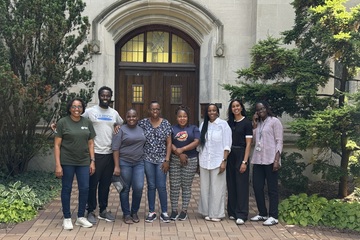
Alliance for African Partnership (AAP), a consortium of ten leading African universities, Michigan State University (MSU), and a network of African research institutes, is excited to welcome the fifth cohort of the African Futures Research Leadership Program to MSU for the in-person portion of the program. Each early career scholar is paired with a faculty mentor from MSU and their home institution for one year of virtual and in-person collaboration to strengthen research skills, innovations in teaching, writing of scholarly and/or policy publications, dissemination of research results and grant proposals.
A consortium-wide initiative, the African Futures program is designed to strengthen the capacity of a cadre of African researchers to return to their home institutions and become scientific leaders in their community, establish long-term partnerships with MSU faculty, co-create innovative solutions to Africa’s challenges, and in turn become trainers of the next generation of researchers.
African Futures Cohort 5: Alfdaniels Mabingo Performing Arts and Film Makerere University Home Mentor - Sylvia Antonia Nakimera Nannyonga-Tamusuza, Dept of Performing Arts and FilmMSU Mentor – Philip Effiong, Dept of English, Theater Studies & Humanities & Gianina Strother, Dept of African American and African Studies Gladys Gakenia Njoroge Pharmacy Practice and Public Health United States International University – Africa Home Mentor - Calvin A. Omolo, Dept of Pharmacy Practice and Public HealthMSU Mentor - Yuehua Cui, Dept of Statistics and Probability Seynabou Sene Plant Biology University Cheikh Anna Diop Home Mentor - Abdala Gamby Diedhiou, Dept of Plan BiologyMSU Mentor - Lisa Tiemann, Dept of Plant, Soil, and Microbial Sciences Portia T. Loeto Educational Foundations (Gender Studies Section) University of Botswana Home Mentor - Godi Mookode, Dept of SociologyMSU Mentor - Soma Chauduri, Dept of Sociology Betina Lukwambe Aquaculture Technology University of Dar es Salaam Home Mentor – Samwel Mchele Limbu, Dept of AquacultureMSU Mentor - Abigail Bennett, Dept of Fisheries and Wildlife & Maria Claudia Lopez, Dept of Community Sustainability Assilah Agigi Business Management University of PretoriaHome Mentor - Alex Antonites, Dept of Business Management MSU Mentor - Sriram Narayanan, Dept of Supply Chain Management Miriam Nthenya Kyule Agricultural Education and Extension Egerton University Home Mentor - Miriam Karwitha Charimbu, Dept of Crops, Horticulture and Soils MSU Mentor - Susan Wyche, Dept of Media and Information Studies Asha Nalunga Agribusiness and Natural Resource Economics Makerere University Home Mentor - Bernard Bashaasha, Dept of Agribusiness and Natural Resource Economics MSU Mentor - Saweda Liverpool-Tasie, Dept of Agricultural, Food, and Resource Economics
Ezinne Ezepue (participating virtually)Theatre & Film Studies University of Nigeria, Nsukka Home Mentor - Chinenye Amonyeze, Dept of Theatre & Film StudiesMSU Mentor - Jeff Wray, Dept of English
“We were extremely impressed with the quality and diversity of applications we received for this cohort of the African Futures program. We are excited to build on the successes of past cohorts and continue to evolve this program as we support the next generation of African research leaders,” said Jose Jackson-Malete, co-director of the Alliance for African Partnership.
Differing from previous cohorts, Cohort 5 is piloting a hybrid model of the African Futures program. The scholars began their work in February 2025 virtually, then will spend the fall semester at Michigan State University working closely with their MSU mentor. They will then complete the rest of their year back at their home institution, culminating in a research showcase in February 2026 to share the research they’ve done. Partnerships between mentors and mentees are expected to continue beyond the end of the program and lead to sustainable collaboration and future funding opportunities.
For more information, visit the Alliance for African Partnership website
By:
Justin Rabineau
Thursday, Sep 4, 2025
AGRI-FOOD SYSTEMS
+6
Leave a comment
Apply Now: Fulbright Visiting Scholar Program (Botswana)
Deadline: Sep 19, 2025
Donor: U.S. Embassy in Botswana
Grant Type: Grant
Grant Size: Not Available
Countries/Regions: Botswana
Area: Arts & Culture, Filmmaking and Entertainment, Music, Energy, Individuals, Artificial Intelligence, Cyber Security, Misinformation/Disinformation, Research, Science, Technology, Sports & Recreation
The U.S. Embassy in Botswana is pleased to announce the competition for the Fulbright Visiting Scholar Program for the 2026-27 academic year.
For more information, visit https://bw.usembassy.gov/funding-opportunities/#F/Bright
Premium Link: https://grants.fundsforngospremium.com/opportunity/op/apply-now-fulbright-visiting-scholar-program-botswana
By:
Baboki Gaolaolwe-Major
Monday, Aug 25, 2025
CULTURE AND SOCIETY
No Preview Available
Leave a comment
Call for Entries: World Food Day Poster Contest
Deadline: Nov 07, 2025
Donor: Food and Agriculture Organization of the United Nations
Grant Type: Events
Grant Size: Not Available
Countries/Regions: All Countries
Area: Food Safety, Community Development, Health, Children, Youth, Peace & Conflict Resolution, Sustainable Development
Join the World Food Day Poster Contest and show them your creativity! Use your skills to show how better foods create a better future - and how together they can build a peaceful, sustainable, prosperous, and food-secure world where everyone has access to a healthy diet.
For more information, visit https://www.fao.org/world-food-day/contest/en/
Premium Link: https://grants.fundsforngospremium.com/opportunity/op/call-for-entries-world-food-day-poster-contest
By:
Baboki Gaolaolwe-Major
Monday, Aug 4, 2025
CULTURE AND SOCIETY
+1
No Preview Available
Leave a comment
Applications open for Getty Library Research Grants
Deadline: Oct 01, 2025
Donor: Conservation Research Foundation Museum
Grant Type: Grant
Grant Size: $1000 to $10,000
Countries/Regions: All Countries
Area: Arts & Culture, Researchers, Research
The Getty Library Research Grants offers support for researchers to use the Getty Library’s collections.
For more information, visit https://www.getty.edu/projects/library-research-grants/
Premium Link: https://grants.fundsforngospremium.com/opportunity/op/applications-open-for-getty-library-research-grants
By:
Baboki Gaolaolwe-Major
Monday, Aug 4, 2025
CULTURE AND SOCIETY
+1

No Preview Available
Leave a comment
COIL Faculty Fellows Program - Africa
Collaborative Online International Learning (COIL) is an educational methodology focused on fostering online intercultural learning experiences within universities in different countries. MSU’s Center for Global Learning and Innovation, Alliance for African Partnership (AAP), and African Studies Center (ASC) anticipate welcoming to the third cohort of the COIL Faculty Fellows Program-Africa a mix of bilateral and trilateral COIL projects. Prior experience in COIL is not required; faculty from any discipline are welcome!
https://globalyouth.isp.msu.edu/partnerships/coil/coil-faculty-fellows-program-africa/coil-faculty-fellows-cohort-3/
By:
Justin Rabineau
Friday, Jul 11, 2025
AGRI-FOOD SYSTEMS
+6
Leave a comment
Celebrating a Legacy of Vision, Dedication, and Continental Impact
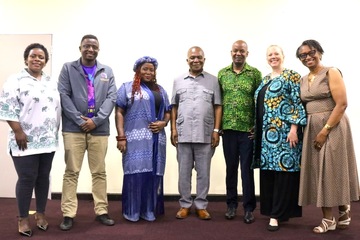
We take this opportunity to honour one of our most visionary leaders, Professor Richard Mkandawire, who retires after years of exceptional service as the Director of the AAP Africa Office, as the Alliance for African Partnership (AAP) continues to grow in strength and purpose. The experience Professor Mkandawire has had with AAP has been nothing short of revolutionary. Richard was a well-known development expert and supporter of soil health who approached his work with insight, moral character, and endless enthusiasm. AAP has become a reliable forum for cooperative research, policy engagement, and capacity building as a result of his dedication to cultivating partnerships throughout Africa. He oversaw the expansion of the AAP throughout African institutions, fostering connections between policy, academia, and the public. From empowering young researchers to advocating for agricultural reform and ensuring soil health remained a top priority for food security on the continent, Richard's enthusiasm for Africa's prosperity was evident in every project he supported. Partners, mentees, and colleagues from around the world gathered at his farewell dinner, held on the last night of the AAP Consortium Meeting 2025 in Lilongwe, Malawi, to honor a man whose work has left a legacy. He was described as a leader, a mentor, and most importantly, a true servant of Africa, in the flood of tributes that poured in. Richard Mkandawire, AAP honors you. Your legacy will continue to inspire, your vision will keep guiding us, and your influence on the lives you have impacted and the organizations you have influenced will only grow. Richard, thank you. We wish you a peaceful, happy, and well-earned retirement.
By:
Baboki Gaolaolwe-Major
Thursday, Jul 10, 2025
AGRI-FOOD SYSTEMS
+2
Leave a comment
Call for Applications: Black Atlantic Editorial Fellowship (Africa)
Deadline: Aug 03, 2025
Donor: The Republic
Grant Type: Fellowship
Grant Size: Less than $1000
Countries/Regions: Algeria, Angola, Benin, Botswana, Burkina Faso, Burundi, Cameroon, Cape Verde, Central African Republic, Chad, Comoros, Congo (Brazzaville), Congo DR, Cote DIvoire (Ivory Coast), Djibouti, Egypt, Equatorial Guinea, Eritrea, Ethiopia, Gabon, Gambia, Ghana, Guinea, Guinea-Bissau, Kenya, Lesotho, Liberia, Libya, Madagascar, Malawi, Mali, Mauritania, Mauritius, Mayotte, Morocco, Mozambique, Namibia, Niger, Nigeria, Reunion, Rwanda, Saint Helena, Sao Tome And Principe, Senegal, Seychelles, Sierra Leone, Somalia, South Africa, Sudan, Swaziland, Tanzania, Togo, Tunisia, Uganda, Western Sahara, Zambia, Zimbabwe, South Sudan
Area: Arts & Culture, Literature, Politics, Black, , Individuals, Journalists, Researchers, Science, Technology
The Republic is pleased to announce the Black Atlantic Editorial Fellowship, a six-month fellowship programme designed towards the commissioning, writing and curation of stories rooted in Blackness and the African experience.
For more information, visit https://rpublc.com/dispatch/black-atlantic-editorial-fellowship/
Premium Link: https://grants.fundsforngospremium.com/opportunity/op/call-for-applications-black-atlantic-editorial-fellowship-africa
By:
Baboki Gaolaolwe-Major
Monday, Jun 30, 2025
CULTURE AND SOCIETY
+1

No Preview Available

Leave a comment