


Browse
Agri Food Systems
Call for Applications for the Inaugural Cohort of the GROW Fellowship
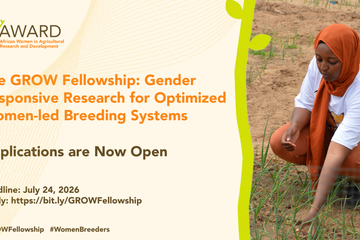
The Call for Applications for the GROW Fellowship: Gender Responsive Research for Optimized Women-led Breeding Systems is now open. Targeting women breeders in Africa, the GROW Fellowship seeks to contribute to more gender-responsive crop improvement systems by strengthening the leadership pipeline of women professionals working in plant breeding and related fields.
The immersive non-residential Fellowship seeks to accelerate the leadership, visibility, and career advancement of women breeders by strengthening their capacity to lead gender-responsive breeding research, influence scientific and policy agendas, and become recognized leaders driving crop and livestock improvement efforts on the continent.
The Fellowship targets African women breeders who are actively engaged in crop improvement research and development. Participants will be drawn from universities, national agricultural research systems (NARES), the private sector, and other institutions involved in crop breeding.
Who Should Apply?
The Program seeks applications from women professionals who:
Are citizens of any African country;
Hold at least a Master’s degree in plant or livestock breeding and actively engaged and practicing in this field;
Have at least 5 years of experience in crop or livestock improvement research;
Are affiliated with universities, national agricultural research institutions, private companies or other organizations involved in crop improvement;
Are available and committed to participating fully in all Fellowship activities offered over a two-year period;
Are not currently participating in other AWARD Fellowships.
Fellowship Activities
Successful applicants will participate in a series of face-to-face and virtual activities, including:
Leadership and negotiation skills training;
Structured mentoring program;
Knowledge forums and networking opportunities;
Peer learning sessions in a growing network of women professionals in crop improvement and agricultural research.
How to submit your application
Applications must be submitted strictly via this online portal. Apply Here
Applications must be submitted no later than July 24, 2026, at 23:59 East Africa Time (GMT+3).
Applications will NOT be accepted after this deadline.
Applicants are encouraged to carefully review the application guidelines for detailed information on eligibility requirements and the application process.
Download the Application Guidelines
Download the Program Brochure
Download the Frequently Asked Questions (FAQs)
The GROW Fellowship is part of the Gender Responsive and Women Led Research and Development Program funded by the Gates Foundation and implemented by African Women in Agricultural Research and Development (AWARD) in partnership with the Gender-Responsive Researchers Equipped for Agricultural Transformation (GREAT), Makerere University, and Cornell University.
By:
Yasmine Ben Slimane
Thursday, Jul 2, 2026
AGRI-FOOD SYSTEMS
+1
Leave a comment
RUFORUM Postgraduate Support Webinar Series June – September 2026
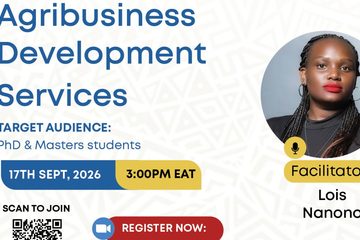
RUFORUM is pleased to announce the Postgraduate Webinar Series, a structured online learning and orientation platform designed to strengthen postgraduate training and support across the RUFORUM Network. The series responds to the need for practical, timely, and widely applicable support for postgraduate students as they navigate research, supervision, professional development, and preparation for future contributions to their universities and communities. Specifically, the initiative targets the Master’s and PhD students by strengthening their capacities in safeguarding, research support, digital skills, and agribusiness development. Each session will be delivered online for two hours and facilitated by subject-matter experts. Universities, supervisors, and programme teams are encouraged to share this announcement widely with eligible postgraduate students and support their participation where possible.
Learn more about the webinar schedule and register through this link:https://news.ruforum.org/ruforum-postgraduate-support-webinar-series-june-september-2026/?utm_source=RUFORUM+Mailing+List&utm_campaign=437ccb654e-RUFORUM+Weekly+-+Vol.3+No.25_COPY_01&utm_medium=email&utm_term=0_1fcfbb8a0b-437ccb654e-346981101&ct=t()&goal=0_1fcfbb8a0b-437ccb654e-346981101&mc_cid=437ccb654e&mc_eid=2397799980
By:
Yasmine Ben Slimane
Wednesday, Jul 1, 2026
AGRI-FOOD SYSTEMS
+2
Leave a comment
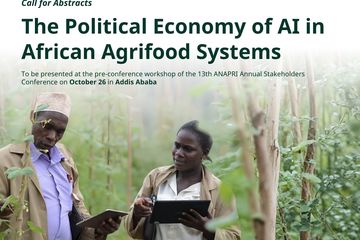
Call for Abstracts: The Political Economy of AI in African Agrifood Systems
The Africa Network of Agricultural Policy Research Institutes (ANAPRI), in partnership with the International Food Policy Research Institute (IFPRI), and with support from the CGIAR Science Programme on Policy Innovations, and the Digital Transformation Accelerator, invites researchers, policymakers, practitioners, and development actors to submit abstracts for a pre-conference workshop on The Political Economy of AI in African Agrifood Systems. The workshop will be held on the margins of the 13th ANAPRI Annual Stakeholders Conference in Addis Ababa, Ethiopia, on 26 October 2026. ANAPRI and IFPRI are currently seeking funding for bursaries for travel and participation of delegates with selected abstract submissions.Background and Rationale
Artificial intelligence (AI) is increasingly being positioned as a transformative force in African food, land, and water systems (FLWS). Through large scale data collection, predictive analytics and personalized advisory tools, AI is framed by many policymakers and tech companies as a solution to persistent challenges of food insecurity, climate vulnerability and public service delivery.
Yet these promises raise urgent questions. Who controls the data and infrastructures on which AI systems depend? How are digital tools being used to support policymaking, organize public life, and shape relations between citizens, states, markets, and development actors? And how are the benefits and risks of AI distributed across places already marked by unequal access to resources, political unrest, and limited technological capacity?
This call for abstracts invites contributions that critically examine the political economy of AI in FLWS. We are particularly interested in work that moves beyond either technological optimism or blanket critique, and instead investigates how AI is being imagined, institutionalized, contested, and made consequential in specific social, ecological, and political contexts. In doing so, the collection asks how policy research institutions can help governments navigate this rapidly shifting landscape, build regulatory and institutional capacity, and inform policy change that are grounded in the needs, priorities, and aspirations of smallholder farmers and other FLWS actors.Workshop Objectives
The workshop aims to create a space for comparative learning on how AI is being governed, contested, and applied in FLWS. Rather than treating AI governance as a technical or universal policy challenge, the event will examine how lessons from different institutional, political, and infrastructural settings can inform more effective governance approaches in Africa. In addition to the presentation of new research, it will bring together researchers, policymakers, technology actors, civil society, and ANAPRI member institutions to identify what is already being learned from practice, where policy gaps remain, and how evidence can support national, regional, and continental strategies that are responsive to the needs of smallholder farmers and rural communities.Thematic Areas
We welcome empirical, conceptual, methodological, and policy-oriented contributions addressing one or more of the following themes:
1. Data governance and digital infrastructure: who controls the means?
AI systems depend on data: who collects it, who owns it, who can access it, and who has the authority to interpret and act on it. In African food, land, and water systems, these questions are closely tied to histories of extraction, unreliable and inaccessible digital infrastructure, weak regulatory capacity, and fragmented institutional arrangements.
Abstracts under this theme may explore topics such as agricultural data governance, data sovereignty, digital public infrastructure, platformization, interoperability, cybersecurity, privacy, consent, and the role of public, private, and development actors in building and governing AI-ready data ecosystems.
2. AI and the organization of public life: who shapes decisions?
AI and other digital tools are increasingly being introduced into policy processes, public administration, agricultural extension, environmental monitoring, social protection, and other aspects of public life. These tools may support decision-making, improve coordination, or make public systems more responsive. At the same time, they may shift accountability, obscure political choices, or embed particular assumptions about efficiency, expertise, and development.
Abstracts under this theme may present, demonstrate, or assess AI-enabled tools for policy and public systems, while also critically examining their risks, limitations, and governance implications. We welcome contributions on decision-support systems, dashboards, predictive models, advisory platforms, monitoring systems, and other tools that raise questions of accountability, transparency, bias, exclusion, institutional dependency, and public value.
3. AI in the majority world: who benefits, and who bears the risks?
The development and deployment of AI in African FLWS is marked by unequal access to resources, political instability, limited technological capacity, and uneven institutional authority. These conditions shape who is able to benefit from AI-enabled systems, who bears their risks, and whose interests are reflected in emerging policy and regulatory frameworks.
Abstracts under this theme may examine how AI policies, investment decisions, data governance arrangements, and regulatory frameworks reduce or reinforce existing inequalities. We welcome contributions on the distributional consequences of AI for smallholder farmers, pastoralists, fishers, women, youth, rural communities, displaced populations, and other groups whose livelihoods depend on FLWS.
Who Should Submit?
This call welcomes interdisciplinary contributions from scholars and practitioners working across agriculture, economics, political science, data science, development studies, sociology, ICT policy, law, agronomy, and related fields. Submissions from African institutions, early-career researchers, women researchers, policymakers, farmer organisations, NGOs, and development practitioners are particularly encouraged. We also welcome contributions that present work on/from all majority world/Global South geographies that are relevant for sub-Saharan Africa.Abstract Submission and Guidelines to Authors
Submission Deadline: 31 July 2026
Notification of Acceptance: 31 August 2026
Pre-Conference Workshop: 26 October 2026
13th ANAPRI Annual Stakeholders Conference: 27–29 October 2026Guidelines for Submissions
Please review the guidelines before submitting.
Access the submission guidelines here.https://www.anapri.net/call-for-abstracts-the-political-economy-of-ai-in-african-agrifood-systems/
By:
Yasmine Ben Slimane
Wednesday, Jul 1, 2026
AGRI-FOOD SYSTEMS
+1
Leave a comment
Submit Applications for Climate Resilience Fund
Deadline: Sep 30, 2026
Donor: International Finance Corporation
Grant Type: Grant
Grant Size: More than $1 million
Countries/Regions: Afghanistan, Albania, Algeria, Angola, Antigua and Barbuda, Argentina, Armenia, Australia, Austria, Azerbaijan, Bahamas, Bahrain, Bangladesh, Barbados, Belarus, Belgium, Belize, Benin, Bhutan, Bolivia, Bosnia And Herzegovina, Botswana, Brazil, Brunei, Bulgaria, Burkina Faso, Burundi, Cambodia, Cameroon, Canada, Cape Verde, Central African Republic, Chad, Chile, China, Colombia, Comoros, Congo (Brazzaville), Congo DR, Costa Rica, Cote DIvoire (Ivory Coast), Croatia, Cyprus, Czech Republic, Denmark, Djibouti, Dominica, Dominican Republic, Ecuador, Egypt, El Salvador, Equatorial Guinea, Eritrea, Estonia, Ethiopia, Fiji, Finland, France, Gabon, Gambia, Georgia, Germany, Ghana, Greece, Grenada, Guatemala, Guinea, Guinea-Bissau, Guyana, Haiti, Honduras, Hungary, Iceland, India, Indonesia, Iran, Iraq, Ireland, Israel, Italy, Jamaica, Japan, Jordan, Kazakhstan, Kenya, Kiribati, South Korea, Kuwait, Kyrgyzstan, Laos, Latvia, Lebanon, Lesotho, Liberia, Libya, Lithuania, Luxembourg, Macedonia, Madagascar, Malawi, Malaysia, Maldives, Mali, Malta, Marshall Islands, Mauritania, Mauritius, Mexico, Micronesia Federated States Of, Moldova Republic Of, Mongolia, Morocco, Mozambique, Myanmar, Namibia, Nepal, Netherlands, New Zealand, Nicaragua, Niger, Nigeria, Norway, Oman, Pakistan, Palau, Panama, Papua New Guinea, Paraguay, Peru, Philippines, Poland, Portugal, Qatar, Romania, Russia, Rwanda, Saint Kitts And Nevis, Saint Lucia, Samoa, Sao Tome And Principe, Saudi Arabia, Senegal, Seychelles, Sierra Leone, Singapore, Slovak Republic, Slovenia, Solomon Islands, Somalia, South Africa, Spain, Sri Lanka, Sudan, Suriname, Eswatini, Sweden, Switzerland, Syria, Tajikistan, Tanzania, Thailand, East Timor (Timor-Leste), Togo, Tonga, Trinidad And Tobago, Tunisia, Turkey, Turkmenistan, Tuvalu, Uganda, Ukraine, United Arab Emirates, United Kingdom, United States, Uruguay, Uzbekistan, Vanuatu, Venezuela, Vietnam, Yemen, Zambia, Zimbabwe, Montenegro, Serbia, Kosovo, South Sudan
Area: Agriculture Food & Nutrition, Business & Industry, Infrastructure, Climate Change
The Climate Resilience Fund provides flexible financing to private sector projects that enhance climate adaptation and resilience in vulnerable regions.
For more information, visit https://ifcgrants.org/grants/climate-resilience-fund-2026
Premium Link: https://grants.fundsforngospremium.com/opportunity/op/submit-applications-for-climate-resilience-fund
By:
Yasmine Ben Slimane
Thursday, Jun 18, 2026
AGRI-FOOD SYSTEMS
+2

No Preview Available
Leave a comment
CFAs: Strengthening Agriculture Commercialisation Project in Malawi
Deadline: Jun 30, 2026
Donor: United Nations Development Programme(UNDP)
Grant Type: Grant
Grant Size: Not Available
Countries/Regions: Malawi
Area: Agriculture Food & Nutrition, Business & Industry, Capacity Building, Farmers/Ranchers, Individuals
The United Nations Development Programme is seeking applications to support agricultural commercialisation in Malawi through mentorship and off-taking services.
For more information, visit https://procurement-notices.undp.org/view_notice.cfm?notice_id=98851
Premium Link: https://grants.fundsforngospremium.com/opportunity/op/cfas-strengthening-agriculture-commercialisation-project-in-malawi
By:
Yasmine Ben Slimane
Thursday, Jun 18, 2026
AGRI-FOOD SYSTEMS
+2
No Preview Available
Leave a comment
Applications open for Agritech Modernization Grant
Deadline: Oct 10, 2026
Donor: International Finance Corporation
Grant Type: Grant
Grant Size: More than $1 million
Countries/Regions: Afghanistan, Angola, Bangladesh, Benin, Bhutan, Botswana, Burkina Faso, Burundi, Cameroon, Cape Verde, Central African Republic, Chad, Comoros, Congo (Brazzaville), Congo DR, Cote DIvoire (Ivory Coast), Djibouti, Equatorial Guinea, Eritrea, Ethiopia, Gabon, Gambia, Ghana, Guinea, Guinea-Bissau, India, Iran, Kenya, Lesotho, Liberia, Madagascar, Malawi, Maldives, Mali, Mauritania, Mauritius, Mozambique, Namibia, Nepal, Niger, Nigeria, Pakistan, Reunion, Rwanda, Sao Tome And Principe, Senegal, Seychelles, Sierra Leone, Somalia, South Africa, Sri Lanka, Sudan, Eswatini, Tanzania, Togo, Uganda, Western Sahara, Zambia, Zimbabwe
Area: Agriculture Food & Nutrition, Farming, Food Safety, Business & Industry, Capacity Building, Learning, Climate Change, Equipment, Research, Technology
The Agritech Modernization Grant offers to support modernizing smallholder farming systems using technology and climate-smart practices to improve incomes and food security.
For more information, visit https://ifcgrants.org/grants/agritech-modernization
Premium Link: https://grants.fundsforngospremium.com/opportunity/op/applications-open-for-agritech-modernization-grant
By:
Yasmine Ben Slimane
Thursday, Jun 18, 2026
AGRI-FOOD SYSTEMS
+2
No Preview Available
Leave a comment
Call for Video Proposals on Innovative Water, Waste and Energy Projects (South Africa)
Deadline: Jun 25, 2026
Donor: Bedfordshire and Luton Community Foundation
Grant Type: Grant
Grant Size: $10,000 to $100,000
Countries/Regions: South Africa
Area: Agriculture Food & Nutrition, Community Development, Employment & Labor, Climate Change, Energy, Environment, Recycling, Innovation, Technology, Water, Water Management, Women & Gender, Youth & Adolescents
The United Nations Development Programme is seeking applications to support community-led projects focused on innovative water, waste, and energy solutions.
For more information, visit https://www.undp.org/south-africa/blog/gef-small-grants-programme-opens-call-video-proposals-innovative-water-waste-and-energy-projects
Premium Link: https://grants.fundsforngospremium.com/opportunity/op/Call-for-Video-Proposals-on-Innovative-Water-Waste-and-Energy-Projects-South-Africa
By:
Baboki Gaolaolwe-Major
Monday, Jun 15, 2026
AGRI-FOOD SYSTEMS
+3
No Preview Available
Leave a comment
Open Call: Fueling Advocates Initiative Grants Program
Deadline: Jun 30, 2026
Donor: Tiny Beam Fund
Grant Type: Grant
Grant Size: $10,000 to $100,000
Countries/Regions: Afghanistan, Albania, Algeria, American Samoa, Angola, Argentina, Armenia, Azerbaijan, Bangladesh, Belarus, Belize, Benin, Bhutan, Bolivia, Bosnia And Herzegovina, Botswana, Brazil, Bulgaria, Burkina Faso, Burundi, Cambodia, Cameroon, Cape Verde, Central African Republic, Chad, China, Colombia, Comoros, Congo (Brazzaville), Congo DR, Costa Rica, Cote DIvoire (Ivory Coast), Cuba, Djibouti, Dominica, Dominican Republic, Ecuador, Egypt, El Salvador, Equatorial Guinea, Eritrea, Ethiopia, Fiji, Gabon, Georgia, Ghana, Grenada, Guatemala, Guinea, Guinea-Bissau, Guyana, Haiti, Honduras, India, Indonesia, Iran, Iraq, Jamaica, Jordan, Kazakhstan, Kenya, Kiribati, South Korea, Kyrgyzstan, Laos, Lebanon, Lesotho, Liberia, Libya, Macedonia, Madagascar, Malawi, Malaysia, Maldives, Mali, Marshall Islands, Mauritania, Mauritius, Mexico, Micronesia Federated States Of, Moldova Republic Of, Mongolia, Morocco, Mozambique, Myanmar, Namibia, Nepal, Nicaragua, Niger, Nigeria, Pakistan, Palau, Palestinian Territories, Papua New Guinea, Paraguay, Peru, Philippines, Russia, Rwanda, Saint Lucia, Saint Vincent And The Grenadines, Samoa, Sao Tome And Principe, Senegal, Sierra Leone, Solomon Islands, Somalia, South Africa, Sri Lanka, Sudan, Suriname, Eswatini, Syria, Tajikistan, Tanzania, Thailand, East Timor (Timor-Leste), Togo, Tonga, Tunisia, Turkey, Turkmenistan, Tuvalu, Uganda, Ukraine, Uzbekistan, Vanuatu, Vietnam, Yemen, Zimbabwe, Montenegro, Serbia, Kosovo, South Sudan
Area: Agriculture Food & Nutrition, Animals & Wildlife
The Fueling Advocates Initiative Grants Program is seeking applications to support evidence-based efforts that address issues related to industrial animal agriculture in low- and middle-income countries.
For more information, visit https://tinybeamfund.org/Grants-Program
Premium Link: https://grants.fundsforngospremium.com/opportunity/op/open-call-fueling-advocates-initiative-grants-program
By:
Baboki Gaolaolwe-Major
Monday, Jun 15, 2026
AGRI-FOOD SYSTEMS
No Preview Available
Leave a comment
RFPs: Community-Driven Environmental and Sustainable Development Initiatives (Uganda)
Deadline: Jul 02, 2026
Donor: United Nations Development Programme(UNDP)
Grant Type: Grant
Grant Size: $10,000 to $100,000
Countries/Regions: Uganda
Area: Agriculture Food & Nutrition, Food Safety, Fisheries, Civil Society Development, Community Development, Climate Change, Conservation, Environment, Natural Resources, Innovation, Livelihood
The Global Environment Facility Small Grants Programme (GEF-SGP), implemented by UNDP Uganda, is inviting eligible community-based organizations, civil society organizations, and non-governmental organizations to submit proposals for community-led initiatives that address environmental challenges while improving livelihoods and generating global environmental benefits.
For more information, visit https://www.undp.org/uganda/publications/call-proposals-community-driven-environmental-and-sustainable-development-initiatives-under-gef-sgp-op8
Premium Link: https://grants.fundsforngospremium.com/opportunity/op/rfps-communitydriven-environmental-and-sustainable-development-initiatives-uganda
By:
Baboki Gaolaolwe-Major
Wednesday, Jun 10, 2026
AGRI-FOOD SYSTEMS
+1
No Preview Available
Leave a comment
Landscape Restoration: Cultivating Change Through Sustainable Orchards
When I first acquired my land in Goromonzi, I was immediately confronted by a stark reality. The property, situated on a slope, had no trees at all. The surrounding hills and mountains were equally bare, reflecting years of deforestation that had gradually transformed the landscape. My agricultural journey began in 2019 when I started farming on my one-acre piece of land. At the time, my focus was mainly on growing field crops. While the experience introduced me to the realities of farming and strengthened my appreciation for agriculture, I quickly realized that the methods I was using were not sustainable for the type of land I owned.
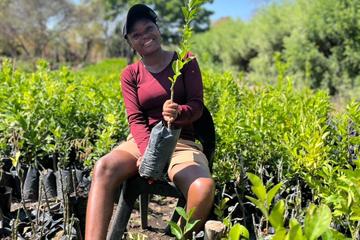
In 2020, I co-founded Young Women in Agriculture, an initiative aimed at empowering young women involved in farming and agribusiness. Through the organization, I had the opportunity to connect with many inspiring farmers and contribute to conversations around youth participation, sustainability, and innovation in agriculture. However, after taking my leave from the organization in 2024, my focus shifted toward more personal and collaborative farming journeys with like-minded young farmers whose work aligns with my own passion for sustainability and environmental restoration.Gashirai Matonga, a 27-year-old fruit farmer from Murehwa, Zimbabwe, has spent the past eight years specializing in grafted fruit tree production and fruit farming. Through her work, she supports farmers in establishing orchards while promoting practical and sustainable agricultural practices.
Our collaboration began through a family connection. During a visit to Murehwa, my father purchased one hundred plus, grafted fruit trees from an orchard operated by Gashirai and her parents in Murehwa called Zowa Farms. The trees included fruit varieties suited to local growing conditions. What initially appeared to be a simple purchase soon became the beginning of an important learning relationship. As I started planting the trees in Goromonzi, Gashirai became one of my primary sources of technical guidance and support. Beyond producing quality seedlings, she shares practical knowledge on orchard establishment, tree care, disease prevention, irrigation, and long-term orchard maintenance. Through seminars and direct farmer support, she equips growers with the skills needed to improve survival rates and increase productivity. From Gashirai I learnt a valuable lesson that propagated trees establish faster and reach fruit-bearing maturity sooner, allowing farmers to begin generating income within a shorter period. She also emphasizes the importance of thinking commercially by establishing orchards that are large enough to become economically sustainable over time.
Water management is another area where her expertise has proven invaluable. As she often explains, fruit production depends heavily on reliable access to water, especially in a changing climate where rainfall patterns are becoming increasingly unpredictable. She trains farmers to identify and manage common pests and diseases, particularly fruit fly infestations, which remain one of the biggest threats facing fruit producers in Zimbabwe.
Like many young agricultural entrepreneurs, Gashirai has faced numerous challenges. Fruit fly infestations once reduced her harvest significantly, highlighting the vulnerability of horticultural farming to pest pressures. Access to sufficient land for expansion has also remained a challenge. Yet despite these obstacles, she continues to grow her business while supporting other farmers, demonstrating resilience and determination that inspire many young people entering agriculture.
The impact of her work can already be seen directly on my own land. To date, I have planted approximately ninety-four fruit trees, mainly mango, lemon, and naartjie varieties. Slowly, these trees are transforming what was once barren land into a productive orchard. Beyond their economic value, the trees are contributing to environmental restoration by helping stabilize the soil, improving biodiversity, and restoring life to previously exposed land.
This journey has also changed the way I view farming itself. Initially, my focus was centered mainly on crop production and productivity. Today, I see agriculture as something much broader. Farming has the potential to restore ecosystems,
strengthen communities, and create sustainable livelihoods at the same time. Fruit trees, in particular, provide apractical way of combining environmental conservation with income generation. They help combat deforestation while creating future opportunities for farmers through fresh produce sales and value-added products. Looking ahead, our vision is to encourage more farmers and community members within Goromonzi and across Zimbabwe to establish orchards and adopt sustainable land management practices. Through collaboration between seedling producers, farmers, agricultural professionals, and local communities, it is possible to reverse the effects of deforestation while building stronger rural economies.
The International Year of Women Farmers provides an important opportunity to recognize contributions being made by young women such as Gashirai Matonga. Her work extends far beyond producing seedlings. Through mentorship, entrepreneurship, and knowledge sharing, she is helping shape a more sustainable agricultural future for young farmers in Zimbabwe. My own journey toward restoring a small corner of Goromonzi would have looked very different without her expertise and encouragement. It serves as a reminder that meaningful change often begins with collaboration. When young farmers work together, combining knowledge, resources, and shared vision, they can restore landscapes, strengthen communities, and create opportunities for future generations.
By:
Baboki Gaolaolwe-Major
Thursday, Jun 4, 2026
AGRI-FOOD SYSTEMS
+1
Leave a comment
Call for Proposals: Uganda Refugee Support, Empowerment and Transformation (ReSET) Project
Deadline: Jun 16, 2026
Donor: Foreign, Commonwealth & Development Office (FCDO)
Grant Type: Grant
Grant Size: More than $1 million
Countries/Regions: Uganda
Area: Agriculture Food & Nutrition, Food Safety, Community Development, Climate Change, Humanitarian Relief, Livelihood, Refugee & Asylum Seekers, Research, Gender Equality, Women & Gender
The Foreign, Commonwealth & Development Office (FCDO) is inviting concept notes for the Uganda Refugee Support, Empowerment and Transformation (ReSET) Project to strengthen humanitarian assistance, resilience, and self-reliance among refugees and host communities in Uganda.
For more information, visit https://www.gov.uk/international-development-funding/uganda-refugee-support-empowerment-and-transformation-reset-project-call-for-proposals
Premium Link: https://grants.fundsforngospremium.com/opportunity/op/call-for-proposals-uganda-refugee-support-empowerment-and-transformation-reset-project
By:
Baboki Gaolaolwe-Major
Monday, Jun 1, 2026
AGRI-FOOD SYSTEMS
+1

No Preview Available
Leave a comment
Call for Applications: Global Pathology Development Grant
Donor: College of American Pathologists Foundation
Grant Type: Grant
Grant Size: $1000 to $10,000
Countries/Regions: All Countries
Area: Education, Health, Innovation, Science, Technology
The Global Pathology Development Grant is seeking applications to improve global health and strengthen the science and expansion of pathology services by supporting sustainable international projects in under-resourced areas.
For more information, visit https://foundation.cap.org/grant-award/global-pathology-development-grant/
Premium Link: https://grants.fundsforngospremium.com/opportunity/op/call-for-applications-global-pathology-development-grant
By:
Aaron Dorner
Thursday, May 21, 2026
AGRI-FOOD SYSTEMS
+5

No Preview Available

Leave a comment