


Browse
Science, Technology And Innovation

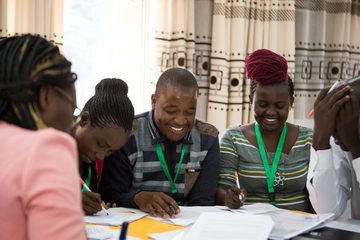
Call for Abstracts for the 22nd RUFORUM Annual General Meeting
Africa stands at a critical juncture, with unprecedented opportunities driven by its youthful population and the growing demand for sustainable agricultural transformation. The African Union’s Decade for Accelerated Action for the Transformation of Education and Skills (2025-2034) and the CAADP Kampala Declaration (2026-2035) provide strategic frameworks to harness education, science, and innovation for inclusive development and the realization of Agenda 2063.
Building on commitments made during the 21st Annual General Meeting (AGM) of the Regional Universities Forum for Capacity Building in Agriculture (RUFORUM), African universities have pledged to intensify efforts to transform higher education systems and enhance their contribution to development. This includes advancing transformative, digitally enabled education; transitioning toward 4th-generation universities that integrate teaching, research, innovation, and community engagement; leveraging emerging technologies such as artificial intelligence and data science; and strengthening agriculture as a cornerstone for economic growth and resilience.
The 22nd RUFORUM AGM will serve as a strategic platform to assess progress, share innovations, and identify actionable pathways for translating research and educational advancements into tangible development outcomes across Africa. RUFORUM, in partnership with the Government of the Republic of Zambia and member universities, is pleased to announce the call for abstracts for the 22nd RUFORUM AGM. This convening serves as a strategic platform for African universities to assess efforts to produce relevant human capital and science-based solutions to underpin the continent’s development.
Dates: 30th November – 4th December 2026.
Venue: Livingstone, Zambia.
Host Institutions: University of Zambia (UNZA), Copperbelt University (CBU), Mulungushi University (MU), and Kapasa Makasa University.
Thematic Areas for Submission
Abstracts are invited under the following sub-themes and critical topics:
Theme 1: Enhance Africa’s Human capital to drive the continent’s development.
Background
Africa’s development trajectory is strongly tied to the quality, relevance, and adaptability of its human capital. With over 60% of the population under 25, the continent has a unique demographic advantage that can drive economic transformation if effectively harnessed through education and skills development. However, persistent gaps remain between higher education outputs and labour market demands, particularly in agriculture and related sectors (African Union, 2025). The Decade for Accelerated Action for the Transformation of Education and Skills in Africa (2025–2034) underscores the need for inclusive, digitally enabled education systems aligned with emerging global trends such as artificial intelligence, data science, and green economies.
Universities must therefore transition from traditional knowledge transmission models to more dynamic approaches that foster critical thinking, innovation, and entrepreneurship. Embedding experiential learning, interdisciplinary approaches, and digital competencies into curricula is essential for producing graduates capable of addressing complex development challenges. Strengthening human capital also requires promoting gender equity, youth inclusion, and lifelong learning systems that support continuous upskilling and reskilling (World Bank, 2023).
Sub-themes
Employment and work transitions.
Skilling for the world of work.
Strengthening teaching and learning (learner-centered, problem-based, and competence-based learning).
Innovations in curriculum review and industry-university apprenticeships.
Theme 2: Building a Resilient and Productive Economy
Background
Agriculture remains central to Africa’s economic transformation, contributing significantly to employment, food security, and livelihoods. However, the sector faces increasing challenges, including climate change, land degradation, low productivity, and limited value addition. The Comprehensive Africa Agriculture Development Programme (CAADP) Kampala Declaration (2026–2035) calls for a transition toward resilient, inclusive, and market-oriented agricultural systems capable of sustaining growth and withstanding environmental shocks (African Union, 2026).
Achieving this transformation requires strengthening agricultural value chains, promoting climate-smart agriculture, and improving access to markets, finance, and technology. Universities and research institutions play a critical role in generating innovations that enhance productivity, reduce post-harvest losses, and support sustainable resource management. Additionally, policy coherence and evidence-based decision-making are essential for creating enabling environments for agribusiness development and rural transformation (FAO, 2022).
Sub-themes
Resilient agrifood systems and climate-smart solutions.
Digital transitions, artificial intelligence, and robotics in agriculture.
Policy information and evidence-based investments.
Wealth creation for young women, men, and agrarian communities.
Theme 3: Harnessing African universities and partner opportunities for mission delivery
Background
Universities are increasingly recognized as key actors within innovation ecosystems, contributing not only through teaching and research but also through partnerships that drive societal impact. The concept of 4th-generation universities emphasizes the integration of education, research, innovation, and community engagement, alongside strong collaboration with government, industry, and civil society (Etzkowitz & Zhou, 2018). In Africa, such partnerships are essential for overcoming resource constraints and scaling impactful solutions.
Strategic collaborations enhance knowledge exchange, facilitate technology transfer, and mobilize resources for research and innovation. Engagement with the private sector supports the commercialization of research outputs, while collaboration with policymakers ensures that scientific evidence informs development strategies. Furthermore, South–South and global partnerships offer valuable opportunities for shared learning and capacity strengthening (OECD, 2021).
Sub-themes
Translating science into businesses and jobs (business incubation and venture capital).
Centers of excellence, leadership, and operational standards.
Strategic partnerships for infrastructure development.
Resourcing for mission delivery.
Theme 4: Capacity Sharing to Train the Next Generation
Background
The sustainability of Africa’s development depends on its capacity to train and retain a new generation of scientists, innovators, and leaders. Capacity development must extend beyond individual training to include institutional strengthening, regional collaboration, and knowledge-sharing networks. Platforms such as RUFORUM have demonstrated the effectiveness of collaborative training models, including joint degree programmes, staff exchanges, and regional research networks, in building critical mass and enhancing quality (RUFORUM, 2023).
Mentorship, mobility programmes, and inclusive training approaches are essential for nurturing talent and fostering innovation among young researchers. Addressing gender disparities and promoting equitable access to opportunities for women and marginalized groups remain critical priorities. At the same time, digital technologies offer new opportunities to scale capacity development through open learning platforms and virtual collaboration (UNESCO, 2024).
Sub-themes
Digital networks and open science platforms.
Joint research and academic mobility programmes.
Thematic consortia and regional centers of excellence.
Submission Guidelines
Format: The scientific sessions will be conducted in a blended manner (face to face and online), and will include both oral and poster presentations.
Target audience: Researchers, innovators, students, academia, and private sector leaders.
Recognition: Outstanding achievers, including young scientists and agri-preneurs, will be recognized during the event.
Abstract Format: The abstract format should be submitted as a Word document. Scientific sessions will be conducted in a blended manner (face-to-face and online) and will include both oral and poster presentations.
Abstract text: The abstract should have a maximum of 300 words excluding title, author names, and affiliations) and should include key issues: with objectives, methods, results, and implications of findings.
Do not include tables and graphs, and bullet points in the abstract.
Target Audience: Researchers, innovators, students, academia, and private sector leaders.
Submission Link: Abstracts must be strictly submitted via this link: 2026 Abstracts submission
Submission deadline: Please submit your abstract no later than 15th July 2026. (Submissions sent via email will not be accepted.
Provide a clear and concise abstract of no more than 300 words (including spaces), excluding the title, authors’ details, and keywords. Please do not include figures or tables.
Authors of accepted abstracts will be invited to submit a full paper. Once accepted for the conference, these will be published in either the RUFORUM Working Document Series (https://repository.ruforum.org/), the African Journal of Rural Development (https://afjrdev.org/index.php/jos), or other peer-reviewed journals. All papers will be subjected to peer review and plagiarism checks before publication.
You may submit more than one abstract. However, individuals selected for oral presentations will be permitted to give only one. Any additional accepted abstracts from the same presenter will be allocated as posters.
Posters must be printed in A0 paper size (Height: 118.9 cm and Width: 84.1 cm). Only vertically oriented (portrait) posters will be accepted.
Important Dates:
Abstract Submission Deadline: 15th July 2026
Notification of Acceptance: 15th August 2026
Full Paper Deadline for accepted abstracts: 15th September 2026
Enquiries should be submitted to ruforumpapers@ruforum.org with a copy to b.yamungu@ruforum.org; m.majaliwa@ruforum.org and chewe.nkonde@unza.ac.zm
By:
Yasmine Ben Slimane
Wednesday, Jul 1, 2026
EDUCATION
+1
Leave a comment
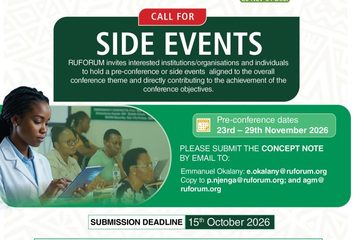
Call for Expression of Interest to hold Side Event Meetings at the 2026 RUFORUM AGM
22nd RUFORUM ANNUAL GENERAL MEETING
THEME: Translating higher agricultural education, innovation, and research into action for Africa’s agricultural transformation and development
Pre-conference events: November 23rd– 29th 2026,
Main conference events: November 30th – December 4th 2026
Venue: Avani Hotel, Livingstone, Zambia
Introduction
In October 2025, the African Union launched the Decade for Accelerated Action for the Transformation of Education and Skills in Africa (2025-2034). This strategic document along with the Comprehensive Africa Agriculture Development Program (CAADP-Kampala Declaration 2026-2035) are essential for unlocking opportunity for Africa’s young population, and its agriculture sector in the journey to achieving Agenda 2063, the Africa We Want. Among the outcomes of RUFORUM’s 21st Annual General Meeting (AGM), African universities pledged to intensify their efforts to transform higher education, engage science, technology and innovation, leverage their capabilities (intellectual and physical infrastructure, as well as their social capital) to underpin production of graduates and science solutions for Africa’s development in the 21st century. These ambitions must be strategically executed to underpin:
Transformative education whose content and delivery is contextual, relevant, digitally enabled, and aligned with labour market needs;
Reforms that accelerate the transition toward 4th-generation universities, which integrate teaching, research, innovation, entrepreneurship, and community impact;
Accelerate impact of artificial intelligence, robotics, and digital tools on the world of work and integrate digital literacy, data science, and emerging technologies into teaching and research; and,
Actions that support and growth and transformation of agriculture, Africa’s most strategic sector to unlock widespread development opportunity for the continent.
During the upcoming 22nd RUFORUM Annual General Meeting (AGM) in December 2026, African universities will meet to assess and draw lessons from recent efforts that aim to produce relevant human capital and science solutions for the continent.
The themes of the 22nd Annual General Meeting
The main theme of the 22nd Annual General Meeting, is Translating higher agricultural education, innovation, and research into action for Africa’s agricultural transformation and development.
Sub-theme 1: Enhancing Africa’s Human Capital to Drive the Continent’s Development
This sub-theme focuses on strengthening Africa’s human capital as a foundation for sustainable socio-economic transformation. Discussions will examine employment trends, labour market transitions, and strategies for preparing graduates and young people for emerging opportunities in the world of work. Particular attention will be given to skilling approaches that align education and training systems with industry needs, technological change, and entrepreneurship. The sub-theme will also explore innovative pathways for improving employability, lifelong learning, and workforce adaptability to ensure that Africa’s youth can contribute to national and continental development agendas.
Sub-theme 2: Building a Resilient and Productive Economy
This sub-theme will explore pathways for strengthening Africa’s economies through resilient agrifood systems, digital transformation, and evidence-informed policy investments. Deliberations will highlight innovations that improve agricultural productivity, climate resilience, and food security while leveraging digital technologies to drive efficiency and inclusion. The sub-theme will also address mechanisms for generating wealth and expanding economic opportunities for young women and men, and agrarian communities. Emphasis will be placed on the use of data, research, and evidence to support strategic investments that promote inclusive growth, sustainable livelihoods, and economic resilience across the continent.
Sub-theme 3: Harnessing African Universities and Partner Opportunities for Mission Delivery
This sub-theme examines the role of African universities and strategic partnerships in advancing development and innovation. It will address resourcing for mission delivery through centres of excellence, leadership development, infrastructure investment, and institutional partnerships. Discussions will further explore strengthening Zambia’s higher education sector to support national development priorities. The sub-theme will also focus on translating science into businesses and jobs through incubation, university-industry collaboration, and supportive policy environments. In addition, it will highlight innovations in teaching and learning, including learner-centred approaches, curriculum reform, technology-enabled education, and postgraduate training aimed at producing graduates equipped with 21st-century skills.
Sub-theme 4: Capacity sharing to train the next generation
This conference sub-theme will explore how cooperative capacity development approaches might transcend continental disparities in expertise, facilities, and innovation. Emerging platforms and models, such as digital networks and open science platforms for improving access to learning and research infrastructure, joint research and academic mobility programmes that harmonise competencies and foster cross-border learning, and regional centres of excellence and thematic consortia that consolidate talent and infrastructure will be examined for scaling and resourcing.
Key events of the 22nd Annual General Meeting
The AGM will involve different convenings such as: Pre-AGM events that will include training sessions in: Zambia higher education day, student technology hackathons, advanced data management and analytics, among others; Conference activities include strategic partnership events, high level policy events, RUFORUM Governance meetings, scientific conference (oral and poster presentations), and exhibitions. Additionally, field visits will be held. recognition of outstanding achievers including young scientists, model farmers and young agripreneurs will be made.
Expected participants
The AGM event brings together academia and science leaders, policy makers (including ministers and technical experts), higher education leaders in Africa, development partners, private sector leaders, researchers, innovators, students, and farmer organizations, among others from Africa, the global south and global north. Approximately 600 participants are expected to attend the AGM.
Call for Expression of Interest to hold Pre-Conference or Side Meetings
RUFORUM invites interested institutions/organisations and individuals to hold pre-conference or side events[1] aligned to the overall conference theme and directly contributing to the achievement of the conference objectives. The pre-conference or side events should be contributing new knowledge or equipping Africans with new skills to address the challenges and seize opportunities in one or more sub-themes scientific sessions to contribute to Africa’s development. Each event should therefore showcase or equip African agriculture and research ecosystem actors with novel knowledge and skills to innovate for Africa’s development.
How to express interest to hold a Pre-conference and/or Side Event
Interested organisations/institutions/individuals should provide 1–3-page Concept Note of the proposed event. The Concept Note should include the following sections.
Title of the event.
Brief background including rationale and objectives.
Event delivery approach and draft programme.
Expected outcomes specifying new knowledge or competency that will be delivered to enable a specified actor in the higher agriculture and research ecosystem to address challenges and seize opportunities in one or more sub-themes scientific sessions to contribute to Africa’s development.
Target group of the pre-conference or side event.
Number of participants.
Sitting arrangements. See examples here
Equipment required to hold the event (projectors, video conferencing equipment, Public Address System, Video coverage etc. required to hold a quality events)
Branding and publicity materials to be brought and those required (flyers, pull-up stands, tear drops, LED Screens, Videos etc.)
Dissemination plan including live media coverage platforms social media, live streaming on e.g., Facebook; twitter and YouTube if applicable, and
Number and category of participants who will be funded by the side event organisers (excluding the organisers). The Program Committee requires that for an event to be accepted, the organisers should cover the travel, registration, and accommodation costs of at least five (5) participants preferably Principals and Deans from outside Zambia to the meeting excluding the event organisers.
Side event dates and duration
The preconference events will take place between 23rd – 29th November 2026. Events taking place in this period can run for a period of one to five days between 8:30am and 4:30pm CAT.
During the AGM, side events may be organised on a day that will be specified in the programme. The day allocated for side events will be shared with organisations which will have expressed interest to host side events. Events taking place during this day must take place for only one day between 8:30am and 4:30pm CAT.
Reporting for Side Events
To ensure coherence in reporting of the overall conference, all side event’s organisers will prepare a summary report of their events as a contribution to the broader conference report, a day after holding the session. A report of a maximum three (3) pages should specify the following.
Objectives of the Side Event.
The sub-theme that the Side Event is contributing to.
The success stories/best practices shared/new skills or competency delivered.
Challenges and opportunities identified.
Practical recommendations, and,
Action plan to implement the recommendations specifying the role of different stakeholders.
Side events funding arrangements
The side event conveners/ organisers will pay for all costs related to the holding of the side event. The cost of holding side events include:
Venue hire, which varies with the number of participants.
Registration fees for the expected number of participants in the side event, and
Video conferencing facilities (for blended events).
Please submit the concept note by email to Emmanuel Okalany at e.okalany@ruforum.org with a copy to LOC, p.njenga@ruforum.org; and agm@ruforum.org by 15th October 2026. All submissions will be responded to by the side event coordinator, specifying the availability of space and conditions for holding the events.
Kindly note that slots for side events are on first come first serve basis!
[1] A side event is a meeting, training, dialogue, or any other event that is not part of the RUFORUM Governance and mainstream scientific Conference by either members or non-members of the RUFORUM Network. Link: https://news.ruforum.org/call-for-expression-of-interest-to-hold-side-event-meetings-at-the-2026-ruforum-agm/?utm_source=RUFORUM+Mailing+List&utm_campaign=437ccb654e-RUFORUM+Weekly+-+Vol.3+No.25_COPY_01&utm_medium=email&utm_term=0_1fcfbb8a0b-437ccb654e-346981101&ct=t()&goal=0_1fcfbb8a0b-437ccb654e-346981101&mc_cid=437ccb654e&mc_eid=2397799980
By:
Yasmine Ben Slimane
Wednesday, Jul 1, 2026
EDUCATION
+1
Leave a comment
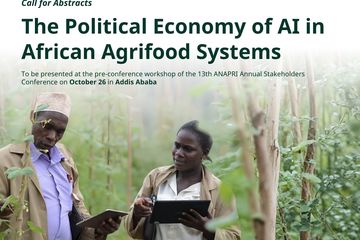
Call for Abstracts: The Political Economy of AI in African Agrifood Systems
The Africa Network of Agricultural Policy Research Institutes (ANAPRI), in partnership with the International Food Policy Research Institute (IFPRI), and with support from the CGIAR Science Programme on Policy Innovations, and the Digital Transformation Accelerator, invites researchers, policymakers, practitioners, and development actors to submit abstracts for a pre-conference workshop on The Political Economy of AI in African Agrifood Systems. The workshop will be held on the margins of the 13th ANAPRI Annual Stakeholders Conference in Addis Ababa, Ethiopia, on 26 October 2026. ANAPRI and IFPRI are currently seeking funding for bursaries for travel and participation of delegates with selected abstract submissions.Background and Rationale
Artificial intelligence (AI) is increasingly being positioned as a transformative force in African food, land, and water systems (FLWS). Through large scale data collection, predictive analytics and personalized advisory tools, AI is framed by many policymakers and tech companies as a solution to persistent challenges of food insecurity, climate vulnerability and public service delivery.
Yet these promises raise urgent questions. Who controls the data and infrastructures on which AI systems depend? How are digital tools being used to support policymaking, organize public life, and shape relations between citizens, states, markets, and development actors? And how are the benefits and risks of AI distributed across places already marked by unequal access to resources, political unrest, and limited technological capacity?
This call for abstracts invites contributions that critically examine the political economy of AI in FLWS. We are particularly interested in work that moves beyond either technological optimism or blanket critique, and instead investigates how AI is being imagined, institutionalized, contested, and made consequential in specific social, ecological, and political contexts. In doing so, the collection asks how policy research institutions can help governments navigate this rapidly shifting landscape, build regulatory and institutional capacity, and inform policy change that are grounded in the needs, priorities, and aspirations of smallholder farmers and other FLWS actors.Workshop Objectives
The workshop aims to create a space for comparative learning on how AI is being governed, contested, and applied in FLWS. Rather than treating AI governance as a technical or universal policy challenge, the event will examine how lessons from different institutional, political, and infrastructural settings can inform more effective governance approaches in Africa. In addition to the presentation of new research, it will bring together researchers, policymakers, technology actors, civil society, and ANAPRI member institutions to identify what is already being learned from practice, where policy gaps remain, and how evidence can support national, regional, and continental strategies that are responsive to the needs of smallholder farmers and rural communities.Thematic Areas
We welcome empirical, conceptual, methodological, and policy-oriented contributions addressing one or more of the following themes:
1. Data governance and digital infrastructure: who controls the means?
AI systems depend on data: who collects it, who owns it, who can access it, and who has the authority to interpret and act on it. In African food, land, and water systems, these questions are closely tied to histories of extraction, unreliable and inaccessible digital infrastructure, weak regulatory capacity, and fragmented institutional arrangements.
Abstracts under this theme may explore topics such as agricultural data governance, data sovereignty, digital public infrastructure, platformization, interoperability, cybersecurity, privacy, consent, and the role of public, private, and development actors in building and governing AI-ready data ecosystems.
2. AI and the organization of public life: who shapes decisions?
AI and other digital tools are increasingly being introduced into policy processes, public administration, agricultural extension, environmental monitoring, social protection, and other aspects of public life. These tools may support decision-making, improve coordination, or make public systems more responsive. At the same time, they may shift accountability, obscure political choices, or embed particular assumptions about efficiency, expertise, and development.
Abstracts under this theme may present, demonstrate, or assess AI-enabled tools for policy and public systems, while also critically examining their risks, limitations, and governance implications. We welcome contributions on decision-support systems, dashboards, predictive models, advisory platforms, monitoring systems, and other tools that raise questions of accountability, transparency, bias, exclusion, institutional dependency, and public value.
3. AI in the majority world: who benefits, and who bears the risks?
The development and deployment of AI in African FLWS is marked by unequal access to resources, political instability, limited technological capacity, and uneven institutional authority. These conditions shape who is able to benefit from AI-enabled systems, who bears their risks, and whose interests are reflected in emerging policy and regulatory frameworks.
Abstracts under this theme may examine how AI policies, investment decisions, data governance arrangements, and regulatory frameworks reduce or reinforce existing inequalities. We welcome contributions on the distributional consequences of AI for smallholder farmers, pastoralists, fishers, women, youth, rural communities, displaced populations, and other groups whose livelihoods depend on FLWS.
Who Should Submit?
This call welcomes interdisciplinary contributions from scholars and practitioners working across agriculture, economics, political science, data science, development studies, sociology, ICT policy, law, agronomy, and related fields. Submissions from African institutions, early-career researchers, women researchers, policymakers, farmer organisations, NGOs, and development practitioners are particularly encouraged. We also welcome contributions that present work on/from all majority world/Global South geographies that are relevant for sub-Saharan Africa.Abstract Submission and Guidelines to Authors
Submission Deadline: 31 July 2026
Notification of Acceptance: 31 August 2026
Pre-Conference Workshop: 26 October 2026
13th ANAPRI Annual Stakeholders Conference: 27–29 October 2026Guidelines for Submissions
Please review the guidelines before submitting.
Access the submission guidelines here.https://www.anapri.net/call-for-abstracts-the-political-economy-of-ai-in-african-agrifood-systems/
By:
Yasmine Ben Slimane
Wednesday, Jul 1, 2026
AGRI-FOOD SYSTEMS
+1
Leave a comment
Open Call: SME Growth Accelerator Program
Deadline: Nov 15, 2026
Donor: International Finance Corporation
Grant Type: Grant
Grant Size: More than $1 million
Countries/Regions: Afghanistan, Algeria, Angola, Argentina, Bangladesh, Benin, Bhutan, Bolivia, Botswana, Brazil, Brunei, Burkina Faso, Burundi, Cambodia, Cameroon, Cape Verde, Central African Republic, Chad, Chile, China, Colombia, Comoros, Congo (Brazzaville), Congo DR, Costa Rica, Cote DIvoire (Ivory Coast), Cuba, Djibouti, Dominican Republic, Ecuador, Egypt, El Salvador, Equatorial Guinea, Eritrea, Ethiopia, Gabon, Gambia, Ghana, Guatemala, Guinea, Guinea-Bissau, Honduras, India, Indonesia, Japan, Kazakhstan, Kenya, South Korea, North Korea, Kyrgyzstan, Laos, Lesotho, Liberia, Libya, Madagascar, Malawi, Malaysia, Maldives, Mali, Mauritania, Mauritius, Mayotte, Mexico, Mongolia, Morocco, Mozambique, Myanmar, Namibia, Nepal, Nicaragua, Niger, Nigeria, Oman, Pakistan, Panama, Paraguay, Peru, Philippines, Puerto Rico, Qatar, Reunion, Russia, Rwanda, Saint Helena, Sao Tome And Principe, Senegal, Seychelles, Sierra Leone, Singapore, Somalia, South Africa, Sri Lanka, Sudan, Eswatini, Tajikistan, Tanzania, Thailand, East Timor (Timor-Leste), Togo, Tunisia, Turkey, Turkmenistan, Uganda, Uruguay, Uzbekistan, Venezuela, Vietnam, Western Sahara, Zambia, Zimbabwe, South Sudan
Area: Business & Industry, Businesses, Companies and Enterprises, Capacity Building, Learning, Employment & Labor, Equipment, Research, Technology
The SME Growth Accelerator Program helps small and medium enterprises grow, expand into new markets, and strengthen their business capacity through funding and mentorship support.
For more information, visit https://ifcgrants.org/grants/sme-growth-accelerator
Premium Link: https://grants.fundsforngospremium.com/opportunity/op/open-call-sme-growth-accelerator-program
By:
Yasmine Ben Slimane
Thursday, Jun 18, 2026
SCIENCE, TECHNOLOGY AND INNOVATION
+1
No Preview Available
Leave a comment
Applications open for Women in Tech Incubator (South Africa)
Deadline: Jun 26, 2026
Donor: WomHub
Grant Type: Training
Grant Size: $1000 to $10,000
Countries/Regions: South Africa
Area: Business & Industry, Entrepreneurship, Startups, Innovation, Leadership, Gender Equality, Women & Gender
The Women in Tech Incubator South Africa is requesting applications to support women innovators in STEM with resources, training, and business development opportunities.
For more information, visit https://www.womhub.com/scwomenintech4.html
Premium Link: https://grants.fundsforngospremium.com/opportunity/op/applications-open-for-women-in-tech-incubator-south-africa
By:
Yasmine Ben Slimane
Thursday, Jun 18, 2026
CULTURE AND SOCIETY
+2

No Preview Available
Leave a comment
Request for Applications: Healthcare Access Initiative
Deadline: Dec 01, 2026
Donor: International Finance Corporation
Grant Type: Grant
Grant Size: More than $1 million
Countries/Regions: Afghanistan, Algeria, Bahrain, Bangladesh, Bhutan, Congo DR, Cote DIvoire (Ivory Coast), Djibouti, Egypt, Equatorial Guinea, Eritrea, Ethiopia, Gabon, Gambia, Ghana, Guinea, Guinea-Bissau, India, Iran, Iraq, Israel, Jordan, Kenya, Kuwait, Lebanon, Lesotho, Liberia, Libya, Madagascar, Malawi, Maldives, Mali, Mauritania, Mauritius, Mayotte, Morocco, Mozambique, Namibia, Nepal, Niger, Nigeria, Oman, Pakistan, Palestinian Territories, Qatar, Reunion, Rwanda, Saint Helena, Sao Tome And Principe, Saudi Arabia, Senegal, Seychelles, Sierra Leone, Somalia, South Africa, Sri Lanka, Sudan, Eswatini, Syria, Tanzania, Togo, Tunisia, Turkey, Uganda, United Arab Emirates, Western Sahara, Yemen, Zambia, Zimbabwe, South Sudan
Area: Business & Industry, Capacity Building, Learning, Equipment, Health care, Research, Technology
The Healthcare Access Initiative is now accepting applications to support projects that improve healthcare access and patient outcomes for low-income communities.
For more information, visit https://ifcgrants.org/grants/healthcare-access-initiative
Premium Link: https://grants.fundsforngospremium.com/opportunity/op/request-for-applications-healthcare-access-initiative
By:
Yasmine Ben Slimane
Thursday, Jun 18, 2026
HEALTH AND NUTRITION
+2
No Preview Available
Leave a comment
Applications open for Agritech Modernization Grant
Deadline: Oct 10, 2026
Donor: International Finance Corporation
Grant Type: Grant
Grant Size: More than $1 million
Countries/Regions: Afghanistan, Angola, Bangladesh, Benin, Bhutan, Botswana, Burkina Faso, Burundi, Cameroon, Cape Verde, Central African Republic, Chad, Comoros, Congo (Brazzaville), Congo DR, Cote DIvoire (Ivory Coast), Djibouti, Equatorial Guinea, Eritrea, Ethiopia, Gabon, Gambia, Ghana, Guinea, Guinea-Bissau, India, Iran, Kenya, Lesotho, Liberia, Madagascar, Malawi, Maldives, Mali, Mauritania, Mauritius, Mozambique, Namibia, Nepal, Niger, Nigeria, Pakistan, Reunion, Rwanda, Sao Tome And Principe, Senegal, Seychelles, Sierra Leone, Somalia, South Africa, Sri Lanka, Sudan, Eswatini, Tanzania, Togo, Uganda, Western Sahara, Zambia, Zimbabwe
Area: Agriculture Food & Nutrition, Farming, Food Safety, Business & Industry, Capacity Building, Learning, Climate Change, Equipment, Research, Technology
The Agritech Modernization Grant offers to support modernizing smallholder farming systems using technology and climate-smart practices to improve incomes and food security.
For more information, visit https://ifcgrants.org/grants/agritech-modernization
Premium Link: https://grants.fundsforngospremium.com/opportunity/op/applications-open-for-agritech-modernization-grant
By:
Yasmine Ben Slimane
Thursday, Jun 18, 2026
AGRI-FOOD SYSTEMS
+2
No Preview Available
Leave a comment
Open Call for Women-Led Business Grant Program
Deadline: Aug 20, 2026
Donor: International Finance Corporation
Grant Type: Grant
Grant Size: $500,000 to $1 million
Countries/Regions: Afghanistan, Albania, Algeria, Angola, Antigua and Barbuda, Argentina, Armenia, Australia, Austria, Azerbaijan, Bahamas, Bahrain, Bangladesh, Barbados, Belarus, Belgium, Belize, Benin, Bhutan, Bolivia, Bosnia And Herzegovina, Botswana, Brazil, Brunei, Bulgaria, Burkina Faso, Burundi, Cambodia, Cameroon, Canada, Cape Verde, Central African Republic, Chad, Chile, China, Colombia, Comoros, Congo (Brazzaville), Congo DR, Costa Rica, Cote DIvoire (Ivory Coast), Croatia, Cyprus, Czech Republic, Denmark, Djibouti, Dominica, Dominican Republic, Ecuador, Egypt, El Salvador, Equatorial Guinea, Eritrea, Estonia, Ethiopia, Fiji, Finland, France, Gabon, Gambia, Georgia, Germany, Ghana, Greece, Grenada, Guatemala, Guinea, Guinea-Bissau, Guyana, Haiti, Honduras, Hungary, Iceland, India, Indonesia, Iran, Iraq, Ireland, Israel, Italy, Jamaica, Japan, Jordan, Kazakhstan, Kenya, Kiribati, South Korea, Kuwait, Kyrgyzstan, Laos, Latvia, Lebanon, Lesotho, Liberia, Libya, Lithuania, Luxembourg, Macedonia, Madagascar, Malawi, Malaysia, Maldives, Mali, Malta, Marshall Islands, Mauritania, Mauritius, Mexico, Micronesia Federated States Of, Moldova Republic Of, Mongolia, Morocco, Mozambique, Myanmar, Namibia, Nepal, Netherlands, New Zealand, Nicaragua, Niger, Nigeria, Norway, Oman, Pakistan, Palau, Panama, Papua New Guinea, Paraguay, Peru, Philippines, Poland, Portugal, Qatar, Romania, Russia, Rwanda, Saint Kitts And Nevis, Saint Lucia, Samoa, Sao Tome And Principe, Saudi Arabia, Senegal, Seychelles, Sierra Leone, Singapore, Slovak Republic, Slovenia, Solomon Islands, Somalia, South Africa, Spain, Sri Lanka, Sudan, Suriname, Eswatini, Sweden, Switzerland, Syria, Tajikistan, Tanzania, Thailand, East Timor (Timor-Leste), Togo, Tonga, Trinidad And Tobago, Tunisia, Turkey, Turkmenistan, Tuvalu, Uganda, Ukraine, United Arab Emirates, United Kingdom, United States, Uruguay, Uzbekistan, Vanuatu, Venezuela, Vietnam, Yemen, Zambia, Zimbabwe, Montenegro, Serbia, Kosovo, South Sudan
Area: Business & Industry, Leadership, Women & Gender
The Women-Led Business Grant Program is requesting applications to support women-led high-impact ventures by combining non-dilutive funding with leadership coaching and access to a global peer network to support scalable and inclusive business growth.
For more information, visit https://ifcgrants.org/grants/women-led-business-grant
Premium Link: https://grants.fundsforngospremium.com/opportunity/op/open-call-for-women-led-business-grant-program
By:
Yasmine Ben Slimane
Thursday, Jun 18, 2026
SCIENCE, TECHNOLOGY AND INNOVATION
+1
No Preview Available
Leave a comment
InukaAngaza Programme for Young Leaders and Changemakers (Tanzania)
Deadline: Jun 21, 2026
Donor:
Grant Type: Events
Grant Size: Not Available
Countries/Regions: Tanzania
Area: Entrepreneurship, Career Development, Employment & Labor, Individuals, Leaders, Innovation, Leadership, Sustainable Development, Youth & Adolescents
The UNDP Tanzania has launched its applications for the inaugural cohort of the InukaAngaza Programme, a flagship initiative aimed at preparing young people with practical skills, professional exposure and career readiness competencies needed in a rapidly evolving world of work.
For more information, visit https://www.undp.org/tanzania/call-applications-inukaangaza-programme-cohort-1
Premium Link: https://grants.fundsforngospremium.com/opportunity/op/inukaangaza-programme-for-young-leaders-and-changemakers-tanzania
By:
Baboki Gaolaolwe-Major
Monday, Jun 15, 2026
YOUTH EMPOWERMENT
+1
No Preview Available
Leave a comment
Apply Now: Digital Minds Career Development Fellowships
Deadline: Jul 10, 2026
Donor: Longview Philanthropy
Grant Type: Fellowship
Grant Size: Not Available
Countries/Regions: All Countries
Area: Career Development, Individuals, Researchers, Artificial Intelligence, Research, Technology
Submissions are open for the Digital Minds Career Development Fellowships to support individuals pursuing or transitioning into careers focused on AI consciousness, sentience, moral status, welfare, and related research and policy work.
For more information, visit https://futureimpact.group/longview-digital-minds-career-development-fellowships
Premium Link: https://grants.fundsforngospremium.com/opportunity/op/apply-now-digital-minds-career-development-fellowships
By:
Baboki Gaolaolwe-Major
Monday, Jun 15, 2026
EDUCATION
+2
No Preview Available
Leave a comment
Applications open for Fit 4 Start Startup Accelerator Programme
Deadline: Jul 10, 2026
Donor: Luxinnovation
Grant Type: Training
Grant Size: $100,000 to $500,000
Countries/Regions: All Countries
Area: Business & Industry, Startups, Artificial Intelligence, Information Technology, Innovation
The Fit 4 Start Startup Accelerator Programme provides support to early-stage and innovative startups with coaching, mentoring, and equity-free funding to help them launch and scale in the European market.
For more information, visit https://events.luxinnovation.lu/e/fit-4-start-17
Premium Link: https://grants.fundsforngospremium.com/opportunity/op/applications-open-for-fit-4-start-startup-accelerator-programme
By:
Baboki Gaolaolwe-Major
Monday, Jun 15, 2026
SCIENCE, TECHNOLOGY AND INNOVATION
No Preview Available

Leave a comment