

Results for "ai"
34 Results
The Role of Science, Institutions of Learning, and Training on Africa’s Fertilizer and Soil Health.
Summary: African soils are in danger, and this crisis threatens to disrupt food security and ecosystems, potentially leading to famine and nutritional challenges. Healthy soil is essential for human existence on earth. Healthy soils have biological, physical and chemical properties found in their top layer, or topsoil, that sustain plant and animal productivity, soil biodiversity and environmental quality.
Healthy topsoil is a key factor in bolstering agriculture productivity in Africa. Yet it is known that African soils are in a crisis. Addressing this urgent issue requires a collaborative effort involving policy and regulation, funding, private and community interventions, and, crucially, the leadership of African research and training institutions. These entities are pivotal in restoring Africa’s soil health and ensuring the appropriate use of fertilizers.
The Africa Fertilizer and Soil Health Summit (AFSHS), held in Nairobi, sought to address these pressing issues. The Summit’s primary goal was to establish an Africa Fertilizer and Soil Health Action Plan, a roadmap designed to tackle the challenges of declining soil health and low fertilizer efficacy across the continent. This plan, envisioned to guide efforts until 2030, aims to enhance agricultural productivity through sustainable practices and robust policy frameworks.
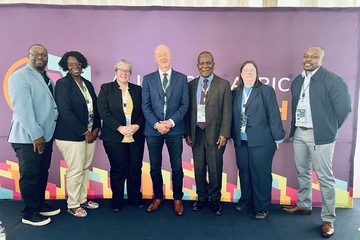
During the Summit, the Alliance for African Partnership (AAP), in collaboration with Michigan State University (MSU) and the Africa Network of Agricultural Policy Research Institutes (ANAPRI), organized a critical side event. This event underscored the indispensable role that African research and training institutions play in shaping and implementing policy reforms for fertilizer and soil health programs.
The Vital Role of African Research and Training Institutions
African research and training institutions are custodians of knowledge and expertise, uniquely positioned to drive sustainable agricultural practices and to address ongoing soil degradation. Their role in promoting sustainable practices and conducting extensive research is central to the success of the Africa Fertilizer and Soil Health Action Plan. These institutions, including universities, scientific crop and livestock institutes, and policy research think tanks, are essential in providing thought leadership, policy engagement, and the development of key solutions and implementation strategies.
Professor Thom S. Jayne of MSU highlighted this during his keynote presentation at the side event. He emphasized that effective implementation of soil health initiatives requires the involvement of trusted local institutions. “The message coming from established local actors will generate much greater trust and commitment than the same message from externally funded outside interests,” he noted. This sentiment reflects a broader recognition that African-led initiatives are crucial for achieving lasting impact and engagement with African governments.
Challenges and Collaborative Efforts
Implementing these initiatives is not without challenges. African food systems face pressures from climate change, population growth, conflict, and land degradation. Innovation is necessary to adapt to these conditions, and this innovation must be driven by robust agricultural research and extension systems. As Thomas Jayne stated, “Innovation is required for African founding populations to survive and remain competitive and productive in the face of all these changes.”
However, the adoption of innovative soil fertility practices among smallholder farmers remains low. Many farmers struggle to consistently implement practices like crop rotations, intercropping legumes, and recycling organic matter. To address this according to Thom Jayne, there must be strong bi-directional learning systems where farmers benefit from new technologies, and scientists understand and address the barriers to adoption.
Path Forward: Empowering Local Institutions
The need for empowering local African institutions will be key to responding to the call implementation of the actions plans. However the local institutions will need to take into account challenges such as; the need for building national coalitions of stakeholders and defining local level coordination mechanisms as well as resources including human and financial These institutions must be supported to fulfill their mandates, drive research and innovation, and implement policies that reflect the realities and needs of African agriculture on the ground. Professor Titus Awokuse from MSU underscored the importance of these partnerships. “Stakeholders must collaborate and contribute to the success of the action plans, from providing leadership and coordination to investing resources and actively participating in the implementation process,” he said. This collaborative approach ensures that the action plans are not just theoretical but are translated into tangible outcomes that benefit farmers and communities across Africa.
Conclusion
The Africa Fertilizer and Soil Health Summit and its associated events highlighted the critical need for a concerted effort to address soil health and fertilizer use in Africa. By leveraging the expertise and leadership of African research and training institutions, supported by a collaborative network of stakeholders, there is a real opportunity to create a more sustainable and productive agricultural future for the continent. The success of these initiatives will not only restore soil health but also enhance food security and resilience, ensuring a prosperous future for Africa and its people. Inherently, this is not a small feat, given the diverse multistakeholder partnerships, alongside the complex nature of various governments, it requires careful navigation. Titus Awokuse reminded everyone that “even though our conversations may take many forms and go in different directions, we need to always remember it's about the people. It's about families, children and individuals that don't have a voice, therefore in our conversations we need to think carefully on how to leverage our positions of privilege to make their voices heard”
By:
Baboki Gaolaolwe-Major
Wednesday, Jul 10, 2024
HEALTH AND NUTRITION
+2
Leave a comment
Essential Competencies of Frontline Agricultural Extension Professionals
This training manual was funded by Michigan State University through the Alliance for African
Partnership (AAP) for the 2021 Partnerships for Innovative Research in Africa (PIRA) grant award
at the scaling grant funding level titled ‘Strengthening Agricultural Extension Training in the MSU Alliance for African Partnership (AAP) Consortium Partners in Africa’.
By:
Justin Rabineau
Monday, Apr 15, 2024
AGRI-FOOD SYSTEMS

Leave a comment
Navigating the Complexities Building Bridges and Sustainable Impactful Networks in Research
Summary: In a fast world where innovation and impact are critical slogans, researchers are required to build their partnerships and grow networks to advance research that transforms lives beyond academic papers. It is equally critical to know the intricacies of connecting with the right people and teams. This article unpacks some of the in ways around the complexities for researchers aiming to works across such environments. Farai Kapfudzaruwa is a Research and Strategic Partnerships Manager at Future Africa, University of Pretoria.
People often say, “the world is becoming small”, when discussing meeting new friends and forming partnerships. This statement reflects the increased connectivity among people, facilitated by rapid transportation and advanced communication methods. However, does the idea of a shrinking world really make it a simple, smooth, and easy process to build sustainable and impactful networks? While the phrase "the world becomes small" suggests ease of navigation, it also brings to light increasingly intricate and complex environments. The kind of environments that are a compound of diverse cultures, trends, and knowledge systems, call for one to re-learn what they know. Neither research nor academia holds a special entry pass into this realm; they must navigate these intricate environments just like everyone else to advance research and societal knowledge. Only by doing so, we will manage to begin to tackle some of the most complex problems with strong bridges and networks.
As the principal investigator of the Africa-Asia Business Partnership Forum, co-funded by the Alliance for African Partnership (AAP), we navigated a myriad of complexities to drive the project towards success. This project brought together South African, Japanese, and US partners, encompassing academics, young entrepreneurs, and their value chain stakeholders. Farai and his team faced the challenge of managing cultural differences, a task that proved to be intricate. For instance, during the project’s initial virtual workshops, Japanese entrepreneurs, known for their quiet and reserved nature, found it difficult to adapt to the interactive format, in contrast to the vocal and assertive South African entrepreneurs. This innocent disparity is something that is usually overlooked and often not considered to be a thing to account for when conceptualising projects, but it can cause and lead to serious imbalance in sharing ideas and creating a levelled environment where thoughts circulate with ease. In this instance, this disparity led to the Japanese feeling overwhelmed.
To address these issues, the team acknowledged the significance of cultural sensitivities and redesigned the workshops to be more inclusive of Japanese participants. They also encountered diverse work cultures and problem-solving methods among the researchers, adding another layer of complexity to the project’s execution.
The foundational principles of effective networking always revolve around two key tenets. The first principle emphasizes the importance of understanding context. This entails understanding and recognizing that every individual, partner, community, or organization operates within a unique socio-cultural, knowledge system, resource-based, and personality-driven context. The second principle highlights the value of being open-minded and receptive to learning. Therefore, when initiating engagements with new partners, it is crucial to approach with an open mind and actively seek to comprehend their specific context.
Mutual respect amongst partners always ensures that diverse views and cultures are accounted for in a partnership. This entails understanding that each partner brings unique value to a project. Once everyone’s value is accounted for and appreciated it allows for equitable distribution of resources and tasks in the team. Often, Global South partners are portrayed as recipients of capacity-building support which then undermines their role in projects. This perception can arise from a lack of appreciation for their indigenous knowledge systems (IKS), which may be dismissed as insufficiently rigorous by Global North partners. By taking the time to understand and respect the value of IKS, Global North partners can find value in the contributions of Global South partners. Furthermore, it’s one thing to understand, respect, and value a different cultural context or way of doing things in a partnership and another to take a key interest and learn a different context. Language is a good example, it's one thing to appreciate a different language and another thing to take an interest and attempt to learn that language to enable you to communicate more effectively with local partners.
Avoid the Misconceptions and Mix Things Up
One of the most prevalent and biggest misconceptions about networking is the belief that relationships should naturally form among researchers or partners who share similar backgrounds and priorities and who are from the same discipline and/or have aligned interests. However, within the context of transdisciplinarity, such relationships often lack innovation and diversity and exhibit significant homogeneity, as they predominantly involve partners with similar interests. In one of the projects that I lead at Future Africa, this is the core of what we do. Supported by the International Science Council, the project explores the idea of a Science Technology and Innovation (STI), Leadership Forum. STI isn't solely about the natural sciences. The project has gained traction by engaging a diverse array of experts and leaders across disciplines, including the social sciences. These professionals contribute their insights on integrating natural sciences with policy to enhance the African STI landscape. The impact of valuing and integrating varied disciplines and expertise has enriched our research methodologies and outcomes. Therefore, it is highly recommended to seek out networks that challenge you and offer diversity, as this creates opportunities for transformative impact. Engineers, for instance, are encouraged to actively cultivate and nurture relationships with sociologists or artists, as they can leverage each other's expertise for mutual benefit. Similarly, academics should strive to engage with sectors beyond academia, such as the private sector or government, to foster relevance and impact of research and teaching, thus catalyzing innovation across diverse fields.
Another common misconception revolves around the idea that networks are inherently self-serving. However, this is not the case. As an academic, you can actively participate in networks, such as community groups, where the focus is not on extracting value but on adding value and making a positive impact by transforming lives. I believe in the power of diverse networks to foster significant, transformative impacts, and I advocate for connections beyond traditional boundaries, such as those between engineers and sociologists or artists, to leverage unique expertise for mutual benefit. This strategy extends to academics engaging with sectors outside of academia, enhancing the relevance and impact of their work across different fields. For example, I am engaged in a network of Non-Profit Organizations (NPOs) addressing child labor and sustainability in the wine industry which illustrates this point. My interaction with stakeholders like human rights lawyers and community leaders enriches my understanding of the problem, while my academic contributions to grant proposal writing and transformative partnerships underscore the value of reciprocal, impactful networking. This experience not only broadens my perspective but also significantly enhances the collective efforts towards sustainable and ethical practices in the industry. In essence, this example reflects a broader principle: networks should not be self-serving but rather avenues for adding value and effecting positive change. My involvement in both academic and non-academic networks highlights the dual benefits of recognition and the opportunity to mentor and support others, ultimately leading to a more interconnected and transformative impact across disciplines and sectors.
Attention to Newcomers in Academia
Firstly, start building networks at an early stage in your graduate studies at conferences, social gatherings, and many other places. Find mentors who can introduce you to their networks for you to benefit and learn. Secondly, always make an effort to engage with partners outside your comfort zone or your area of expertise or sector. You are more likely to be impactful from a research and teaching perspective if you always have a transdisciplinary lens to your work. This is critically important in an academic environment that increasingly values societal impact. If you work with local communities – show respect and value them.
Practical Techniques for Working Across Sectors and Cultural and knowledge Contexts
Given the diverse expertise and capacities in such partnerships, the key to ensuring impact and sustainability is to ensure everyone has input in setting the agenda and goals. As such, communicating and engaging on the project management plan early and transparently is essential. Secondly, clearly defining the roles of each partner based on their expertise and capabilities (resources and time) is key. This ensures there is accountability in the partnership. Thirdly, it’s important to develop reflexive practices which enable all the partners to contribute to the project through learning from others’ expertise, competencies and disciplines. For example, if you want to learn the value of government or civil society, the best way is through regular knowledge sharing sessions where partners share their expertise, competencies, and lessons learned. This can be an opportunity for individuals and partners to learn new skills and expertise. In scenarios like these, it's crucial to give everyone a voice. Adopting the "world café" concept, where workshop participants are divided into small groups, ensures that each partner can contribute their insights. In 2022, we organized a transdisciplinary capacity development workshop for early career researchers. The aim was to collaboratively design projects addressing global challenges. To break the ice, we introduced games that facilitated socialization and mutual acquaintance among participants. This strategy helped build rapport and relationships, enabling productive engagement throughout the week. Such interactive approaches can foster communication and collaboration in workshop settings.
Fourth, given the variety of backgrounds and competencies in these complex knowledge systems its always important to “speak the same language”. For example, simple tools such as documented communication guidelines, or glossary of terms can help data scientists and policy makers understand each other across disciplines. Fifth, use multidisciplinary approaches to ensure that everyone benefits. Generally, academics value “methods” whereas policymakers value results/practical outcomes. This means creating flexible design frameworks that can accommodate variable scope and unanticipated results. It is important to know that there is need for mutual benefit and there are several approaches to achieving a shared vison and outcome based on the nature of the stakeholder. Therefore, it is important to emphasize the preferred method of integrating multidisciplinary approaches to ensure that all partners benefit from the collaboration. Partners must therefore acknowledge the different priorities and perspectives of academic researchers and policymakers, highlighting the need for flexible design frameworks that can accommodate diverse goals and outcomes. For example, a partnership focused on environmental conservation and policy development might involve academic researchers specializing in ecological studies, policymakers from government agencies, and environmental advocacy groups. Each partner brings unique strengths and priorities to the table. The academic researchers may prioritize rigorous scientific methodologies, data collection, and analysis techniques to understand ecosystem dynamics, species diversity, and environmental impacts while policymakers may prioritize actionable insights, policy recommendations, and practical solutions to address environmental challenges such as deforestation, pollution, and habitat loss. When designing the project, a flexible research framework that integrates both academic methodologies and policy-oriented outcomes is key. For example, academic researchers can conduct in-depth ecological studies using advanced data collection techniques, while also focusing on translating their findings into policy-relevant recommendations. In that way it's a win-win for both the academic and policy stakeholders.
Navigating ethical considerations across different cultural contexts poses a complex challenge. What may be deemed ethical in one region might not align with ethical standards elsewhere. Therefore, it is preferable to identify overarching principles that promote sustainable partnerships, such as steering clear of linguistic dominance and embracing epistemological flexibilities. Numerous global frameworks exist that outline these principles. However, the true challenge lies in integrating them into funding models, project frameworks, and institutional structures effectively. This requires a thoughtful approach that respects diverse perspectives and ensures ethical practices are embedded at every level of operation.
Using DEI to Frame Your in Partnerships and Networks
As the global landscape continues “to become smaller”, our interactions increasingly involve individuals from diverse backgrounds. It is imperative that we equip ourselves with the necessary skills to navigate the different cultural sensitivities. This includes understanding what makes people comfortable and acknowledging areas that may cause discomfort. It's crucial not only to consider our interactions with individuals but also to evaluate our treatment of marginalized groups such as women, youth, disabled individuals, LGBTQ+ communities, among others. How we treat these groups can significantly be seen as your institutional culture. Hence, it is vital to prioritize fairness, inclusivity, and a deep understanding at all levels of interaction. Attention to diversity and inclusion ensure there are different partners from different backgrounds with varying experiences and expertise. As a result, diverse networks offer broader perspectives as different people provide insights that others would never have considered or thought. Joining diverse and inclusive networks also brings new opportunities to partners – for example, new funding sources. A lot has also been written on the value of diversity and inclusion in promoting creativity and innovation.
Emerging Trends that Alter the World of Partnerships and Networking
The funding for higher education partnerships globally is diminishing. Therefore, networks that will be able to ensure impact and transformative impact with fewer resources will become more successful. This particularly, relates the movement to embrace artificial intelligence and machine learning in research and learning. AI is equipping students and communities with information processed faster (which has implications on how collaborative research is done), but also bridging access to quality knowledge. The COVID-19 pandemic has spurred the adoption of a new global work culture, characterized by widespread remote work practices. This shift has accelerated the use of virtual communication platforms, facilitating seamless connections and collaboration among individuals worldwide. This virtual communication culture presents a unique opportunity for the academia to build robust research and innovation networks. Virtual communication tools have broken down geographical barriers, allowing researchers, academics, and innovators from diverse backgrounds to connect effortlessly. This global connectivity fosters the exchange of ideas, knowledge sharing, and collaboration on a scale previously unattainable. enable real-time collaboration on research projects, facilitating joint efforts and interdisciplinary approaches. Researchers can collaborate across institutions, disciplines, and even continents, leveraging each other's expertise and resources to drive innovation and scientific progress.
By:
Abraham Mamela
Saturday, Apr 6, 2024
CULTURE AND SOCIETY
+1

Leave a comment
Bridging the Divide in Agricultural Extension Training in Africa and South Asia
Bridging the Divide in Agricultural Extension Training in Africa and South Asia: A Transregional Approach to Curriculum Enhancement
Project team: Murari Suvedi, Michigan State University, USA; Agwu Ekwe Agwu, University of Nigeria, Nsukka, Nigeria; Charity Chanza, Lilongwe University of Agriculture and Natural Resources, Malawi; and P.V.K. Sasidhar, Indira Gandhi National Open University, India
In an era where agricultural demands are increasingly complex, the work of Dr. Murari Suvedi and his team stands as a beacon of innovative transformation. Their project, funded by AAP through the Partnerships for Innovative Research in Africa (PIRA), hopes to revitalize agricultural extension training across Sub-Saharan Africa and Asia. Suvedi's research, sparked by his Fulbright Regional Research insights, underscores a pivotal shift towards a competency-based curriculum that aligns with the evolving landscapes of agricultural systems and market conditions.
The project involved the collaboration of several prestigious institutions, including Michigan State University; the University of Nigeria, Nsukka; Lilongwe University of Agriculture and Natural Resources; and Indira Gandhi National Open University. The team aimed to analyze and enhance the underpinnings of agricultural extension curricula. This transregional study, covering Nigeria, Malawi, Kenya, Uganda, and South Africa, is a testament to the pressing need for curriculum reform. The initiative not only identifies core competencies required by agricultural extension workers but also bridges the gap between existing academic frameworks and the practical, skill-based requirements of the modern agricultural sector.
A major accomplishment of Suvedi and his team is the creation of a comprehensive training manual designed to equip agricultural extension faculty with the latest skills and competencies. This manual is not just a document; it is a roadmap towards a more effective and responsive agricultural extension training model that resonates with the current needs of farmers and agribusinesses.
The team encountered startling revelations regarding the agricultural extension curriculum used within AAP member institutions and in institutions South Asia. Suvedi conveyed the profound discovery: "The curriculum is alarmingly outdated, necessitating comprehensive revision. Additionally, there is a critical need for faculty development to familiarize them with the updated curriculum and new pedagogical resources, including basic materials and training manuals." The team’s research also revealed that the agricultural extension curricula borrowed heavily from Western models that are not in sync with the practical realities of the regions studied. This misalignment highlights the urgency for a curriculum that is relevant, modern, and capable of preparing students for the actual challenges they will face in the field.
Collaboration as the Cornerstone and Lessons for the Future
The project’s success in forging robust partnerships among the partners has been instrumental. These collaborations are not only academic exchanges but vital conduits for sharing resources, research findings, and best practices, fostering a unified approach to agricultural extension training. The initiative underlines the importance of regular, transparent communication and the timely allocation of resources as pillars of successful international collaboration. These principles are crucial for building trust and ensuring the sustained impact of joint research projects.
The Road Ahead and Reflection on Partnership Impact
Looking forward, the team will continue its impactful work by focusing on capacity strengthening for agricultural extension faculties, thereby ensuring that the new curriculum and training methodologies are not only adopted but are also effectively implemented. Suvedi has shared that engagement with AAP has been a transformative journey, not only advancing his professional growth but also contributing to a strategic overhaul of agricultural extension education in the regions studied. The project’s outputs, including country reports, research findings, and the training manual, are now enormously vital resources available for the global community.
By:
Justin Rabineau
Friday, Apr 5, 2024
AGRI-FOOD SYSTEMS
+1
No Preview Available
Leave a comment
Centering Community: Enacting Culturally Responsive-Sustaining YPAR During COVID-19
Abstract
Purpose – This paper aims to provide insights for educators seeking to enact culturally responsive-sustaining education and research in the midst of the COVID-19 global pandemic. The authors examine what happened when the community-based Youth Participatory Action Research (YPAR) initiative they engaged with traditionally marginalized high school students was interrupted as a result of physical distancing necessitated by COVID-19.
Design/methodology/approach – Data for this inquiry were taken from a broader on-going ethnography of youth’s participation in the YPAR project and included audio and video recordings from meetings of the YPAR initiative and messages exchanged between and among authors and youth. Authors used components of culturally responsive-sustaining education and theories related to student voice as an analytic frame through which they considered how the COVID-19 pandemic influenced their work. Findings – Three findings are examined in this paper. They consider: how youth participants and the authors stayed connected after they were no longer able to meet in person; how youth chose to center the needs of the subsidized housing community where they lived while continuing their work; and how youth and authors navigated the uncertainties they encountered in looking ahead to future possibilities for their study as the pandemic continued. Originality/value – This study provides urgently needed insights for educators and researchers grappling with how they may enact culturally responsive-sustaining education and research during the COVID-19 global pandemic and beyond.
By:
Joanne E. Marciano
Thursday, Apr 4, 2024
YOUTH EMPOWERMENT
+1
Leave a comment
Determinants of Small-Scale Irrigation Use for Poverty Reduction: The Case of Offa Woreda, Wolaita Z
Small-scale irrigation is one of the agricultural activities used by rural farmers to improve the overall livelihood of the rural community by increasing income, securing food, meeting social requirements, and reducing poverty. e main objective of this study was to look into the factors that influence small-scale irrigation for poverty reduction among small-holder farmers in theOffa Woreda, Wolaita Zone.
By:
Elias Bojago
Thursday, Sep 8, 2022
AGRI-FOOD SYSTEMS
+1
Leave a comment
New open access book: Rethinking Heritage for Sustainable Development (UCL Press)
UCL Press is delighted to announce the publication of a new open access book that may be of interest to list subscribers.
Rethinking Heritage for Sustainable Development, by Sophia Labadi.
The Sustainable Development Goals (SDGs) adopted by the UN in 2015 have influenced the actions of international and intergovernmental organisations and governments around the world, and have dictated priorities for international aid spending. Culture, including heritage, is often presented as fundamental to addressing the SDGs: since 2010, the United Nations has adopted no fewer than five major policy recommendations that assert its importance as a driver and enabler of development. Yet, heritage is marginalized from the Sustainable Development Goals.
Rethinking Heritage for Sustainable Development constitutes a substantial and original assessment of whether and how heritage has contributed to three key dimensions of sustainable development (namely poverty reduction, gender equality and environmental sustainability) within the context of its marginalisation from the Sustainable Development Goals and from previous international development agendas.
Sophia Labadi adopts a novel, inclusive, large-scale and systematic approach, providing the first comprehensive history of the international approaches on culture (including heritage) for development, from 1970 to the present day. This book is also the first to assess the negative and positive impacts of all the international projects implemented in sub-Saharan Africa by a consortium of UN organisations that aimed to provide evidence for the contribution of heritage for development in time for the negotiation of the SDGs. The book’s conclusions provide recommendations for rethinking heritage for development, while reflecting on the major shortcomings of the selected projects.
Free download: https://bit.ly/3m10NRK
By:
Raquel Acosta
Monday, Jun 13, 2022
CULTURE AND SOCIETY

No Preview Available
Leave a comment
Feminist Africa, Volume 2, Issue 2 (2021): Gender and Sexuality in African Futurism
The newest issue of Feminist Africa is now available! The theme of the issue is "Gender and Sexuality in African Futurism." You can access the full issue at Current Issue - Feminist Africa. Learn more about Feminist Africa here.
TABLE OF CONTENTS
Editorial: Gender and Sexuality in African Futurism
· by Jacqueline-Bethel Tchouta Mougoué
Feature Articles
“How to Save the World from Aliens, Yet Keep Their Infrastructure”: Repurposing the “Master’s House” in The Wormwood Trilogy
· by Jenna N. Hanchey and Godfried Asante
When the Lagoons Remember: An Afroqueer Futurist Reading of “Blue Ecologies of Agitation”
· by Kwame Edwin Otu
“One Foot on the Other Side”: An Africanfuturist Reading of Irenosen Okojie’s Butterfly Fish (2015) and Akwaeke Emezi’s Freshwater (2018)
· by Kelsey Ann McFaul
Haunted Airports and Sexual Anxieties in Nana Nyarko Boateng’s “Swallowing Ice”
· by Delali Kumavie
Africanfuturism and the Reframing of Gender in the Fiction of Nnedi Okorafor
· by Arit Oku
Standpoint
The Liquid Space where African Feminism and African Futurism Meet
· by Minna Salami
Fiction
Land of My Dreams
· by Juliana Makuchi Nfah-Abbenyi
Exhibition
The Afrofuturist Village
· by Masiyaleti Mbewe
Reviews
“Liberation is Necessarily an Act of Culture”: A Review of Spirit Desire
· by Luam Kidane
Methodologies in Caribbean Research on Gender and Sexuality
· by Sylvia Tamale
Fashioning Postfeminism: Spectacular Femininity and Transnational Culture
· by Rosemary Oyinlola Popoola
By:
Raquel Acosta
Tuesday, Jan 4, 2022
CULTURE AND SOCIETY
+1
No Preview Available
Leave a comment
USAID Administrator Samantha Power: A New Vision for Global Development
USAID Administrator Samantha Power delivers remarks outlining a bold vision for the future of the U.S. Agency for International Development (USAID) and inclusive development around the world. The speech takes place as USAID celebrates its 60th anniversary. Administrator Samantha Power's remarks will be followed by a conversation with 2020 USAID Payne Fellow Katryna Mahoney
By:
Derek Tobias
Thursday, Nov 4, 2021
AGRI-FOOD SYSTEMS
+5
Leave a comment
WHO greenlights the world's first malaria vaccine — but it's not a perfect shot
The world's arsenal against malaria just got a fancy new bazooka. But it's not the easiest weapon to deploy, it only hits its target 30 to 40% of the time, and it's not yet clear who's going to pay for it.
The weapon in question is the RTS,S vaccine from GlaxoSmithKline, which on Wednesday got the green light from the World Health Organization for widespread use.
This is not only the first authorized malaria vaccine, it's also the first vaccine ever approved for use against a parasitic disease in humans.
The recommendation comes after RTS,S showed positive results in a pilot program in Ghana, Kenya and Malawi. The vaccine cut malaria cases by 40% and reduced hospitalizations of the potentially deadly disease by nearly a third.
Continue reading on NPR website
By:
Derek Tobias
Wednesday, Oct 13, 2021
HEALTH AND NUTRITION

Leave a comment
Building Sustainable Research Management Capacity in Sub-Saharan Africa: AAP Co-director Published
Co-director of AAP MSU Office, Jose Jackson-Malete, has recently had a chapter published! “Building Science Systems in Africa” is a culmination of a project focused on building capacity of African science councils to collaborate with each other and the private sector. The project was led by the African Centre for Technology Studies, the Science, Technology, and Innovation Policy Research Organization (STIPRO), the Scinnovent Centre, and the Association of African Universities. Jose Jackson, alongside co-authors Karin Dyason, Dipalesa Mpye, and Zimasa Sobuza, wrote the chapter “Building Sustainable Research Management Capacity in Sub-Saharan Africa” which discusses the increasing professionalization of research management.
The e-book is made available open access on the ACTS website and also the SGCI website.
https://www.acts-net.org/publications/books/building-science-systems-in-africa
By:
Madeleine Futter
Friday, Aug 27, 2021
OTHER
No Preview Available
Leave a comment
Avoiding tax in South Africa's retail industry via customer loyalty programs
The Medium Term Budget Policy Statement presented by the South African Minister of Finance in late 2013, highlighted that government expenditure substantially exceeded revenues collected. In investigating the possible broadening of the South African tax base as well as improving revenue administration, there is evidence of a gap in the taxation of customer loyalty programmes within many industries. The problem is that customer loyalty award credits is currently not being taxed by the revenue authority in South Africa. This study uses a multiple instrumental case study design to identify the tax leakages resulting from inadequate revenue administration within the South African retail industry’s use of customer loyalty programmes. The study has found that the loss to the fiscus in the non-taxing of customer loyalty award credits is substantial.
By:
Teresa Pidduck
Thursday, Aug 19, 2021
OTHER


Leave a comment