


Results for "education"
128 Results
Impact of PIRA Grant on Sharks, Whales, Coral, Students, and South Africa’s Largest Marine Park
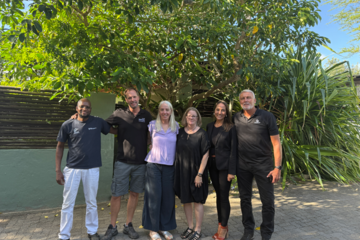
I’ll never forget hitting the submit button for our PIRA proposal, Bridging the Gap: Strengthening Conservation, Community, and Education, in South Africa’s Largest Coastal Marine Protected Area. After months of meetings, discussion, and zoom calls which led to weeks of writing and rewriting, we felt excited and hopeful. We were thankful that Michigan State had an opportunity for projects like this but were also concerned because our project was so unique and different.
The hard work paid off when we were named as one of the recipients of this funding. Not only were our main partners, the University of Pretoria, and the South African NGO SharkLife Conservation thrilled, but three other universities in the United States and two in South Africa were ready to help make a difference.
The main objectives of the project were to hold several zoom sessions to allow collaboration between the different entities, and also to have three workshops in Sodwana Bay in the Kwa-Zulu Natal province of South Africa. The workshops had two main goals. First, to bring together researchers that work in the area to monitor, protect, and conserve the iSimangaliso marine park and World Heritage site. Second, to engage the community in order to recognize the importance and impact of this marine park on their lives.The work with the community has been one of the highlights of this project. Overall, the Zulu culture is focused on farming and raising cattle. Their interaction with the ocean by which they live is minimal. Each year, thousands of tourists from Europe and North America come to their area to scuba dive on one of the healthiest coral reefs left in the world. Yet, the local communities have not yet been exposed to the value of this resource. This project helped to change that. Being able to take a boat full of Zulu school children out on the ocean to listen to whales and dolphins and to watch these magnificent marine mammals leap out of the ocean was incredible. It was a life changing experience for all of those on the boat, me included. A few days later when we took the same children to snorkel in the tide pools, we were again able to witness more firsts for the students. The first time using a mask, the first time seeing a fish swim, the first time appreciating the underwater world. Encouraging the students to put on a mask and lay in the water in their soccer uniform while another student held their feet in 24 inches of water for safety was the barrier. The reward was to see their faces as they stood up in the water and spoke about a hundred words of Zulu with a big smile on their face and then turned to me to say “I saw beautiful fish” in English. What was meant to be a 30-minute activity in the tide pools, turned into over an hour. Each student wanted multiple turns, and I continuously consulted my Zulu-English guide to marine organisms. We later heard that the students told their families and everyone at their school about their experience so when we asked for volunteers for the next workshop, we had a plethora.
Among the scientific researchers, we had similar positive results. For the second workshop we hosted professors from Michigan State University, Texas A&M, Mississippi State University, and North Carolina State University. In addition, we had South Africans researcher from the University of Pretoria, Nelson Mandela University and several marine focused NGOs. The governmental and monitoring entities from South African and Kwa-Zulu Natal were also present. It was the first time that such a diverse group came together to protect this World Heritage site and shared their expertise to advance the research and address issues that impact the site. In particular, it was critical for the South African governmental organizations to see how the various university researchers and NGOs were all working together toward a common goal. Following this workshop, several of the pitfalls that were preventing licensing and permitting seemed to evaporate because trust was built between the groups. Data sharing agreement were made and friendships were forged.
We still have one remaining workshop to build upon this strong foundation. It will be a pleasure to return to Sodwana Bay again with all the progress of the previous two workshops for more engagement with the community and outputs from the scientific partners. It is one of those rare moments in life as a conservationist when you are optimistic and sure of the win-win-win. It is a win for the community because of the spark of curiosity and scientific knowledge we have started. It is a win for the organisms in the hugely biodiverse marine park to have more people caring about the future. Finally, it is a win for scientists and NGOs who study and want to protect this World Heritage Site.
By:
Yasmine Ben Slimane
Thursday, Jun 4, 2026
WATER, ENERGY, AND THE ENVIRONMENT
+2
Leave a comment
Empowering Black Youth: From Listening to Learning to Meaningful Action
Black children and adolescents hold valuable knowledge about what supports their well-being and positive development. It’s this understanding that influences much of my research, which focuses on engaging Black youth’s voices to inform how families, schools, and communities understand youth thriving. My commitment to youth-engaged research approaches stems from the belief that young people know how to name their needs, experiences, and hopes for the future—we just need to listen.
Listening to Black Youth to Reimagine the Contexts They Navigate
bell hooks (1991) reminds us that theory emerges from lived experience. In this spirit, Black youth theorize as they navigate the relationships, systems, and environments that shape their growth. Recognizing young people as experts challenges adults, including researchers, educators, and community leaders, to take seriously the insights they can offer about their lives and well-being.
One way this perspective has informed my work is through my involvement with the Family Voices Project, led by Dr. Emilie Smith, Professor of Human Development and Family Studies and College of Social Science Distinguished Scholar. Through focus groups with Black children ages 5–12 in mid-Michigan, our team explored youth’s experiences of racism and coping, as well as what they identify as necessary for their success in school, family, and community contexts. Even at early ages, Black youth in our study offered thoughtful and deeply perceptive reflections on what they need to thrive. Perhaps most importantly, their responses pointed to tangible policies and programs that could better foster their positive development.
For example, participants consistently emphasized the importance of strong relationships and supportive environments. They described how caring family members, encouraging teachers, positive peer connections, and mentors would positively contribute to their sense of well-being and belonging. Many shared that more individualized attention and encouragement at school would strengthen both their motivation and confidence to do well in class. At the same time, children identified several barriers to their well-being. Bullying and teasing surfaced frequently, alongside a desire for more effective adult intervention and support. Concerns about community safety also emerged, particularly fears related to gun violence, highlighting a need for coordinated community safety efforts and responsive firearm policies. In addition, several children described a need for improved food access, underscoring the importance of universal school meals, summer and after school meal programs, community gardens, and other place-based initiatives that promote food security among youth and families.
Listening Responsibly, Acting Responsively
When Black youth articulate their needs and desires, they offer a roadmap for reshaping the environments that matter most in their lives. Their perspectives provide important insight into the conditions that support their success, as well as the barriers that may hinder their growth and well-being. Creating intentional opportunities for young people to share their experiences and perspectives helps us move beyond adult assumptions and toward programs, practices, and policies that are more responsive to the realities they navigate every day.
Even so, listening alone isn’t enough. While creating space for Black youth voice is an important step toward empowerment, it is equally important that their perspectives meaningfully inform the decisions adults often make on their behalf. When youth insights are taken seriously and translated into action, we move closer to creating school, neighborhood, and community environments that are aligned with their lived experiences and developmental needs.
Centering Black Youth Expertise to Create Thriving Developmental Contexts
As they navigate family, school, and community life, Black youth are continually making sense of who they are, how they relate to others, and how the world responds to them. In doing so, they generate insights that can transform developmental contexts into environments that affirm their identities, respond to their needs, and support their holistic well-being. However, these possibilities can only be realized when adults commit to intentional listening and engage young people as partners in change.
Through my scholarship, I aim to affirm Black children and adolescents as active contributors to envisioning healthier and more equitable communities. I’m guided by the belief that when we recognize youth expertise and act on the knowledge they share, we move closer to creating environments where young people—and the communities around them—can truly thrive.
____________________________________
Reference
hooks, b. (1991). Theory as liberatory practice. Yale Journal of Law and Feminism, 4(1), 1–12.
By:
Yasmine Ben Slimane
Thursday, Jun 4, 2026
CULTURE AND SOCIETY
+2
Leave a comment
Growing Opportunities: Empowering Youth & Women Through Horticultural Value Chains
Creating jobs especially for youth and women is a top priority for many African countries. Africa’s rapidly growing population where over 70% are youth has driven significant rural-to-urban migration, as young people seek employment opportunities in urban centers. However, the industry and service sectors in Africa are still growing and unable to absorb the huge influx of youth. Furthermore, the youth are resource constrained with limited access to finance and productive land which increases their vulnerability to poverty. These constraints are exacerbated by the youth’s declining interest in farming. As such, horticultural value chains provide alternative employment opportunities in processing, logistics, transport, wholesale and retailing.
We conducted a survey in Nigeria to assess the extent to which the two rapidly expanding horticultural value chains (tomatoes and Green Leafy Vegetables (GLVs)) provide employment to women, men, and youth in Nigeria. Nigeria is the fourteenth-largest tomato producer globally and the second in Africa, and it grows a wide variety of green leafy vegetables (GLVs) across all regions. The study was conducted in two economically and culturally distinct regions of Nigeria, the northern region (Kaduna state) and the Southern region (Oyo state). These states were purposively selected because of their prominent roles in Nigeria’s tomato production. Kaduna state is a major supplier of tomatoes to markets nationwide, while Oyo state is a leader in regional production (for the south west) and primarily serves local and neighboring markets.
Our study presents new empirical evidence from more than 4,000 agrifood enterprises spanning micro, small, and medium enterprises. The analysis of employment data from these agrifood enterprises reveals that horticulture value chains generate substantial employment opportunities in both states, not just at the farm level but across processing, transport, wholesale, and retail. Importantly, employment outcomes vary sharply by state context, meaning governors have a decisive role to play. We highlight five key findings and their implication for Nigerian states.
Most horticulture farmers hire workers: about 85% of tomato farmers and 70% of GLV farmers employ non-family labor including youth.
Off-farm enterprises in vegetable trading, transport, processing, and input supply commonly employ 2–3 permanent workers and about 5 casual workers each month, and these are mainly youth.
Across nodes, 25% to over 90% of enterprises hire labor, making horticulture a major state-level employment engine for the youth.
Permanent agrifood jobs pay ₦38,000–₦115,000 per month, comparable to semi-skilled formal jobs in Kaduna and Oyo.
Casual jobs pay less and are less secure but remain critical for youth and seasonal workers.
Together, these results challenge the perception that agrifood value chains are dominated by family labor and highlight their importance for employment both as entrepreneurs and as hired labor in Nigeria for youth and women. In both Kaduna and Oyo, horticulture can contribute to state government efforts to reduce poverty and increase employment.
Next steps: We are developing a proposal to generate insights into the role of the horticultural sector in reducing youth unemployment in East Africa and strategies to improve the youth’s interest in farming, with a case study from Uganda and Kenya.
By:
Yasmine Ben Slimane
Thursday, Jun 4, 2026
YOUTH EMPOWERMENT
+1
Leave a comment
Transnational Student Collaboration: Driving Change Through Democratic Dialogue & Peacebuilding
When we began discussing the idea of a COIL dialogue project in early fall 2025 on peacebuilding and democracy in Mali and the U.S., we knew we had a lot in common in terms of our research and teaching, a significant amount of institutional support and social capital to build upon, and also many logistical obstacles to overcome. Our common interest in empowering students to become active participants in peacebuilding and democracy was reflected in the two courses we would be teaching in spring 2026. The limitations that the students would face in terms of time and internet connectivity would be significant, but hardly insurmountable. We also knew that the political world was changing very rapidly and so we may have to adjust the form and content of our collaboration to meet unexpected challenges.
All of this turned out to be very true. What also was true was the enthusiasm the students developed for the project and its success. This may seem like an odd thing to say about a peacebuilding and democracy project which over the past six months has encountered new levels of anti-democratic political violence in both Mali and the U.S. But rather than be discouraged, the students saw these obstacles as reasons for participating in this COIL project.
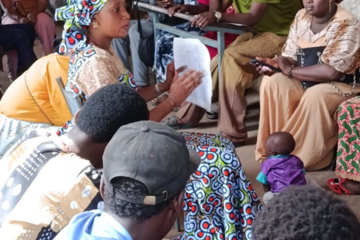
The centerpiece of our COIL project was a bi-weekly online discussion between four MSU students from a graduate seminar on democracy and 15 UYOB students in a course taught in English entitled American Civilization: What is history? The making of America. The texts were articles Niambélé, Esquith, Sheldon Wolin, and Achille Mbembe. These were critical – albeit in different ways. – of the relationship between economic power and democratic politics in both the U.S. and Mali. Our online discussions were complemented by participation by the UYOB students in an ongoing community engagement project in one of 10 camps for displaced persons in Mali. While the UYOB students were joining the concluding round of a photovoice project for youth in one of these IDP camps and then helping to plan the opening round of a political simulation, the Malian Peace Game, there, the MSU students were studying the potential value of artistic community engagement interventions such as these within dangerous conflict zones.
Our COIL project became a three-way collaboration between UYOB, MSU, and young people living in Mabile, a camp for internally displaced persons. Some of the online meetings combined the students from the two university classes with former UYOB students who had worked in the IDP camps as mentors since 2022 on the photovoice project and now served as senior mentors for the current UYOB students in the creation of the new peace game.
Hybrid (face-to-face and in-person) meetings in Bamako between MSU students, the new UYOB mentors, and the returning senior mentors, were conversations in both English and French. Three Team Leaders who had supervised the recently concluded photovoice exhibits in the IDP camps were joined by the two faculty instructors to facilitate these bilingual conversations to prepare the new (UYOB) and returning mentors for the peace game simulation.
Here is a picture of one such hybrid meeting held at the office of the International Sports Alliance in Bamako on a Sunday afternoon as the two groups of mentors prepared to launch the peace game and to discuss online the obstacles to peacebuilding and democracy with their MSU partners.Two weeks before the final COIL presentations and three weeks before the UYOB students visited Camp Mabile to meet their young mentees whom they would introduce to the peace game simulation, we asked these new mentors and their MSU COIL partners to reflect on the COIL project. Here is a small sample from those comments.
UYOB student (1): “This COIL project has been a bridge between Bamako and Michigan, allowing us to see that the challenges of democracy are universal. It has been an eye-opening experience to share our Malian perspectives with MSU students.”
UYOB student (2): “It has permitted me to know that democracy and politics are concepts that not only the leaders must know how they function, but the citizens, even those who are living in the very distant areas, also must know how they function: Tell them that the democracy and politics are part of their everyday life. Tell them that the way they organize meetings and ask the consent of all the community members to solve a collective problem of their community is also democracy, and tell them that democracy and politics simply mean the contribution of every single citizen to the betterment its community, country, continent, and the world in general because the more understanding they have on the rules and the different functions of democracy and politics the better society we have. This program has been an opportunity for me to understand the misunderstanding that exists between the representatives and the citizens: the representatives who supposed to act as servants to meet the need of those who they represent, once the power they become master who forbid any uttering from their subjects. Through the program, I have discovered that the young people are the main pillar of democracy and politics, and I also understand that my role goes beyond studying and working for my own interest: it is to be so active, to understand the rules and being able to explain them to those who do not have access to them.”
MSU student (1): "Participating in the COIL project has been an amazing opportunity. It has provided me with the space to discuss issues of global importance with folks whose perspectives I would never otherwise have heard. It has been immensely helpful for the ability of my colleagues and I to think through the crises of democracy as they are manifesting around the world, something that feels increasingly urgent in our current international political climate."
The final COIL presentations on Zoom on May 3, 2026, by UYOB and MSU students reflected the richness of the theory and practice of their study of and work on democratic peacebuilding within a zone of conflict, whether a low-income country like Mali or a higher income country like the U.S.
Limited internet connectivity made it difficult for all the participants to keep their cameras on for the whole meeting, and some participants had to connect via cell phones. Nevertheless, they were able to discuss the limits that aspiring democratic societies face and whether the state in these societies may ever threaten the life of persons within its borders, including those considered to be full citizens. This was followed by a discussion of the relationship between a democratic society’s commitment to majority rule its terms of membership. These theoretical questions were discussed and debated in the contexts of Mali and the U.S. where violence against displaced persons, immigrants, refugees, and legal citizens is part of the everyday reality of many persons.
By:
Yasmine Ben Slimane
Wednesday, Jun 3, 2026
YOUTH EMPOWERMENT
+1
Leave a comment
Student Development: Transforming Futures Through Mathematical Research
Undergraduate research in mathematics has one of its profound impacts on the development of students’ critical thinking skills. Traditional mathematics education often emphasizes solving well-defined problems with known methods. Research, however, presents open-ended questions where the solution is uncertain and the path forward is unclear. Students are required to analyze patterns, test hypotheses, and create logical arguments. This process strengthens their reasoning abilities and teaches them how to approach complex challenges systematically. As students engage deeply with mathematical problems, they learn not only to find answers but also to question assumptions, evaluate evidence, and refine their thinking. These intellectual habits are valuable in every aspect of life, including science, technology, business, and public decision-making.
Guided by these underlying principles, a pilot initiative was launched in Spring 2025 at United States International University-Africa. The TI-Analytics Program was a four-week intensive undergraduate research experience that engaged twenty-one undergraduate students from USIU-Africa, including eleven female and ten male participants. The program was supported through a Transforming Institutions (TI) grant from the Alliance for African Partnership.
Four faculty members served as research mentors: Aklilu Zeleke from Michigan State University, alongside Gabriel Okello, Leah Mutanu, and Verrah Otiende from USIU-Africa. Prior to the launch of the program, the faculty mentors held regular planning meetings to design the day-to-day activities, establish student selection criteria, and identify appropriate research topics.
The twenty-one participants were selected based on their academic performance, demonstrated work ethic as reflected by faculty recommendations, and their interest in using research to address pressing challenges facing Africa. For many of the students, this was their first experience working on open-ended research projects in which the outcomes were unknown. To encourage independence and innovation, the faculty mentors intentionally provided minimal direction, allowing students to explore ideas creatively and shape the direction of their research.
All research groups conducted literature reviews relevant to their projects. Some teams modified existing mathematical models to create authentic research experiences, such as the dynamical systems group. Others applied existing models using different algorithms and analytical tools to compare their findings with established results, including the recommender systems and sepsis research groups. Another team worked with a unique institutional dataset to develop recommendations for assessing student performance through the Learning Management System (LMS). Undergraduate researchers participated in applied projects that required advanced mathematical, statistical, and computational techniques. Four research groups were formed, each guided by a faculty mentor. The projects focused on modeling the life cycle of red blood cells using dynamical systems, analyzing recommender systems for the aviation industry that generate booking options for airline passengers, applying analytical methods for the early prediction of pediatric sepsis-related mortality, and investigating student academic performance using data from the Blackboard Learning Management System (LMS).
The groups worked intensively from 9:00 a.m. to 5:00 p.m. each day for four weeks, with a half-hour mid-morning break and a one-hour lunch period. At the conclusion of the program, each group delivered a research presentation to invited guests from USIU and Mt. Kenya University, including college deans, faculty members, graduate students, and fellow undergraduate students.
Student engagement extended beyond the formal program period. For example, the group studying red blood cell life cycle modeling continued refining its work by incorporating advanced concepts from dynamical systems, including Lorenz attractors. The group later presented its enhanced findings at the 4th International Mathematics and Statistics Student Research Symposium.
Overall, student researchers expressed strong enthusiasm for participating in the pilot TI Analytics initiative and emphasized the value of integrating research experiences into undergraduate education. Faculty mentors further advanced the initiative by securing an AAP grant to support a yearlong program that will embed similar research experiences into existing mathematics and statistics courses at USIU during the 2026–2027 academic year.
Finally, we would like to highlight some of the program’s most significant impacts on individual student participants. One of the direct outcomes of the TI Analytics program was the development of strong mentoring relationships between faculty mentors and student researchers. These relationships extended beyond the program itself, with faculty mentors helping students identify and pursue additional research, internship, and educational opportunities both within Africa and internationally. For example, Dr. Aklilu Zeleke has continued to support participating students by providing mentorship and writing recommendation letters for academic programs and professional opportunities.
Several student success stories illustrate the long-term impact of the initiative. Hermela Gizaw, a member of the sepsis research group, secured an internship opportunity in Switzerland. Snit Teshome, from the LMS research group, received the Generation Google Scholarship, and Haymanot Alemayoh was admitted to the Development Engineering graduate program at the University of California, Berkeley. Woldesenbet Aregay from the modeling red blood cells group writes “My participation in the TI Analytics and the IMSS international conference enhanced my presentation, teamwork and research skills. These experiences helped me build confidence in communicating ideas and collaborating effectively within a team”. Woldesenbet secured an internship at iCog, Labs, an AI and Machine Learning research organization in Ethiopia. Bethlehem Getachew mentioned that the TI Analytics training enhanced her skills in applying data analytics to healthcare challenges, particularly through the pediatric sepsis project. She feels prepared to apply what she learned to projects in data science and cyber security analytics.
Particularly remarkable is that all these students are survivors of the recent civil conflict in their home country Ethiopia. Their achievements reflect resilience, determination, intellectual strength, and a commitment to overcoming adversity while contributing meaningfully to society.
While these students have benefited from support provided through the Mastercard Foundation at USIU-Africa to excel in academic accomplishments, they have also returned to their communities and engaged in service initiatives aimed at empowering young women to pursue STEM education. By sharing their experiences with younger students, they have emphasized the importance of confidence, independence, perseverance, and resilience, qualities they further strengthened through their participation in the TI Analytics program. Their stories demonstrate how research experiences can foster not only academic and professional growth but also leadership, mentorship, and broader community impact.
In conclusion, undergraduate research in mathematics is a transformative educational experience that significantly strengthens students’ intellectual and personal development. It cultivates critical thinking, creativity, resilience, communication skills, independence, and intellectual curiosity. Through research experiences, students move beyond passive learning to become active contributors to the creation and application of knowledge. They develop confidence in their abilities, learn to navigate challenges with persistence, and build habits of inquiry that support lifelong learning.
More importantly, undergraduate mathematical research prepares students not only for academic and professional success but also for meaningful engagement in society. By investing in undergraduate research opportunities, educational institutions create pathways for students to become innovative problem-solvers, thoughtful leaders, and intellectually empowered individuals equipped to address complex challenges and contribute positively to their communities and the broader world.
By:
Yasmine Ben Slimane
Wednesday, Jun 3, 2026
YOUTH EMPOWERMENT
+1
Leave a comment
African Futures Scholar Azinne Azipue
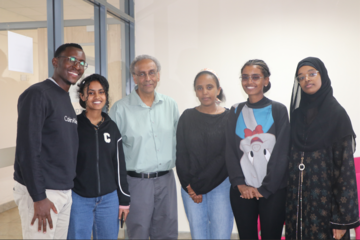
Meet Dr. Ezinne Ezepue, Lecturer of Film at University of Nigeria, Nsukka. 🌟Her research focuses on reimagining folklore and adapting traditional stories for the screen, exploring how cultural narratives can be preserved and shared through film. 🎬Although she participated virtually throughout the program, Dr. Ezepue described it as an interesting experience and expressed her gratitude to for the opportunity to take part in the program. ✨
By:
Baboki Gaolaolwe-Major
Wednesday, Apr 1, 2026
CULTURE AND SOCIETY
+1
Leave a comment
Feminist Echoes: Uniting Young Women for Political Emancipation
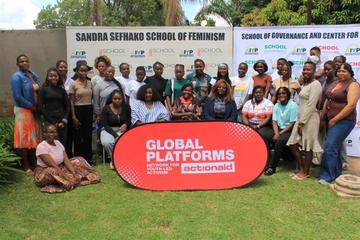
On 25 March 2026, the African Institute for Young People (AIYP) successfully hosted Feminist Echoes: Uniting Young Women for Political Emancipation at the Global Platform Youth Hub. The training brought together 35 young women from diverse backgrounds—including students, young mothers, and school dropouts—and equipped them with leadership, advocacy, and political engagement skills through a participatory feminist circle approach. The initiative was implemented under the Sandra Sefhako School of Feminism, a flagship program of AIYP dedicated to mentoring and empowering young African women to lead in sexual and reproductive health and rights (SRHR), human rights, climate justice, and political and economic participation. The program seeks to dismantle patriarchal barriers, strengthenwomen’s participation in decision-making, and build solidarity across communities and nations.
Named in honor of Sandra Sefhako, a distinguished youth activist and Mandela Washington Fellowship alumna from Botswana, the school celebrates her legacy of advancing women’s rights and gender equality in Africa. It provides mentorship, capacity-building, advocacy training, and leadership development to equip participants with the skills, knowledge, and confidence to lead transformative change in their communities. The training utilized culturally grounded methodologies inspired by the Shona nhanga tradition, alongside intergenerational dialogue, group discussions, and roundtable engagements. Esteemed leaders, including Senator Itayi Mwanza, Councillor Leah Chidamba, and former Epworth Mayor Annah Sande, shared their lived experiences in politics, offering mentorship and practical insights into navigating governance spaces.
Participants deepened their understanding of feminism, Ubuntu, and solidarity, while building confidence, networks, and actionable commitments to engage in leadership and political processes. The training underscored the importance of early mentorship, inclusivity, and the creation of safe spaces for emerging women leaders.
Overall, Feminist Echoes strengthened the capacity of young women to influence governance, foster collective empowerment, and advance inclusive political participation, in alignment with the enduring legacy of Sandra Sefhako.
Introduction
The African Institute for Young People (AIYP) convened Feminist Echoes:Uniting Young
Women for Political Emancipation at the Global Platform Youth Hub as part of the Youth in Elections Project. The initiative was designed as a participatory feminist circle contributing to the broader vision of the Sandra Sefhako School of Feminism, a flagship program committed to mentoring and equipping young African women with the skills, knowledge, and confidence to lead in political, social, and economic spaces.Grounded in the traditional Shona concept of nhanga as a safe space for guidance, mentorship,
and socialization, Feminist Echoes created an inclusive platform for young women to engage in dialogue, storytelling, and intergenerational exchange with experienced women leaders. The initiative directly responds to the persistent underrepresentation of young women in governance by fostering leadership, strengthening networks, and building practical skills in advocacy, negotiation, and coalition-building.
Through this feminist circle, participants were empowered to engage more actively and
confidently in political processes, share lived experiences, and develop actionable strategies for influencing decision-making. By nurturing solidarity, promoting feminist values, and transforming individual aspirations into collective action, Feminist Echoes contributes to advancing inclusive governance and cultivating a new generation of transformative women leaders in line with the legacy of the Sandra Sefhako School of Feminism.
Objectives
To establish a safe and inclusive feminist platform that enables at least 35 young women to share experiences, build solidarity, and engage in structured dialogue on political participation during the training.
To enhance the leadership, advocacy, and political engagement capacities of at least 35 young women through mentorship, peer learning, and skills-building sessions, with participants demonstrating improved knowledge and confidence by the end of the training.
To support at least 35 young women to develop practical, actionable strategies and commitments for engaging in political processes and decision-making, with clear follow-up actions identified for implementation beyond the training.
Methodologies Used
The activity utilized a participatory, learner-centered, and culturally grounded methodology informed by the Shona concept of nhanga, which emphasizes safe spaces for mentorship, guidance, and socialization. This approach ensured inclusivity and created an enabling environment for experiential learning, open dialogue, and knowledge exchange among participants and facilitators. An intergenerational dialogue model was employed to facilitate direct engagement between young women participants and experienced women leaders, including Senator Itayi Mwanza, Councillor Leah Chidamba, and former Epworth Mayor Annah Sande. Through storytelling and experience-sharing, participants gained practical insights into leadership pathways, barriers to participation, and strategies for navigating political and civic spaces. The session was facilitated using inclusive moderation techniques by Tsitsi Patience Mashiri to ensure equitable participation and safe engagement.
The methodology further incorporated peer-to-peer learning through structured group
discussions and roundtable dialogues. These sessions enabled participants to critically reflect on key thematic areas, including feminism, ubuntu, and solidarity, while co-creating context-specific strategies for enhancing women’s political participation. This approach strengthened critical thinking, collaboration, and collective problem-solving.Networking and relationship-building were integrated as a core component of the methodology, fostering cross-sectoral linkages among participants from diverse political, social, and economic backgrounds. This contributed to the development of sustained support systems and collaborative engagement beyond the training.
Overall, the methodology combined experiential learning, intergenerational mentorship, peer learning, and culturally relevant frameworks to promote leadership development, collective empowerment, and inclusive participation. It aligns with the values underpinning the Sandra Sefhako School of Feminism, particularly feminism, ubuntu, and solidarity, while reinforcing shared responsibility and agency among young women.
Summary of Proceedings
The training was successfully held on 25 March 2026 at the Global Platform Youth Hub,
bringing together 35 young women from diverse backgrounds, including students, young
mothers, and school dropouts, reinforcing the principle of inclusivity. The diversity of
participants enriched discussions, ensuring a wide range of perspectives on women’s
participation in leadership and governance. The sessions were structured into thematic segments to maximize learning and engagement. The first segment focused on mentorship, where facilitators shared guidance on leadership and governance, drawing on their personal experiences and professional journeys. This provided participants with practical insights into the realities of leadership and pathways to active political participation. The second segment emphasized feminism, ubuntu, and solidarity as strategic frameworks for political engagement. This participatory session encouraged equal contributions from all participants, fostering dialogue and reflection on how these values can be applied to advance women’s leadership and influence in governance processes. The training concluded with participants developing actionable commitments, pledging to pursue leadership and governance opportunities within their communities. Overall, the sessions enabled participants to gain knowledge, confidence, and practical skills, equipping them to engage meaningfully in political and civic spaces.
Outcomes (Results)
By the conclusion of the training, participants demonstrated a significant improvement in their understanding of feminist principles, Ubuntu, and solidarity, gaining clarity on how these concepts can be applied to advance gender equality and women’s political participation. Young women acquired practical strategies for leadership, advocacy, and coalition-building, strengthening their capacity to engage meaningfully in governance and decision-making processes. The training fostered an inclusive political culture through open dialogue, peer learning, and collective reflection. Participants left with increased confidence, a stronger sense of agency, and a reinforced commitment to pursue leadership opportunities. Overall, the training empowered young women to translate knowledge and mentorship into tangible actions that advance their political emancipation and civic engagement.
Lessons Learnt
A key lesson from the training was the critical role of seasoned leaders in opening doors for young women, highlighting that today’s participants are tomorrow’s leaders. The sessions demonstrated that young women possess the passion, potential, and capacity to drive positive change in their communities and political spaces when given the right guidance and opportunities. The training also underscored the mentorship gap for emerging women leaders, as many participants reported limited access to guidance, networks, and practical insights needed to navigate political and civic spaces effectively. This highlighted the importance of structured mentorship programs and safe, inclusive spaces—like the nhanga circles—where young women can learn from experienced leaders, exchange ideas, and gain practical strategies for leadership. Additionally, the value of intergenerational dialogue became evident, with interactions between seasoned leaders and young women providing inspiration, encouragement, and actionable insights. Participants learned not only about leadership successes but also about overcoming challenges and systemic barriers, reinforcing the need for continuous engagement, capacity building, and platforms that foster solidarity, Ubuntu, and feminist principles to strengthen the next generation of women leaders.
Recommendations
Based on the training experience, it is recommended that future trainings intentionally include very young leaders, starting from high school, to introduce them early to concepts of leadership, feminism, Ubuntu, and solidarity. Early engagement will nurture political awareness, confidence, and civic responsibility, enabling young women to build a strong foundation for future leadership roles. It is also important to ensure that the training environment remains inclusive and accessible to all participants, including providing facilities and accommodations for people with disabilities. Creating such an enabling environment will foster equitable learning, ensure diverse voices are heard, and strengthen the overall impact of the program in developing capable, confident, and
inclusive young women leaders.
Conclusion
The training successfully created a proactive, mentorship-driven space that equipped young women with the knowledge, skills, and confidence to navigate political and governance spaces effectively. Through presentations, intergenerational dialogue, group discussions, and networking, participants translated ideas into actionable strategies for political engagement and leadership. The training reinforced the values of feminism, Ubuntu, and solidarity, encouraging participants to work collectively and support one another in their leadership journeys. Overall, Feminist Echoes: Uniting Young Women for Political Emancipation contributed significantly to building a generation of confident, politically engaged young women prepared to influence decision-making processes and shape inclusive, equitable governance in their communities and beyond.
By:
Baboki Gaolaolwe-Major
Monday, Mar 30, 2026
YOUTH EMPOWERMENT
+1
Leave a comment
African Futures Scholar Alfdaniels Mabingo
“I can't wait to go back and be kind of a new scholar, new researcher, new academic leader, and new responsible citizen of this world.” ✨Meet Dr. Alfdaniels Mabingo, Lecturer of Performing Arts and Film at Makerere University in Uganda. His research for this fellowship explores dance education, pedagogy, and leadership particularly focusing on empowering youth through the arts in Uganda. He describes the program as a transformative experience in his early research career, calling it a true rite of passage that marked a significant milestone in his academic and professional growth.Through collaboration, mentorship, and knowledge exchange, the program has supported Dr. Alfdaniels Mabingo in further developing his leadership capacity and expanding his research experience. It has offered him a valuable space to continue refining his scholarly voice while building meaningful connections across disciplines and borders. 🌍
By:
Baboki Gaolaolwe-Major
Tuesday, Mar 24, 2026
CULTURE AND SOCIETY
+1
Leave a comment
African Futures Scholar Seynabou Sene
“This collaborative environment has greatly enhanced my work.” 🌱Meet Dr. Seynabou Sene, PhD in Plant and Microbial Biotechnology at Cheikh Anta Diop University of Dakar, Senegal.She reflects on her journey: “I will return home with a broader scientific perspective, strengthened analytical skills, and enhanced leadership experience.” ✨The program supported Seynabou in expanding her research outlook, refining critical skills, and preparing her to lead impactful scientific initiatives within her academic and research community.
By:
Baboki Gaolaolwe-Major
Wednesday, Mar 18, 2026
EDUCATION
+1
Leave a comment
African Futures Scholar Assilah Agigi Mocke
“The program’s benefit is immeasurable, it’s something you have to experience.” 🌟Meet Dr. Assilah Agigi Mocke, Senior Lecturer in Supply Chain Management at the University of Pretoria, South Africa.She reflects on her journey: “It has deepened my resolve as a lecturer, as an academic in the field. I now have a vision for my future, what I want to bring back to the African continent, and how I can create real impact.” ✨Through the program, Assilah was able to broaden her academic connections, engage with diverse perspectives, and gain the tools and inspiration to translate her research into meaningful impact across Africa.
By:
Baboki Gaolaolwe-Major
Thursday, Mar 12, 2026
EDUCATION
Leave a comment
Advancing Equitable Global Partnerships in Nutrition and HIV Research
Summary of the Award
The Alliance for African Partnership (AAP) award was a catalytic institutional investment that transformed the trajectory of my global health research program. Nested within the International AIDS Society–funded CIPHER study, the AAP award (RN100284; $100,000) supported a focused investigation of micronutrient deficiency—specifically vitamin D and long-chain polyunsaturated fatty acids (PUFAs)—as modifiable determinants of functional outcomes among school-aged Ugandan children with and without perinatal HIV exposure or infection. This strategic expansion sharpened our hypotheses, deepened cross-continental partnerships, and laid the empirical foundation for a sustained, externally funded program spanning child development and aging with chronic HIV.
Advancing Global Health and Nutrition Science
The award enabled systematic measurement of nutritional biomarkers in the full cohort rather than a limited subsample. This strengthened statistical power and allowed us to determine whether micronutrient deficits compounded baseline impairments and influenced trajectories of cognitive, socioemotional, and quality-of-life outcomes over 12 months. Importantly, AAP funds supported comprehensive assessment of physiologic stress and detailed abstraction of antiretroviral therapy exposure histories—critical for disentangling nutritional, immunologic, and psychosocial influences on child development in HIV-affected settings.
Our findings demonstrated that variation in vitamin D status and fatty acid profiles were biologically meaningful contributors to growth, executive function, and socioemotional adjustment. Nutrition emerged not as a background covariate but as a mechanistic driver of morbidity risk. In sub-Saharan Africa—where perinatal HIV exposure remains common and nutritional vulnerability persists—identifying modifiable micronutrient pathways has direct implications for scalable intervention strategies that complement antiretroviral therapy.
The scientific impact extended beyond childhood. Signals observed in the AAP-supported analyses informed refined hypotheses regarding the vitamin D metabolome as a determinant of cognitive development and decline across the life course. This work directly supported successful NIH funding, including an R21 in adolescents (R21HD088169), extended longitudinal follow-up in children (R01NS122510), and a recent R01 in older adults (R01AG087191) with and without chronic HIV infection. Across these awards and supplements, more than $8.0 million in extramural support has been secured, all building on the mechanistic insights strengthened by the AAP investment. Together, these projects examine nutrition, immune dysregulation, microbiome variation, and neurocognitive outcomes within a unified framework of functional survival.
Partnership and Collaboration Dynamics
The AAP award was intentionally structured to deepen equitable partnership between Michigan State University and the Uganda Society for Health Scientists (USHS). By co-leading the nutrition-focused expansion with Ugandan collaborators, including Dr. Sarah Zalwango and Dr. Philippa Musoke, we ensured that research questions were locally relevant, operationally feasible, and mutually beneficial. The award supported dedicated in-country research personnel and reinforced long-standing cohort infrastructure, strengthening data quality and local capacity.
This infrastructure proved especially critical during the turbulent global research policy environment of 2025. Because of the systems and trust built through AAP-supported collaboration, our team was positioned to absorb external shocks while maintaining continuity of data collection and scientific productivity. The partnership model fostered bidirectional learning and reinforced a sustainable framework for global research engagement.
Within MSU, the award deepened collaboration across Nutrition, Epidemiology, Psychiatry, Neuropsychology, and Biostatistics. Engagement with colleagues such as Dr. Jenifer Fenton and multidisciplinary collaborators created synergy that directly contributed to subsequent NIH R21 and R01 successes. The integration of nutritional epidemiology with neuropsychology, immunology, and global mental health allowed us to move beyond siloed inquiry toward a biopsychosocial model of risk and resilience. Support for student training was another critical dimension of impact. AAP-supported data generated dissertation research for two PhD students focused on fatty acids, vitamin D, and neurodevelopment, and supported a postdoctoral fellow whose ongoing work extends our African partnership into microbiome and metabolomic investigation. These investments align with MSU’s land-grant mission and AAP’s commitment to sustainable, capacity-enhancing collaboration.
Follow-Up Work and Field Advancement
The momentum generated by the AAP award continues to shape our research trajectory. In children, the R01NS122510 study is developing and validating a composite risk index to identify adolescents at high risk for neurocognitive impairment, integrating nutritional, immunologic, and virologic predictors. In older adults, the R01AG087191 project examines vitamin D bioavailability, gut microbiota composition, and dementia risk among individuals aging with chronic HIV infection. Together, these studies represent a life-course continuum directly traceable to the original AAP-supported mechanistic inquiry.
We are also translating these findings into intervention strategies. For children, we are designing biopsychosocial supportive care models that incorporate nutritional optimization alongside psychosocial stress mitigation. For adults, we are investigating modifiable determinants of premature cognitive aging—including micronutrient status and gut dysbiosis—with the goal of preventive intervention. Emerging data on variation in the vitamin D metabolome position our team to address critical gaps in understanding how vitamin D functions within mechanistic nutrition trials, further strengthening our competitive edge.
In sum, the AAP award was more than seed funding; it was a strategic inflection point for my research program. It strengthened transcontinental collaboration, refined mechanistic hypotheses, expanded training pipelines, and positioned our team for sustained NIH funding success. By providing early support that led to our appreciation of consequential variations in vitamin D metabolome, this project has positioned us to continue advancing health globally and domestically with the United States. Specifically, clinical guidelines (Endocrine Society Clinical Practice guidelines and the United States Health and Preventive Task force) on vitamin D has recently been updated and the excitingly, these updates and emphasized knowledge gaps directly align with the innovative insight on vitamin D metabolome we observed as part of the AAP supported projects. There is no doubt that the scientific, collaborative, and translational ripple effects of this investment continue to shape our contribution to global health and nutrition science as we increasingly move towards interventions informed by them.
By:
Baboki Gaolaolwe-Major
Tuesday, Mar 17, 2026
HEALTH AND NUTRITION
+1
Leave a comment
Beyond the Playing Field: Advancing Global Mental Health for International Student-Athletes
Reflecting on who I am and what makes me who I am, it becomes evident that my research interests parallel my lived experiences. As a Japanese American woman raised in the United States and a former student-athlete, I grew up in spaces where perseverance was praised (and often expected), and vulnerability was often considered a weakness. Mental health was rarely discussed openly, and strength was frequently associated with self-reliance. Within athletics, performance and success often came before personal health and well-being. Over time, the intersection of these cultures contributed to my first experiences with mental health challenges and significantly molded the lens through which I view and understand health, struggle, and support in sport.
My current work focuses specifically on international student-athletes (ISAs) competing in the National Collegiate Athletic Association (NCAA). Although they represent roughly 5% of NCAA athletes, ISAs account for over 25,000 individuals who navigate the complexities of higher education, elite sport, and cultural transition. These athletes often face challenges that may include but are not limited to language barriers, pressure to perform, social isolation, and culture shock – all of which can impact mental health and overall well-being.
Given this context, my research journey has been shaped through meaningful collaboration across institutions. My first published study qualitatively explored mental health and help-seeking behaviors among NCAA Division I ISAs throughout their transition, in collaboration with my master’s advisor, Matt Hoffmann, at California State University, Fullerton. The findings underscored the prevalence of mental health stigma as a barrier to help-seeking and the importance of peer support in navigating cultural transitions. Building on this work, I recently co-authored a scoping review of ISA mental health and help-seeking with my current doctoral advisor, Dr. Leapetswe Malete, at Michigan State University, which is now in press. Currently, Dr. Malete and I are further expanding on this research by examining how support from fellow international student-athletes evolves across the phases of cultural transition and which types of support are most meaningful or missing.
Collaboration has strengthened and continues to strengthen this work in important ways as each member of our research team(s) brings their own lived experiences shaped by time spent studying, working, or living in different countries. These diverse perspectives encourage us to question assumptions and remain considerate of cultural nuance and context. In this research that focuses on international populations, cultural responsiveness must be actively addressed. Ongoing conversation allows for the design of studies that are inclusive and sensitive to the intricacies of identity and culture across various contexts. As I have been presently learning, this collaborative approach is imperative for remaining both reflective and reflexive of world perspectives, instead of a single institutional lens.
Across these projects, my colleagues and I purposefully used qualitative methods to amplify the voices of those who are often overlooked or unheard. Through in-depth, semi-structured interviews with NCAA ISAs, I aim to create a safe space for participants to share their unique stories to produce actionable research grounded in lived experiences. Many participants are highly visible on their sport’s playing field, but are frequently unheard at an institutional level. That said, this approach seeks to help bridge that gap and inform tangible changes within universities.
With the continued increase in international student migration around the world, institutions are becoming increasingly diverse and interconnected. As universities expand global partnerships, including collaborations between African institutions and U.S. universities through networks such as the Alliance for African Partnership, it becomes increasingly important to recognize how well-being is affected by cultural transition. Therefore, my research aims to advance understanding of global mental health by highlighting how migration, stigma, and culture intersect within an understudied population (i.e., ISAs). By applying a theoretical framework, this research illustrates that mental health and well-being evolve over time within transitional contexts. Interpreting these shifts allows institutions to anticipate challenges within these communities, rather than react when distress becomes visible.
While our current research has examined ISAs migrating to the U.S., its findings have practical implications for university policies and student support systems across the globe. Institutions that enroll international students may benefit from intentionally creating opportunities for connection early in the transition process. Our findings suggest that ISAs often value relationships with others who share comparable experiences. Furthermore, peer support from other international students is consistently reported as the most meaningful and helpful form of connection. By proactively facilitating these connections, institutions can shift from reactive toward preventative approaches that foster inclusive environments where not just ISAs, but all students are able to experience more consistent states of overall positive well-being.
Conducting research with ISAs, has been both rewarding and humbling. Mental health remains stigmatized in many contexts, resulting in difficulty recruiting participants and in quickly cultivating a space that feels psychologically safe enough for them to open up about personal struggles. Learning and engaging in qualitative research has constantly reminded me that my own background shapes how I interpret and interact with the participants and the data. These projects have reinforced the importance of mindfulness and reflexivity in research, and in recognizing that I inevitably play a role in how others’ lived experiences are conveyed.
While our research thus far focuses on ISAs in the U.S., cultural transition and student well-being are worldwide experiences. Looking ahead, I hope to continue expanding this work through engagement with researchers and institutions across nations, to better understand the nuances of various cultural contexts, the challenges they may bring, and their effects on wellness. Moreover, it is my hope that this research contributes to global conversations on mental health and encourages more translational research into preventive and inclusive approaches to supporting students across diverse institutional settings.
By:
Baboki Gaolaolwe-Major
Thursday, Mar 5, 2026
HEALTH AND NUTRITION
+2


Leave a comment