

Results for "research"
24 Results
Navigating the Complexities Building Bridges and Sustainable Impactful Networks in Research
Summary: In a fast world where innovation and impact are critical slogans, researchers are required to build their partnerships and grow networks to advance research that transforms lives beyond academic papers. It is equally critical to know the intricacies of connecting with the right people and teams. This article unpacks some of the in ways around the complexities for researchers aiming to works across such environments. Farai Kapfudzaruwa is a Research and Strategic Partnerships Manager at Future Africa, University of Pretoria.
People often say, “the world is becoming small”, when discussing meeting new friends and forming partnerships. This statement reflects the increased connectivity among people, facilitated by rapid transportation and advanced communication methods. However, does the idea of a shrinking world really make it a simple, smooth, and easy process to build sustainable and impactful networks? While the phrase "the world becomes small" suggests ease of navigation, it also brings to light increasingly intricate and complex environments. The kind of environments that are a compound of diverse cultures, trends, and knowledge systems, call for one to re-learn what they know. Neither research nor academia holds a special entry pass into this realm; they must navigate these intricate environments just like everyone else to advance research and societal knowledge. Only by doing so, we will manage to begin to tackle some of the most complex problems with strong bridges and networks.
As the principal investigator of the Africa-Asia Business Partnership Forum, co-funded by the Alliance for African Partnership (AAP), we navigated a myriad of complexities to drive the project towards success. This project brought together South African, Japanese, and US partners, encompassing academics, young entrepreneurs, and their value chain stakeholders. Farai and his team faced the challenge of managing cultural differences, a task that proved to be intricate. For instance, during the project’s initial virtual workshops, Japanese entrepreneurs, known for their quiet and reserved nature, found it difficult to adapt to the interactive format, in contrast to the vocal and assertive South African entrepreneurs. This innocent disparity is something that is usually overlooked and often not considered to be a thing to account for when conceptualising projects, but it can cause and lead to serious imbalance in sharing ideas and creating a levelled environment where thoughts circulate with ease. In this instance, this disparity led to the Japanese feeling overwhelmed.
To address these issues, the team acknowledged the significance of cultural sensitivities and redesigned the workshops to be more inclusive of Japanese participants. They also encountered diverse work cultures and problem-solving methods among the researchers, adding another layer of complexity to the project’s execution.
The foundational principles of effective networking always revolve around two key tenets. The first principle emphasizes the importance of understanding context. This entails understanding and recognizing that every individual, partner, community, or organization operates within a unique socio-cultural, knowledge system, resource-based, and personality-driven context. The second principle highlights the value of being open-minded and receptive to learning. Therefore, when initiating engagements with new partners, it is crucial to approach with an open mind and actively seek to comprehend their specific context.
Mutual respect amongst partners always ensures that diverse views and cultures are accounted for in a partnership. This entails understanding that each partner brings unique value to a project. Once everyone’s value is accounted for and appreciated it allows for equitable distribution of resources and tasks in the team. Often, Global South partners are portrayed as recipients of capacity-building support which then undermines their role in projects. This perception can arise from a lack of appreciation for their indigenous knowledge systems (IKS), which may be dismissed as insufficiently rigorous by Global North partners. By taking the time to understand and respect the value of IKS, Global North partners can find value in the contributions of Global South partners. Furthermore, it’s one thing to understand, respect, and value a different cultural context or way of doing things in a partnership and another to take a key interest and learn a different context. Language is a good example, it's one thing to appreciate a different language and another thing to take an interest and attempt to learn that language to enable you to communicate more effectively with local partners.
Avoid the Misconceptions and Mix Things Up
One of the most prevalent and biggest misconceptions about networking is the belief that relationships should naturally form among researchers or partners who share similar backgrounds and priorities and who are from the same discipline and/or have aligned interests. However, within the context of transdisciplinarity, such relationships often lack innovation and diversity and exhibit significant homogeneity, as they predominantly involve partners with similar interests. In one of the projects that I lead at Future Africa, this is the core of what we do. Supported by the International Science Council, the project explores the idea of a Science Technology and Innovation (STI), Leadership Forum. STI isn't solely about the natural sciences. The project has gained traction by engaging a diverse array of experts and leaders across disciplines, including the social sciences. These professionals contribute their insights on integrating natural sciences with policy to enhance the African STI landscape. The impact of valuing and integrating varied disciplines and expertise has enriched our research methodologies and outcomes. Therefore, it is highly recommended to seek out networks that challenge you and offer diversity, as this creates opportunities for transformative impact. Engineers, for instance, are encouraged to actively cultivate and nurture relationships with sociologists or artists, as they can leverage each other's expertise for mutual benefit. Similarly, academics should strive to engage with sectors beyond academia, such as the private sector or government, to foster relevance and impact of research and teaching, thus catalyzing innovation across diverse fields.
Another common misconception revolves around the idea that networks are inherently self-serving. However, this is not the case. As an academic, you can actively participate in networks, such as community groups, where the focus is not on extracting value but on adding value and making a positive impact by transforming lives. I believe in the power of diverse networks to foster significant, transformative impacts, and I advocate for connections beyond traditional boundaries, such as those between engineers and sociologists or artists, to leverage unique expertise for mutual benefit. This strategy extends to academics engaging with sectors outside of academia, enhancing the relevance and impact of their work across different fields. For example, I am engaged in a network of Non-Profit Organizations (NPOs) addressing child labor and sustainability in the wine industry which illustrates this point. My interaction with stakeholders like human rights lawyers and community leaders enriches my understanding of the problem, while my academic contributions to grant proposal writing and transformative partnerships underscore the value of reciprocal, impactful networking. This experience not only broadens my perspective but also significantly enhances the collective efforts towards sustainable and ethical practices in the industry. In essence, this example reflects a broader principle: networks should not be self-serving but rather avenues for adding value and effecting positive change. My involvement in both academic and non-academic networks highlights the dual benefits of recognition and the opportunity to mentor and support others, ultimately leading to a more interconnected and transformative impact across disciplines and sectors.
Attention to Newcomers in Academia
Firstly, start building networks at an early stage in your graduate studies at conferences, social gatherings, and many other places. Find mentors who can introduce you to their networks for you to benefit and learn. Secondly, always make an effort to engage with partners outside your comfort zone or your area of expertise or sector. You are more likely to be impactful from a research and teaching perspective if you always have a transdisciplinary lens to your work. This is critically important in an academic environment that increasingly values societal impact. If you work with local communities – show respect and value them.
Practical Techniques for Working Across Sectors and Cultural and knowledge Contexts
Given the diverse expertise and capacities in such partnerships, the key to ensuring impact and sustainability is to ensure everyone has input in setting the agenda and goals. As such, communicating and engaging on the project management plan early and transparently is essential. Secondly, clearly defining the roles of each partner based on their expertise and capabilities (resources and time) is key. This ensures there is accountability in the partnership. Thirdly, it’s important to develop reflexive practices which enable all the partners to contribute to the project through learning from others’ expertise, competencies and disciplines. For example, if you want to learn the value of government or civil society, the best way is through regular knowledge sharing sessions where partners share their expertise, competencies, and lessons learned. This can be an opportunity for individuals and partners to learn new skills and expertise. In scenarios like these, it's crucial to give everyone a voice. Adopting the "world café" concept, where workshop participants are divided into small groups, ensures that each partner can contribute their insights. In 2022, we organized a transdisciplinary capacity development workshop for early career researchers. The aim was to collaboratively design projects addressing global challenges. To break the ice, we introduced games that facilitated socialization and mutual acquaintance among participants. This strategy helped build rapport and relationships, enabling productive engagement throughout the week. Such interactive approaches can foster communication and collaboration in workshop settings.
Fourth, given the variety of backgrounds and competencies in these complex knowledge systems its always important to “speak the same language”. For example, simple tools such as documented communication guidelines, or glossary of terms can help data scientists and policy makers understand each other across disciplines. Fifth, use multidisciplinary approaches to ensure that everyone benefits. Generally, academics value “methods” whereas policymakers value results/practical outcomes. This means creating flexible design frameworks that can accommodate variable scope and unanticipated results. It is important to know that there is need for mutual benefit and there are several approaches to achieving a shared vison and outcome based on the nature of the stakeholder. Therefore, it is important to emphasize the preferred method of integrating multidisciplinary approaches to ensure that all partners benefit from the collaboration. Partners must therefore acknowledge the different priorities and perspectives of academic researchers and policymakers, highlighting the need for flexible design frameworks that can accommodate diverse goals and outcomes. For example, a partnership focused on environmental conservation and policy development might involve academic researchers specializing in ecological studies, policymakers from government agencies, and environmental advocacy groups. Each partner brings unique strengths and priorities to the table. The academic researchers may prioritize rigorous scientific methodologies, data collection, and analysis techniques to understand ecosystem dynamics, species diversity, and environmental impacts while policymakers may prioritize actionable insights, policy recommendations, and practical solutions to address environmental challenges such as deforestation, pollution, and habitat loss. When designing the project, a flexible research framework that integrates both academic methodologies and policy-oriented outcomes is key. For example, academic researchers can conduct in-depth ecological studies using advanced data collection techniques, while also focusing on translating their findings into policy-relevant recommendations. In that way it's a win-win for both the academic and policy stakeholders.
Navigating ethical considerations across different cultural contexts poses a complex challenge. What may be deemed ethical in one region might not align with ethical standards elsewhere. Therefore, it is preferable to identify overarching principles that promote sustainable partnerships, such as steering clear of linguistic dominance and embracing epistemological flexibilities. Numerous global frameworks exist that outline these principles. However, the true challenge lies in integrating them into funding models, project frameworks, and institutional structures effectively. This requires a thoughtful approach that respects diverse perspectives and ensures ethical practices are embedded at every level of operation.
Using DEI to Frame Your in Partnerships and Networks
As the global landscape continues “to become smaller”, our interactions increasingly involve individuals from diverse backgrounds. It is imperative that we equip ourselves with the necessary skills to navigate the different cultural sensitivities. This includes understanding what makes people comfortable and acknowledging areas that may cause discomfort. It's crucial not only to consider our interactions with individuals but also to evaluate our treatment of marginalized groups such as women, youth, disabled individuals, LGBTQ+ communities, among others. How we treat these groups can significantly be seen as your institutional culture. Hence, it is vital to prioritize fairness, inclusivity, and a deep understanding at all levels of interaction. Attention to diversity and inclusion ensure there are different partners from different backgrounds with varying experiences and expertise. As a result, diverse networks offer broader perspectives as different people provide insights that others would never have considered or thought. Joining diverse and inclusive networks also brings new opportunities to partners – for example, new funding sources. A lot has also been written on the value of diversity and inclusion in promoting creativity and innovation.
Emerging Trends that Alter the World of Partnerships and Networking
The funding for higher education partnerships globally is diminishing. Therefore, networks that will be able to ensure impact and transformative impact with fewer resources will become more successful. This particularly, relates the movement to embrace artificial intelligence and machine learning in research and learning. AI is equipping students and communities with information processed faster (which has implications on how collaborative research is done), but also bridging access to quality knowledge. The COVID-19 pandemic has spurred the adoption of a new global work culture, characterized by widespread remote work practices. This shift has accelerated the use of virtual communication platforms, facilitating seamless connections and collaboration among individuals worldwide. This virtual communication culture presents a unique opportunity for the academia to build robust research and innovation networks. Virtual communication tools have broken down geographical barriers, allowing researchers, academics, and innovators from diverse backgrounds to connect effortlessly. This global connectivity fosters the exchange of ideas, knowledge sharing, and collaboration on a scale previously unattainable. enable real-time collaboration on research projects, facilitating joint efforts and interdisciplinary approaches. Researchers can collaborate across institutions, disciplines, and even continents, leveraging each other's expertise and resources to drive innovation and scientific progress.
By:
Abraham Mamela
Saturday, Apr 6, 2024
CULTURE AND SOCIETY
+1

Leave a comment
Generating New Narratives: Examining Youths' Multiliteracies in Youth Participatory Action Research
This paper examines the multiliteracies practices (New London Group, 1996) of 20 high school students who participated in a weeklong summer research institute at the start of a 6-month long community-based youth participatory action research (YPAR) initiative. Data analyzed included 20 digital multimodal compositions produced by youths, individual interviews with youths, and observations of youths’ participation in the YPAR initiative. Data analysis utilized theories of multiliteracies practices (New London Group, 1996) and culturally sustaining pedagogies (Paris & Alim, 2014) enacted across contexts of YPAR (Fine & Torre, 2004). Findings contribute new insights about students’ multiliteracies practices in YPAR in two ways. First, we examine how learning about research methods shifted students’ understandings of research and the role their experiences could play in YPAR. Second, we examine how students’ digital literacies practices (Lankshear & Knobel, 2008) supported them in generating new narratives about their community in digital multimodal compositions. Finally, we consider how insights gained from our examination may support educators in developing and enacting culturally sustaining (Paris & Alim, 2014) learning contexts that build with students’ multiliteracies practices as strengths while challenging persistent educational inequities.
By:
Joanne E. Marciano
Thursday, Apr 4, 2024
YOUTH EMPOWERMENT
+1

Leave a comment
Modeling with ARIMA-ARCH/GARCH Techniques to Estimate Weekly Exchange Rate of Liberia
This empirical research focused on a weekly exchange rate volatility modeling, where I studied the distribution of the series and recommended to Central Bank authority the behavior pattern of the financial variable.
By:
Joe Greaves
Wednesday, Feb 2, 2022
OTHER
Leave a comment
Investigating Saving and Investment Relationship: Evidence from an ARDL Bounds Testing Approach
This is an empirical economics research article that was published.
By:
Joe Greaves
Wednesday, Feb 2, 2022
OTHER
Leave a comment
Building Sustainable Research Management Capacity in Sub-Saharan Africa: AAP Co-director Published
Co-director of AAP MSU Office, Jose Jackson-Malete, has recently had a chapter published! “Building Science Systems in Africa” is a culmination of a project focused on building capacity of African science councils to collaborate with each other and the private sector. The project was led by the African Centre for Technology Studies, the Science, Technology, and Innovation Policy Research Organization (STIPRO), the Scinnovent Centre, and the Association of African Universities. Jose Jackson, alongside co-authors Karin Dyason, Dipalesa Mpye, and Zimasa Sobuza, wrote the chapter “Building Sustainable Research Management Capacity in Sub-Saharan Africa” which discusses the increasing professionalization of research management.
The e-book is made available open access on the ACTS website and also the SGCI website.
https://www.acts-net.org/publications/books/building-science-systems-in-africa
By:
Madeleine Futter
Friday, Aug 27, 2021
OTHER
No Preview Available
Leave a comment
Tax research methodology for untested legislation: An exemplar for the tax scholar
Tax scholars using typical doctrinal and reform-oriented methodologies often struggle to articulate the process undertaken in their research and at the same time, these methods often require an analysis of legislation that has already been the subject of judicial inquiry. However, this raises the challenge of what method to employ in the absence of such judicial inquiry. The tax environment has become so dynamic that law reform occurs rapidly and the law has to be researched, in the absence of case law post legislative amendment. This article provides tax scholars with a methodological approach described as a structured pre-emptive analysis that overcomes this problem (in other words an adaptation of typical doctrinal reform-oriented approaches). Using an exemplar of an actual tax law problem, the paper demonstrates how to conduct rigorous research in the absence of case law dealing with legislation that is the subject of enquiry. The article makes two contributions. First, it gives transparency to the traditional doctrinal reform-oriented methods primarily used in law. Second, it illustrates a method that can be used to overcome the absence of case law.
By:
Teresa Pidduck
Thursday, Aug 19, 2021
OTHER

Leave a comment
ACARE's 2020 Annual Report
Access the 2020 Annual Report for the African Center for Aquatic Research and Education here
"The year 2020 seemed longer than usual. When we looked up from our desks, we realized that it was not actually the 15th month of 2020, but March of 2021. The photo at the right is a perfect representation of our year of interactions.
We are excited to share with you our successes and progress from 2020. Despite interacting with you only on screens and trapped in our basements, we grew, and we continue to do so.
We look forward to another good year and anticipate we will be seeing you in person soon."
By:
Madeleine Futter
Monday, Aug 16, 2021
WATER, ENERGY, AND THE ENVIRONMENT
+1
No Preview Available
Leave a comment
Metrics-based profiling of university research engagement with Africa
Co-authorship data provides evidence of greater collaboration of MSU with non-African countries on African-focused research but a growing number of partner institutions from African countries. This growing collaboration provides significant benefits on strategic research conducted and its impact, as well as increasing the recognition of African researchers as contributors to impactful international research collaborations and improving the ability of MSU and its global and African partners to co-generate knowledge and innovation that can help solve global problems more effectively.
Learn more below.
https://link.springer.com/article/10.1007/s11192-019-03211-y">https://link.springer.com/article/10.1007/s11192-019-03211-y" rel="nofollow">https://link.springer.com/article/10.1007/s11192-019-03211-y
By:
Elaina Lawrence
Monday, Aug 16, 2021
EDUCATION

Leave a comment
Call for the UASP Fellowships: Mid- to Senior-Level University Leaders
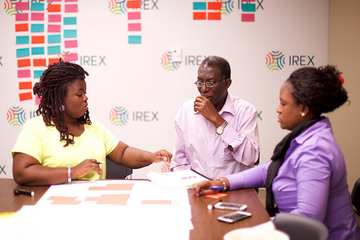
The UASP Fellowships in Research Management support the development of university research management and knowledge transfer capacity through a six-week fellowship in the United States for mid- to senior-level university leaders.
Two weeks of training in Washington, DC, a virtual learning environment, and a four-week placement at a respected U.S. university support participants to build their universities into leading research institutions that impact their communities. Following the placement, fellows are supported to implement reforms in their home institution.
Click the link to learn more!
https://www.irex.org/project/university-administration-support-program-uasp" rel="nofollow">https://www.irex.org/project/university-administration-support-program-uasp">https://www.irex.org/project/university-administration-support-program-uasp" rel="nofollow">https://www.irex.org/project/university-administration-support-program-uasp" rel="nofollow">https://www.irex.org/project/university-administration-support-program-uasp
By:
Elaina Lawrence
Monday, Aug 16, 2021
EDUCATION
Leave a comment
Urban households in southern Africa depend on charcoal for energy security: MSU research partnership
In September of 2016, the AAP issued an open call for research proposals that target the AAP’s thematic areas of agri-food systems; water, energy and the environment; youth empowerment; education; culture; and health and nutrition. After receiving over sixty-five proposals, fifteen proposals were chosen to be awarded between $50,000-$200,000 towards their projects that would create long-term and sustainable collaborations between MSU faculty and partners from African Organizations.
Now, three years of diligence and passion later, these research teams have finished their research. To celebrate and share this collaboration, effecting positive change in Africa through meaningful and equitable partnerships, here is a success story from one of the teams and their project, “Energy Security for Sustainable Livelihoods in Southern Africa”.
This project was led by professor Robert B. Richardson from MSU’s Department of Community Sustainability and Judith Kamoto, a Lecturer at Lilongwe University of Agriculture and Natural Resources’ Department of Forestry. With a team comprised of faculty from MSU, Lilongwe University of Agriculture and Natural Resources, Indaba Agricultural Policy Research Institute, and the University of Zambia, this research project confronts the challenges presented from dependence on woodfuels for energy in sub-Saharan Africa.
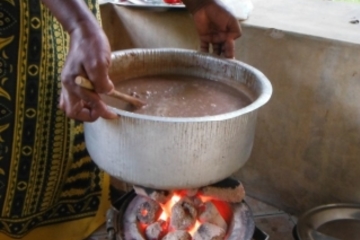
More than 80% of urban households in sub-Saharan Africa use charcoal as their main source of cooking energy, and demand is projected to increase for several decades. Although the charcoal market provides urban households with an affordable source of energy and is also a major source of income for rural households, charcoal production is associated with deforestation and forest degradation, as well as with negative impacts on watersheds and water quality. With this in mind, the objective of the research project was to examine the role of charcoal in household energy security and in livelihoods, since relatively little is known about household behaviour and decision making in sub-Saharan Africa regarding urban household energy choices.
Throughout the duration of their research, their team gathered data from urban households in Malawi and Zambia regarding their energy consumption, including sources of cooking fuel, prices paid, and frequency of purchase. Their team also gathered data from charcoal producers, transporters, and wholesale buyers in order to better understand the charcoal value chain. They did this by developing a research design and conducting urban household surveys, along with semi-structured interviews and focus group discussions with charcoal producers, transporters, and wholesale traders. As the first known study of the charcoal value chain across Malawi and Zambia, the project has advanced knowledge of energy consumption of urban households in southern Africa and has advanced knowledge of the role charcoal plays in the livelihoods of people in these regions. Dr. Richardson says, “The findings highlight the complex nature of the charcoal value chain, and they reveal significant implications for energy policy and forest conservation.”
In July of 2018, Dr. Richardson had the opportunity to present the results from this research project at the conference of the International Center for Evaluation and Development, Evidence to Action, in Nairobi, Kenya. With the new findings that came from this research project, the team hopes to build upon the successes of the project thus far and develop a grant proposal to be submitted to a foundation for additional research in the region that addresses solutions to the charcoal dilemma, such as efficient charcoal cookstoves, multi-purpose cookstoves, alternative energy sources, and sustainable charcoal.
By:
Elaina Lawrence
Monday, Aug 16, 2021
WATER
+2
Leave a comment
AAP Supports Freshwater Research Through the African Women in Science Campaign
The Alliance for African Partnership (AAP) is proud to support the African Women in Science campaign by the African Center for Aquatic Research and Education. Four women from various AAP member institutions have been selected to take part in the program, which aligns with AAP's goal of addressing the gap of African women in the sciences. The program seeks to enhance the participation of women scientists through the creation of a comprehensive, long-term, collaborative network of freshwater experts.
The first component of the program is sending a group of promising students and early career researchers to the International Association for Great Lakes Research Conference in Winnipeg, Canada. Here, each participant will give oral presentations on their areas of research, attend networking events with academic, managerial, and policy experts from global freshwater community, and visit regional research facilities to further their exposure to research being done around the world.
The four participants from AAP member institutions are:
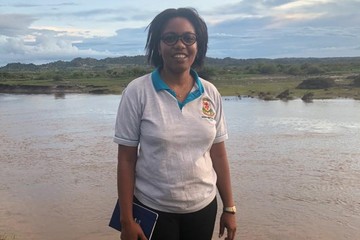
Christine Nyagaya, Egerton University, MS Student, from Kenya, working on Lake Victoria
Christine Nyagaya Owino is a Kenyan, currently pursuing a master’s degree in Limnology at Egerton University Kenya and an undergraduate background in biotechnology. I am interested in biogeochemical processes in inland wetlands, their ecological and economic services and emissions of greenhouse gases from the wetlands. As a limnologist I am passionate about sustainable use of wetlands since I understand important ecological roles especially in acting as nutrient sinks and purifying water (buffer zones) that enters our lakes. I am also interested in sustainable use of inland lakes since these lakes are primary source of water to some people. One of my major goals is to contribute towards the achievement of sustainable development goals number 6 which is to (Ensure availability and sustainable management of water and sanitation for all” and numb
er 13 on “Taking urgent action to combat climate change and its impacts
Madalitso Magombo Chatsika, LUANAR, PhD Student, from Malawi, working on Lake Malawi/Nyasa/Niassa
Mrs. Madalitso Magombo Chatsika an experienced and accomplished fisheries biologist for over 14 years. Currently, Madalitso is working as a lecturer in Fish Biology and Fisheries Management at the Lilongwe University of Agriculture and Natural resources (LUANAR), at the Department of Aquaculture and Fisheries Science where she is involved in teaching, research, consultancy and outreach. She is currently in her final year at Michigan State University (MSU), Department of Fisheries and Wildlife, studying towards attaining a PhD in Fisheries Biology and Management. As part of her PhD dissertation, Madalitso studied the “Effects of climate change on fisheries of the Southeast arm of Lake Malawi where she incorporated environmental variables like temperature and rainfall into the convectional Surplus Production Models to assess the impact of climate change on fisheries resources in Lake Malawi. Recently, Madalitso also conducted a study to assess the ecological impacts of climate change in capture fisheries: a case of Lake Chilwa in Zomba district, Malawi.Madalitso also conducted a research on the “Effect of seasonal variations and mesh sizes on the estimated length at 50% maturity of fish from Lake Kariba for her MSc degree at University of Bergen in Norway. She has also been involved in a WorldFish and World Vision project on “Developing creative approaches to fight HIV/AIDS in the fisheries sector in Malawi” in partnership with the World Bank and the International Monetary Fund. She has also been a team member for the CTA project on Technology Innovation System for the Fisheries and Aquaculture sub-sectors case study in Malawi.
As a fisheries scientist, Madalitso has a passion to contribute towards natural resource management (fisheries), food security and poverty reduction in Malawi through sustainable use of fisheries resources. She loves to see herself as a person who can provide solutions to the problems that are being faced by the fisheries sector in Malawi.
Outside my career as a fisheries scientist, Madalitso is a wife and a mother of three boys. She comes from a lake district called Mangochi in Malawi (probably one of the reasons she got interested in fisheries). She likes cooking and travelling and her favorite travel destination is Japan. Her favorite sport is netball and she likes listening to traditional gospel music.
Dr. Lulu Kaaya, University of Dar es Salaam, Recent Graduate, from Tanzania, working on Lake Victoria
Dr Lulu Kaaya is a Lecturer in Freshwater Ecology in the Department of Aquatic Sciences and Fisheries Technology at the University of Dar es Salaam, Tanzania where she teaches limnology and watershed management. She is also a lecturer of stream ecosystems concepts and streams integrity assessment in the International Joint Master’s degree in Limnology and Wetland Management Programme (Boku University-Austria, Egerton University-Kenya and UNESCO-IHE, The Netherlands).Dr Kaaya has been doing research in the rivers and lakes of Tanzania since 2005. Her research area cores around the ecological role and functions of freshwater ecosystems in the management of water resources.
She has been providing professional consultation on the integration of ecology into watershed management approaches in Tanzania i.e. Environmental Flow Assessments, River Health Assessments and establishment of integrated water resources management and development plans. Her PhD thesis titled “Biological Assessment Of Tropical Riverine Systems Using Aquatic Macroinvertebrates In Tanzania, East Africa” provides a detailed analysis of
bioassessment from the regional perspective. She has published seven peer-reviewed articles based on freshwater ecosystems of Tanzania, supervised seven masters students in the area of aquatic sciences and conducted several outreach programmes on bioassessment.On a personal note, Dr Kaaya is a wife, mother of four, loves nature and sports (swimming and running), enjoys gardening and making new contacts. She is also a Rotarian.
Dr. Suzan Luyiga, Makerere University, Recent Graduate, from Uganda, working on Lake Victoria
Suzan Luyiga is a Ugandan Limnologist associated with the Department of Zoology, Entomology and Fisheries Sciences of Makerere University, having over 15 years of freshwater ecological research and teaching experience. She has a PhD (Zoology-Limnology) of Makerere University, and a MSc. (Environmental Science and Technology - Limnology and Wetland Ecosystems) of UNESCO-IHE. As a professional limnologist, Suzan has conducted research on various aspects of freshwater environmental management, focusing on great lakes ecosystems particularly the anthropogenic impact on plankton communities, Environmental Impact Assessments and developing and optimizing integrated technologies to management of wastewater e.g. constructed wetlands and wastewater reuse for food production to prevent water pollution. She is passionate about freshwater environmental sustainability, and this has directed her to acquire skills including but not limited to: - Designing and implementing ESIA activities, Developing and implementing community awareness programs; Collecting information and developing of technical and training manuals; Teamwork building and management, and Networking with multi-disciplinary and inter-cultural groups.
By:
Elaina Lawrence
Monday, Aug 16, 2021
WATER
+2
Leave a comment
Bringing Insects Back as Food and Feed in Sub-Sarahan Africa
In September of 2016, the AAP issued an open call for research proposals that target the AAP’s thematic areas of agri-food systems; water, energy and the environment; youth empowerment; education; culture; and health and nutrition. After receiving over sixty-five proposals, fifteen proposals were chosen to be awarded between $50,000-$200,000 towards their projects that would create long-term and sustainable collaborations between MSU faculty and partners from African organizations.
Now, three years of diligence and passion later, these research teams have finished their research. To celebrate and share this collaboration, effecting positive change in Africa through meaningful and equitable partnerships, here is a success story from one of the teams and their project, “Farming Insects for Food: Developing Partnerships for Sustainable Food Security in Malawi”.
Led by associate professor, M. Eric Benbow and assistant professor, Jennifer L. Pechal of MSU’s Agriculture and Natural Resources, the team addressed the food insecurity in East Africa due to uncertainty in local crop availability. With a long-term goal of developing and assessing the use and safety of insects as a widely available, sustainable feed for livestock production, the team focused on the following three objectives:
Developing partnerships and build a network of collaborators between African and US institutions and individuals for technical training and capacity building.
Assess the feasibility, benefits, and optimization of insects as feed for local stakeholders while educating local students and stakeholders.
Secure external funding to promote research and enhance the livelihood for individuals that would implement these techniques of using insects.
Benbow and Pechal collaborated with several faculty from Lilongwe University of Agriculture and Natural Resources (LUANAR) in Lilongwe, Malawi. Through this partnership, they looked at how larvae of certain insects can be used as feed for livestock and help increase agricultural sustainability, improve feed security and can be easily introduced into local food production chains. With meaningful conversations at the city council and private industry levels, a better understanding of the costs, impacts, and challenges of developing a continuous source of insects as protein in Malawi, and the opportunity to meet the assistant deputy head of the Lilongwe City Council Solid Waste Disposal Sites to identify potential waste streams available as a resource for black soldier fly development, the team was able to reach the stages of their research where they are discussing logistics, capacity, partnerships, and data acquisition with a consortium of insects-as-feed in the USA (i.e., Evoconversion Systems) and a private South African based company.
After 18 months of efforts funded by the AAP to get more global support for this initiative to develop a commercial black soldier fly (BSF) operation in Malawi to increase sustainable feed for livestock production and minimize the risk of malnutrition in rural communities, Benbow and Pechal have established strong partnerships with people and businesses looking to help them continue this project which will undoubtedly improve the agricultural and economic reality of Malawi.
By:
Justin Rabineau
Monday, Aug 16, 2021
AGRI-FOOD SYSTEMS


Leave a comment