

Browse
Education
Open Call for Google PhD Fellowship Program
Donor: Google
Grant Type: Fellowship
Grant Size: $10,000 to $100,000
Countries/Regions: Albania, Algeria, Andorra, Angola, Argentina, Armenia, Australia, Austria, Azerbaijan, Bahrain, Belarus, Belgium, Benin, Bolivia, Bosnia And Herzegovina, Botswana, Brazil, Brunei, Bulgaria, Burkina Faso, Burundi, Cambodia, Cameroon, Canada, Cape Verde, Central African Republic, Chad, Chile, China, Colombia, Comoros, Congo (Brazzaville), Congo DR, Costa Rica, Cote DIvoire (Ivory Coast), Croatia, Cuba, Cyprus, Czech Republic, Denmark, Djibouti, Dominican Republic, Ecuador, Egypt, El Salvador, Equatorial Guinea, Eritrea, Estonia, Ethiopia, Finland, France, Gabon, Gambia, Georgia, Germany, Ghana, Greece, Guatemala, Guinea, Guinea-Bissau, Holy See (Vatican City State), Honduras, Hong Kong SAR, Hungary, Iceland, India, Indonesia, Iran, Iraq, Ireland, Israel, Italy, Japan, Jordan, Kenya, South Korea, North Korea, Kuwait, Laos, Latvia, Lebanon, Lesotho, Liberia, Libya, Liechtenstein, Lithuania, Luxembourg, Macau, Macedonia, Madagascar, Malawi, Malaysia, Mali, Malta, Mauritania, Mauritius, Mayotte, Mexico, Moldova Republic Of, Monaco, Mongolia, Morocco, Mozambique, Burma(Myanmar), Namibia, Netherlands, New Zealand, Nicaragua, Niger, Nigeria, Norway, Oman, Palestinian Territories, Panama, Paraguay, Peru, Philippines, Poland, Portugal, Puerto Rico, Qatar, Reunion, Romania, Rwanda, Saint Helena, San Marino, Sao Tome And Principe, Saudi Arabia, Senegal, Seychelles, Sierra Leone, Singapore, Slovak Republic, Slovenia, Somalia, South Africa, Spain, Sudan, Swaziland, Sweden, Switzerland, Syria, Tanzania, Thailand, Togo, Tunisia, Uganda, Ukraine, United Arab Emirates, United Kingdom, United States, Uruguay, Venezuela, Viet Nam, Western Sahara, Yemen, Zambia, Zimbabwe, Montenegro, Kosovo, South Sudan
Area: Health, Individuals, Students, Research, Science, Technology
The Google PhD Fellowship Program provides support to outstanding graduate students pursuing doctoral research in computer science and related fields.
For more information, visit https://research.google/programs-and-events/phd-fellowship/
Premium Link: https://grants.fundsforngospremium.com/opportunity/op/open-call-for-google-phd-fellowship-program
By:
Aaron Dorner
Wednesday, Apr 1, 2026
HEALTH AND NUTRITION
+3

No Preview Available
Leave a comment
Apply Now: Sandoz Scholarship for Young Leaders
Countries/Regions: All Countries
Area: Health, Health care, Innovation, Leadership, Youth & Adolescents
The One Young World is pleased to announce its Sandoz Scholarship to support young leaders tackling systemic barriers to healthcare in their communities, countries or the world at large.
For more information, visit https://www.oneyoungworld.com/scholarship/sandoz-scholarship-2026
Premium Link: https://grants.fundsforngospremium.com/opportunity/op/apply-now-sandoz-scholarship-for-young-leaders
By:
Aaron Dorner
Wednesday, Apr 1, 2026
CULTURE AND SOCIETY
+4
No Preview Available
Leave a comment
Women in AV and Tech Startup Prize for Early-Stage Women Founders
Donor: Women in AV & Tech
Grant Type: Awards, Prizes and Challenges
Grant Size: $10,000 to $100,000
Countries/Regions: All Countries
Area: Business & Industry, Startups, Individuals, Media, Technology, Women & Gender
The Women in AV & Tech Startup Prize is a global initiative designed to support and empower women founders building early-stage ventures in the audiovisual and technology ecosystem.
For more information, visit https://www.nmkelectronics.com/women-in-tech-startup/#
Premium Link: https://grants.fundsforngospremium.com/opportunity/op/Women-in-AV-and-Tech-Startup-Prize-for-EarlyStage-Women-Founders
By:
Aaron Dorner
Wednesday, Apr 1, 2026
CULTURE AND SOCIETY
+3

No Preview Available
Leave a comment
Flourish Africa Business and Life Skills Programme 2026 (Nigeria)
Applications are now open for the Flourish Africa Business and Life Skills Programme Cohort 5, a structured initiative aimed at supporting female entrepreneurs in building and scaling their businesses.
For more information, visit https://www.linkedin.com/posts/fluorishafrica_transform-your-business-in-four-months-applications-activity-7441790334285750272-uKKq?utm_source=share&utm_medium=member_desktop&rcm=ACoAAEHEQWQBdeeCk50Y9buygT4gtJpoFSowtKM
Premium Link: https://grants.fundsforngospremium.com/opportunity/op/flourish-africa-business-and-life-skills-programme-2026-nigeria
By:
Aaron Dorner
Wednesday, Apr 1, 2026
AGRI-FOOD SYSTEMS
+5
No Preview Available
Leave a comment
RFAs: CRI Irvington Postdoctoral Fellowship Program
The CRI Irvington Postdoctoral Fellowship Program offers a prestigious platform for early-career researchers to advance innovative work in immunology and cancer immunology while building pathways toward independent scientific leadership.
For more information, visit https://www.cancerresearch.org/cri-irvington-postdoctoral-fellowship
Premium Link: https://grants.fundsforngospremium.com/opportunity/op/rfas-cri-irvington-postdoctoral-fellowship-program
By:
Aaron Dorner
Wednesday, Apr 1, 2026
AGRI-FOOD SYSTEMS
+5
No Preview Available
Leave a comment
Open Call: Mandela Rhodes Scholarship Programme
Countries/Regions: Algeria, Angola, Benin, Botswana, Burkina Faso, Burundi, Cameroon, Cape Verde, Central African Republic, Chad, Comoros, Congo (Brazzaville), Congo DR, Cote DIvoire (Ivory Coast), Djibouti, Egypt, Equatorial Guinea, Eritrea, Ethiopia, Gabon, Gambia, Ghana, Guinea, Guinea-Bissau, Kenya, Lesotho, Liberia, Libya, Madagascar, Malawi, Mali, Mauritania, Mauritius, Mayotte, Morocco, Mozambique, Namibia, Niger, Nigeria, Reunion, Rwanda, Saint Helena, Sao Tome And Principe, Senegal, Seychelles, Sierra Leone, Somalia, South Africa, Sudan, Swaziland, Tanzania, Togo, Tunisia, Uganda, Western Sahara, Zambia, Zimbabwe, South Sudan
Area: Tertiary & Higher Education, Individuals, Leadership, Research
The Mandela Rhodes Scholarship is inviting applications to support a leadership programme that will challenge you, grow you and connect you to young African changemakers - just like you.
For more information, visit https://www.mandelarhodes.org/scholarship/apply/
Premium Link: https://grants.fundsforngospremium.com/opportunity/op/open-call-mandela-rhodes-scholarship-programme
By:
Aaron Dorner
Wednesday, Apr 1, 2026
AGRI-FOOD SYSTEMS
+5

No Preview Available
Leave a comment
Request for Proposals: Clinical Cancer Research Grant Program
The Clinical Cancer Research Grant Program has announced its applications to support innovative, patient-centered interventional clinical trials aimed at improving cancer treatment options and quality of life.
For more information, visit https://www.risingtide-foundation.org/clinical-cancer-research-how-to-apply/
Premium Link: https://grants.fundsforngospremium.com/opportunity/op/request-for-proposals-clinical-cancer-research-grant-program
By:
Aaron Dorner
Wednesday, Apr 1, 2026
AGRI-FOOD SYSTEMS
+5

No Preview Available
Leave a comment
RFAs: Richard and Susan Hayden Academy Fellowship Program
The Richard and Susan Hayden Academy Fellowship Program is pleased to announce its applications to support early-to-mid-career professionals to spend ten months at Chatham House developing an independent research project while engaging in international affairs.
For more information, visit https://www.chathamhouse.org/academy/fellowships-and-leadership-programme/richard-and-susan-hayden-academy-fellowship
Premium Link: https://grants.fundsforngospremium.com/opportunity/op/rfas-richard-and-susan-hayden-academy-fellowship-program
By:
Aaron Dorner
Wednesday, Apr 1, 2026
AGRI-FOOD SYSTEMS
+5
No Preview Available
Leave a comment
Feminist Echoes: Uniting Young Women for Political Emancipation
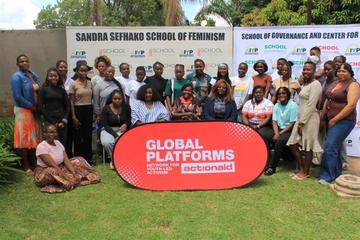
On 25 March 2026, the African Institute for Young People (AIYP) successfully hosted Feminist Echoes: Uniting Young Women for Political Emancipation at the Global Platform Youth Hub. The training brought together 35 young women from diverse backgrounds—including students, young mothers, and school dropouts—and equipped them with leadership, advocacy, and political engagement skills through a participatory feminist circle approach. The initiative was implemented under the Sandra Sefhako School of Feminism, a flagship program of AIYP dedicated to mentoring and empowering young African women to lead in sexual and reproductive health and rights (SRHR), human rights, climate justice, and political and economic participation. The program seeks to dismantle patriarchal barriers, strengthenwomen’s participation in decision-making, and build solidarity across communities and nations.
Named in honor of Sandra Sefhako, a distinguished youth activist and Mandela Washington Fellowship alumna from Botswana, the school celebrates her legacy of advancing women’s rights and gender equality in Africa. It provides mentorship, capacity-building, advocacy training, and leadership development to equip participants with the skills, knowledge, and confidence to lead transformative change in their communities. The training utilized culturally grounded methodologies inspired by the Shona nhanga tradition, alongside intergenerational dialogue, group discussions, and roundtable engagements. Esteemed leaders, including Senator Itayi Mwanza, Councillor Leah Chidamba, and former Epworth Mayor Annah Sande, shared their lived experiences in politics, offering mentorship and practical insights into navigating governance spaces.
Participants deepened their understanding of feminism, Ubuntu, and solidarity, while building confidence, networks, and actionable commitments to engage in leadership and political processes. The training underscored the importance of early mentorship, inclusivity, and the creation of safe spaces for emerging women leaders.
Overall, Feminist Echoes strengthened the capacity of young women to influence governance, foster collective empowerment, and advance inclusive political participation, in alignment with the enduring legacy of Sandra Sefhako.
Introduction
The African Institute for Young People (AIYP) convened Feminist Echoes:Uniting Young
Women for Political Emancipation at the Global Platform Youth Hub as part of the Youth in Elections Project. The initiative was designed as a participatory feminist circle contributing to the broader vision of the Sandra Sefhako School of Feminism, a flagship program committed to mentoring and equipping young African women with the skills, knowledge, and confidence to lead in political, social, and economic spaces.Grounded in the traditional Shona concept of nhanga as a safe space for guidance, mentorship,
and socialization, Feminist Echoes created an inclusive platform for young women to engage in dialogue, storytelling, and intergenerational exchange with experienced women leaders. The initiative directly responds to the persistent underrepresentation of young women in governance by fostering leadership, strengthening networks, and building practical skills in advocacy, negotiation, and coalition-building.
Through this feminist circle, participants were empowered to engage more actively and
confidently in political processes, share lived experiences, and develop actionable strategies for influencing decision-making. By nurturing solidarity, promoting feminist values, and transforming individual aspirations into collective action, Feminist Echoes contributes to advancing inclusive governance and cultivating a new generation of transformative women leaders in line with the legacy of the Sandra Sefhako School of Feminism.
Objectives
To establish a safe and inclusive feminist platform that enables at least 35 young women to share experiences, build solidarity, and engage in structured dialogue on political participation during the training.
To enhance the leadership, advocacy, and political engagement capacities of at least 35 young women through mentorship, peer learning, and skills-building sessions, with participants demonstrating improved knowledge and confidence by the end of the training.
To support at least 35 young women to develop practical, actionable strategies and commitments for engaging in political processes and decision-making, with clear follow-up actions identified for implementation beyond the training.
Methodologies Used
The activity utilized a participatory, learner-centered, and culturally grounded methodology informed by the Shona concept of nhanga, which emphasizes safe spaces for mentorship, guidance, and socialization. This approach ensured inclusivity and created an enabling environment for experiential learning, open dialogue, and knowledge exchange among participants and facilitators. An intergenerational dialogue model was employed to facilitate direct engagement between young women participants and experienced women leaders, including Senator Itayi Mwanza, Councillor Leah Chidamba, and former Epworth Mayor Annah Sande. Through storytelling and experience-sharing, participants gained practical insights into leadership pathways, barriers to participation, and strategies for navigating political and civic spaces. The session was facilitated using inclusive moderation techniques by Tsitsi Patience Mashiri to ensure equitable participation and safe engagement.
The methodology further incorporated peer-to-peer learning through structured group
discussions and roundtable dialogues. These sessions enabled participants to critically reflect on key thematic areas, including feminism, ubuntu, and solidarity, while co-creating context-specific strategies for enhancing women’s political participation. This approach strengthened critical thinking, collaboration, and collective problem-solving.Networking and relationship-building were integrated as a core component of the methodology, fostering cross-sectoral linkages among participants from diverse political, social, and economic backgrounds. This contributed to the development of sustained support systems and collaborative engagement beyond the training.
Overall, the methodology combined experiential learning, intergenerational mentorship, peer learning, and culturally relevant frameworks to promote leadership development, collective empowerment, and inclusive participation. It aligns with the values underpinning the Sandra Sefhako School of Feminism, particularly feminism, ubuntu, and solidarity, while reinforcing shared responsibility and agency among young women.
Summary of Proceedings
The training was successfully held on 25 March 2026 at the Global Platform Youth Hub,
bringing together 35 young women from diverse backgrounds, including students, young
mothers, and school dropouts, reinforcing the principle of inclusivity. The diversity of
participants enriched discussions, ensuring a wide range of perspectives on women’s
participation in leadership and governance. The sessions were structured into thematic segments to maximize learning and engagement. The first segment focused on mentorship, where facilitators shared guidance on leadership and governance, drawing on their personal experiences and professional journeys. This provided participants with practical insights into the realities of leadership and pathways to active political participation. The second segment emphasized feminism, ubuntu, and solidarity as strategic frameworks for political engagement. This participatory session encouraged equal contributions from all participants, fostering dialogue and reflection on how these values can be applied to advance women’s leadership and influence in governance processes. The training concluded with participants developing actionable commitments, pledging to pursue leadership and governance opportunities within their communities. Overall, the sessions enabled participants to gain knowledge, confidence, and practical skills, equipping them to engage meaningfully in political and civic spaces.
Outcomes (Results)
By the conclusion of the training, participants demonstrated a significant improvement in their understanding of feminist principles, Ubuntu, and solidarity, gaining clarity on how these concepts can be applied to advance gender equality and women’s political participation. Young women acquired practical strategies for leadership, advocacy, and coalition-building, strengthening their capacity to engage meaningfully in governance and decision-making processes. The training fostered an inclusive political culture through open dialogue, peer learning, and collective reflection. Participants left with increased confidence, a stronger sense of agency, and a reinforced commitment to pursue leadership opportunities. Overall, the training empowered young women to translate knowledge and mentorship into tangible actions that advance their political emancipation and civic engagement.
Lessons Learnt
A key lesson from the training was the critical role of seasoned leaders in opening doors for young women, highlighting that today’s participants are tomorrow’s leaders. The sessions demonstrated that young women possess the passion, potential, and capacity to drive positive change in their communities and political spaces when given the right guidance and opportunities. The training also underscored the mentorship gap for emerging women leaders, as many participants reported limited access to guidance, networks, and practical insights needed to navigate political and civic spaces effectively. This highlighted the importance of structured mentorship programs and safe, inclusive spaces—like the nhanga circles—where young women can learn from experienced leaders, exchange ideas, and gain practical strategies for leadership. Additionally, the value of intergenerational dialogue became evident, with interactions between seasoned leaders and young women providing inspiration, encouragement, and actionable insights. Participants learned not only about leadership successes but also about overcoming challenges and systemic barriers, reinforcing the need for continuous engagement, capacity building, and platforms that foster solidarity, Ubuntu, and feminist principles to strengthen the next generation of women leaders.
Recommendations
Based on the training experience, it is recommended that future trainings intentionally include very young leaders, starting from high school, to introduce them early to concepts of leadership, feminism, Ubuntu, and solidarity. Early engagement will nurture political awareness, confidence, and civic responsibility, enabling young women to build a strong foundation for future leadership roles. It is also important to ensure that the training environment remains inclusive and accessible to all participants, including providing facilities and accommodations for people with disabilities. Creating such an enabling environment will foster equitable learning, ensure diverse voices are heard, and strengthen the overall impact of the program in developing capable, confident, and
inclusive young women leaders.
Conclusion
The training successfully created a proactive, mentorship-driven space that equipped young women with the knowledge, skills, and confidence to navigate political and governance spaces effectively. Through presentations, intergenerational dialogue, group discussions, and networking, participants translated ideas into actionable strategies for political engagement and leadership. The training reinforced the values of feminism, Ubuntu, and solidarity, encouraging participants to work collectively and support one another in their leadership journeys. Overall, Feminist Echoes: Uniting Young Women for Political Emancipation contributed significantly to building a generation of confident, politically engaged young women prepared to influence decision-making processes and shape inclusive, equitable governance in their communities and beyond.
By:
Baboki Gaolaolwe-Major
Monday, Mar 30, 2026
YOUTH EMPOWERMENT
+1
Leave a comment
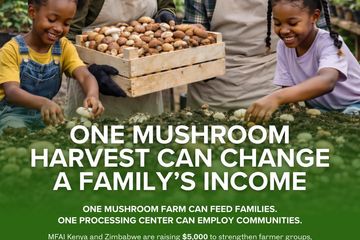
I am creating awareness for this transformative Michigan Fellows Africa Initiatives project set to support small holder farmers majority women and youth in Kenya and Zimbabwe. For as small a contribution as $25 or more, you can be part of this powerful cause!
I trust that my friends on LinkedIn can help raise $5000 by March 31. The unique opportunity is that our total fundraise will be matched 100% by New Africa Fund
Please donate here www.mfaiafrica.org
By:
Raymond Musiima
Saturday, Mar 28, 2026
AGRI-FOOD SYSTEMS
+3
Leave a comment
2027 Fulbright Research Awards for African Scholars
U.S. Embassy Uganda is accepting applications for the 2027 Fulbright African Research Scholar Program. This award funds African university faculty, administrators, and research institute professionals to conduct postdoctoral research or curriculum development and research at a U.S. academic or research institution during the 2027-2028 academic year.
Please review the award types and eligibility requirements carefully below. Awards are open without regard to academic discipline, faculty rank, sex, or age. All applications are due by April 10, 2026. All applications should be submitted at https://apply.iie.org/fvsp2027.
Note: Proposals involving dissertation research or general professional travel are not eligible for this program. Curriculum development grants contribute to the development of new courses, curricula, or programs upon the participant’s return to their home institution.
Applications are currently being accepted for:
Research Grants (awards of three to nine months in duration)
Applicants should have a productive scholarly record, and a specific detailed project statement directly related to their ongoing teaching and/or research responsibilities. Funding is normally for one term/semester of about four months. Longer grants may be possible if the research proposal clearly demonstrates that the project requires more time. Applicants must have a Ph.D.
Program and Curriculum Development Grants (awards of three to five months in duration)
Applicants will conduct reading and research of benefit to both the scholar and their home institution. Proposals should be linked to the applicant’s professional duties (classroom instruction, student advising, and university outreach) and should provide specific details that demonstrate how the scholar would use the knowledge gained to update / develop new courses, curricula, or other academic programs at their home institution. A doctorate degree is not required for this grant, but applicants must hold a minimum of a master’s or equivalent graduate degree at the time of application.
In addition, applicants can choose to apply directly for a Notre Dame Visiting Scholar Award.
Notre Dame Visiting Scholar Award
The University of Notre Dame will host two Fulbright Scholars from Uganda in the 2027-2028 academic year. Prospective applicants interested in the following fields will be hosted at the University of Notre Dame.
Sustainability, resilience, mitigation and adaptation
Peacebuilding, including peace processes, religion and peacebuilding, and the role of new technologies
Global Health including WASH (water, sanitation, and hygiene), nutrition and maternal health
A letter of support from a faculty member at Notre Dame is recommended but not required for consideration. Please contact kampalaexchanges@state.gov for added questions related to the Notre Dame opportunity.
Fulbright Research Awards for African Scholars: Eligibility and Selection
Applicants must be Ugandan citizens.
Awards are open without regard to academic discipline, faculty rank, sex, or age.
Proposals for clinical medical research involving patient contact cannot be approved under the Fulbright Program.
Preference will be given to those proposals that best promote the spirit and goals of the Fulbright Program: to increase and enhance mutual understanding between the United States and other countries through interpersonal contact and the sharing of professional/academic experience and expertise among the widest possible audience. Applicants must provide a detailed project statement to help facilitate the U.S. host placement process and address why their research needs to take place in the United States.
Applicants must include a bibliography of one to three pages of references relevant to the proposed activities/research within their project statement.
Preference will be given to applications that include a letter of support from a potential U.S. host institution willing to support your project proposal.
Applicants open or interested to have host placement at University of Notre Dame should indicate this as their preferred U.S. host within their applications.
For research applicants, preference is given to individuals who have at least three years of university teaching experience and a productive scholarly record.
Plagiarism in any part of an application will result in disqualification from participation in the program.
Applications for doctoral dissertation research, postdoctoral research immediately following the completion of a doctorate degree, or general professional travel, are ineligible.
Preference is given to individuals who have not visited the United States within the past five years.
Applicants must have a strong command of the English language.
Applications are reviewed by a local selection panel. Final nominations are reviewed in the United States and selections are made by the J. William Fulbright Foreign Scholarship Board. Whenever possible, scholars should plan to travel beginning August 2027 or January 2028 to coincide with U.S. university schedules. Only short-listed candidates will be contacted after review of submitted applications.
By:
Aaron Dorner
Wednesday, Mar 25, 2026
AGRI-FOOD SYSTEMS
+5
Leave a comment
Bayer Foundation Fellowships
We offer scientific fellowships for outstanding master, PhD, and medical students to pursue international research projects, internships, and more, providing additional funding for international placements to enhance their study programs.
In line with our commitment to gender equality in science, we strongly encourage applications from women, individuals from low- & middle-income countries, parents with caring responsibilities for children, and individuals working within Germany with German as a second language.
Who can apply?
Fellowship in Drug Discovery Sciences
For master or PhD students from all scientific disciplines including pharmacy and data science, with fundamental or applied studies with relevance to the pharmaceutical and consumer healthcare (over-the-counter) industries.
Fellowship for Agricultural Science
For master or PhD students from all scientific disciplines including data science, with fundamental or applied studies with relevance to the Crop Science industry.
Fellowship for Medical Sciences
For all students of human & veterinary medicine, or master and PhD students in medical engineering, applied medical sciences, data science in medicine and public health.
These fellowships have been established in memory of Otto Bayer, former director of research at Bayer, Jeff Schell, co-founder of Plant Genetic Systems now part of Bayer Crop Science, and Carl Duisberg, former Chairman of the Board of Management at Bayer.
Fellowship for Climate & Health
For students in the fields of human or veterinary medicine, or master and PhD students in natural sciences, pharmacy, public health, or epidemiology with relevance to the impact of climate change on health, with a focus on:
The health of women and other vulnerable populations
Cardio-Renal Health
Neglected Tropical Diseases
Respiratory Health
What can I apply for?
Applicants are eligible for up to 10.000 € funding and can undertake fellowships for up to six months.
The fellowship can be used for research projects, internships and more. People studying in Germany must undertake placements in a second country and those studying outside Germany must undertake their fellowships at a German research institution. For more detailed information please see our guidelines and frequently asked questions (link below).
How can I apply?
Before you begin applying, please read the complete application guidelines and FAQs here. Familiarize yourself with the application form (see preview here) and collect all relevant documentation and content prior to starting your application.
Application phase: February 18 - April 15, 2026. Applications can only be made through our digital portal below (click the button).
Please contact us with any questions at: bayer.fellowship@bayer.com.
Apply now!
Fellowship for STEM Student Teachers & Teachers
This fellowship is designed for teachers that will shape the perspectives of future generations and provides funding for teachers e.g. for internships, research projects and trainings.
Who can apply?
This fellowship is only available to applicants currently working or studying in Germany!
Trainee teachers or students of pedagogy (Bachelor, Master, PhD, Staatsexamen) with a focus on STEM subjects
Newly qualified teachers (< 3 years) with a primary focus on STEM subjects
Grundschule or Förderschule teachers seeking to enhance their capacity and knowledge regarding STEM education.
What can I apply for?
Applicants are eligible for up to 10,000€ in funding and can undertake fellowships for up to twelve months.
The fellowship can be used for internships, research projects in STEM education, trainings, summer schools, research courses etc. related to STEM education in Germany or abroad. For more detailed information please see our guidelines and frequently asked questions (link below).
How can I apply?
Before you begin applying, please read the complete application guidelines and FAQs here. Familiarize yourself with the application form (see preview here) and collect all relevant documentation and content prior to starting your application.
Application phase: February 18 - April 15, 2026. Applications can only be made through our digital portal below (click the button).
Please contact us with any questions at: bayer.fellowship@bayer.com
This fellowship is established in memory of Kurt Hansen, former Chairman of the Board of Management at Bayer.
Apply now!
By:
Aaron Dorner
Wednesday, Mar 25, 2026
AGRI-FOOD SYSTEMS
+3
No Preview Available

Leave a comment